Why Accounts Payable Go Negative? Key Reasons & Fixes


The accounts payable department also works to reduce costs by developing strategies to save a business money. For example, paying an invoice within a discount period that many vendors provide. Accounts Payable and Receivable are usually different departments in larger companies.
- See how forward-thinking finance teams are future-proofing their organizations through AP automation.
- When used responsibly, the benefits of trade payables tend to outweigh the risks.
- This is because we are recognizing that we paid less for the inventory that we received.
- In return, vendors are likely to deliver goods swiftly and offer future discount opportunities.
- Unless the ERP has been directly integrated with the company’s banks, manual file uploads and data entry will still be required to process payments.
Cash Basis Journal Entries
- At the end of each accounting period, the ending balance on each supplier account can be reconciled to the independent statement received from the supplier.
- After the invoice is verified and approved, the amount will be credited to the company’s Accounts Payable account and will also be debited to another account (often as an expense or asset).
- Trade payables is credited, which, since it’s a liability, increases the outstanding balance.
- Identifying the root causes such as overpayments, unapplied vendor credits, or data entry errors.
- Maintain open communication with suppliers to address any issues, negotiate terms, or discuss alternative payment arrangements if needed.
- Keeping this distinction clear helps you manage vendor relationships, forecast cash flow accurately, and understand whether debts stem from core operations or broader expenses.
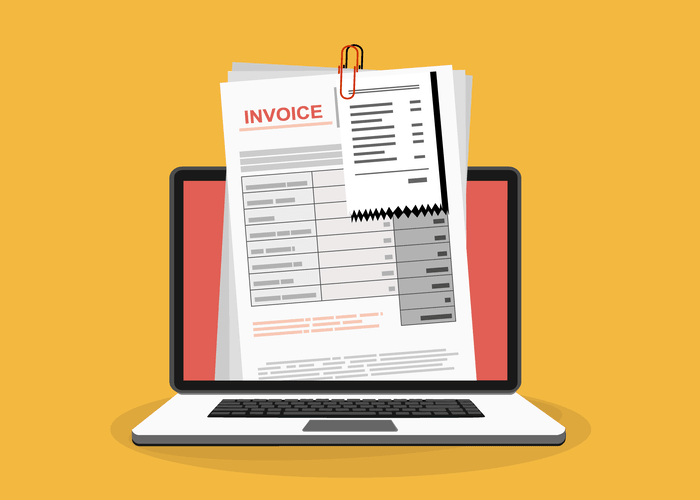
Prior to entering a vendor invoice into Accounts Payable, the invoice should be reviewed and approved. The reason is that a vendor invoice may contain errors (incorrect quantities, incorrect prices, math errors, etc.) and some invoices may not be legitimate. Travel and entertainment, commonly known as T&E, is another area of accounts payable that needs to be managed. Here, too, each company must establish procedures and controls and be in compliance with Internal Revenue Service (IRS) rules which can be found at Certain purchases of goods and/or services may be subject to state sales taxes. If a sales tax is not paid for the sales-taxable goods or services (even from out-of-state vendors), Foreign Currency Translation the buyer is likely to be liable for a state use tax.

Step-by-Step Invoice Verification to Prevent Fraud and Errors

Resolve discrepancies promptly – Investigate and correct errors before payments are processed. Define clear due dates – Standardize terms such as Net 30 or Net 60 to align with the company’s financial cycles. AP represents all short-term debts your business needs to pay for general operations. In this retained earnings guide, we’ll break down these terms and their impact on your daily financial operations.
Examples of trade payables
- The reversing entry removes the previous period’s accrual adjusting entry and prevents the double-counting of an expense that could occur when the actual vendor invoice is processed.
- If a business habitually delays payments beyond agreed terms, it can strain supplier relationships or even lead to service disruptions.
- Check out our page on AP and reconciliation automation for more information.
- However, if the business makes new purchases on cash terms, it does not change the previous accounts payable balance.
- Yes, trade payables are listed under current liabilities on a company’s balance sheet.
- With trade payables, you have the opportunity to pay for what goes into a good or service after the sale is already made.
- Advancements in technology have transformed accounts payable processes, enhancing efficiency and accuracy.
The impact of the transaction is a debit entry to the “Inventory” account, with a credit entry to the “Accounts Payable” account, reflecting the increase in the current liability balance. The transactions relating to accounts payable are repetitive in nature. Therefore, many companies use a special journal known as purchases journal for recording these transactions. However, small companies with low transaction volume don’t maintain special journals.
- A legal agreement to pay rent to the lessor for a stated period of time.
- When the company makes payment to settle the payables, it will debit the accounts payable to clear the liability and credit the cash account as the payment results in the cash outflow from the company.
- While the business owes the supplier the money, the outstanding amount is classified as an accounts payable in the accounting records of the business.
- Since we’re analyzing the accounts payable process and collection policies from the perspective of the provider—i.e.
However, accounts payable are payments you owe for any goods or services provided by a vendor. Vendors would have a matching amount on their balance sheets under trade receivables and accounts receivable. Good management of trade payables allows trade payables a business to optimise cash flow by delaying payments until they fall due, and even extend the payment terms if possible. For example, a company with $50,000 in accounts payable and $70,000 in accounts receivable has a net inflow of $20,000, indicating healthy working capital.