‘It’s Just a Joke’: When Gender Equality Gets Gaslit in Small Talk

Two months into my PhD in Law in the UK, I have learned that researching gender-based violence is never just an academic project; it’s also a social one. My days are filled with reading about structural inequality, colonial legacies, and the lived experiences of women whose stories rarely make it into policy discussions. But some of the most revealing insights don’t come from journals—they show up in the conversations I stumble into as a woman researcher moving through everyday spaces.
Recently, I went to postgraduate research social, a casual gathering where everyone clutched a drink and recycled the same icebreaker: “So, what’s your research about?”
Also read: Singing Against Silence
When it was my turn, I explained that I work on international law and gender-based violence. One man in the group responded almost instantly: “Oh yes, that’s a very important topic right now.” His tone was warm enough that I took it as support.
Then another man cut in:
“Anyway, my friend told me that the foundation of law in the UK is: women’s rights come first, then pets’ rights, and then—at the very bottom—men’s rights.”
I asked, “How do you feel about that?” He laughed, as if to reassure me, and said, “It’s just a joke, of course.”
The first man nodded along and added, “Well, in every joke there’s some truth,” as if to say that the legal system had somehow become biased against them.
In the span of a minute, my research topic had quietly been recast as a personal threat to men.
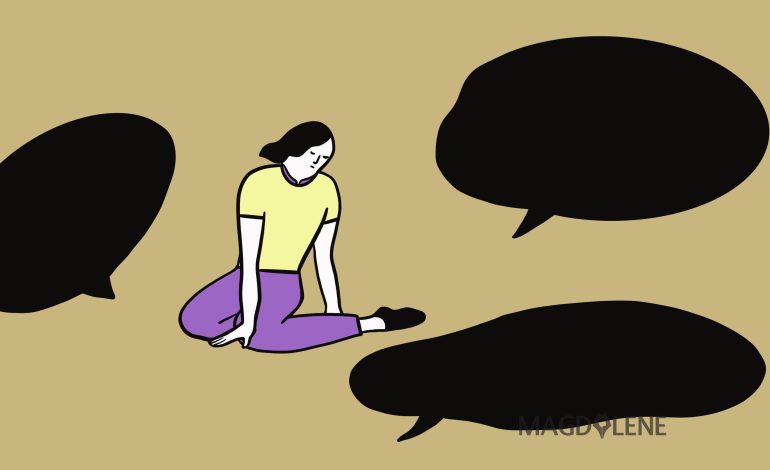
I had a dozen replies ready in my head—historical data, legal frameworks, gender-disaggregated statistics, the whole UN reports. But something held me back. Maybe it was the exhaustion of constantly having to justify the existence of gender studies. Maybe it was the sinking realisation that this conversation wasn’t about understanding, but about defending hurt entitlement. Or maybe I simply sensed that arguing at that moment would lead nowhere.
So I stayed quiet. Later that night on the bus home, it wasn’t the joke that bothered me most. It was my silence.
The fear hiding behind equality
I have replayed that conversation many times since—not out of rage, but curiosity. Why are some men so convinced that expanding women’s rights automatically shrinks their own?
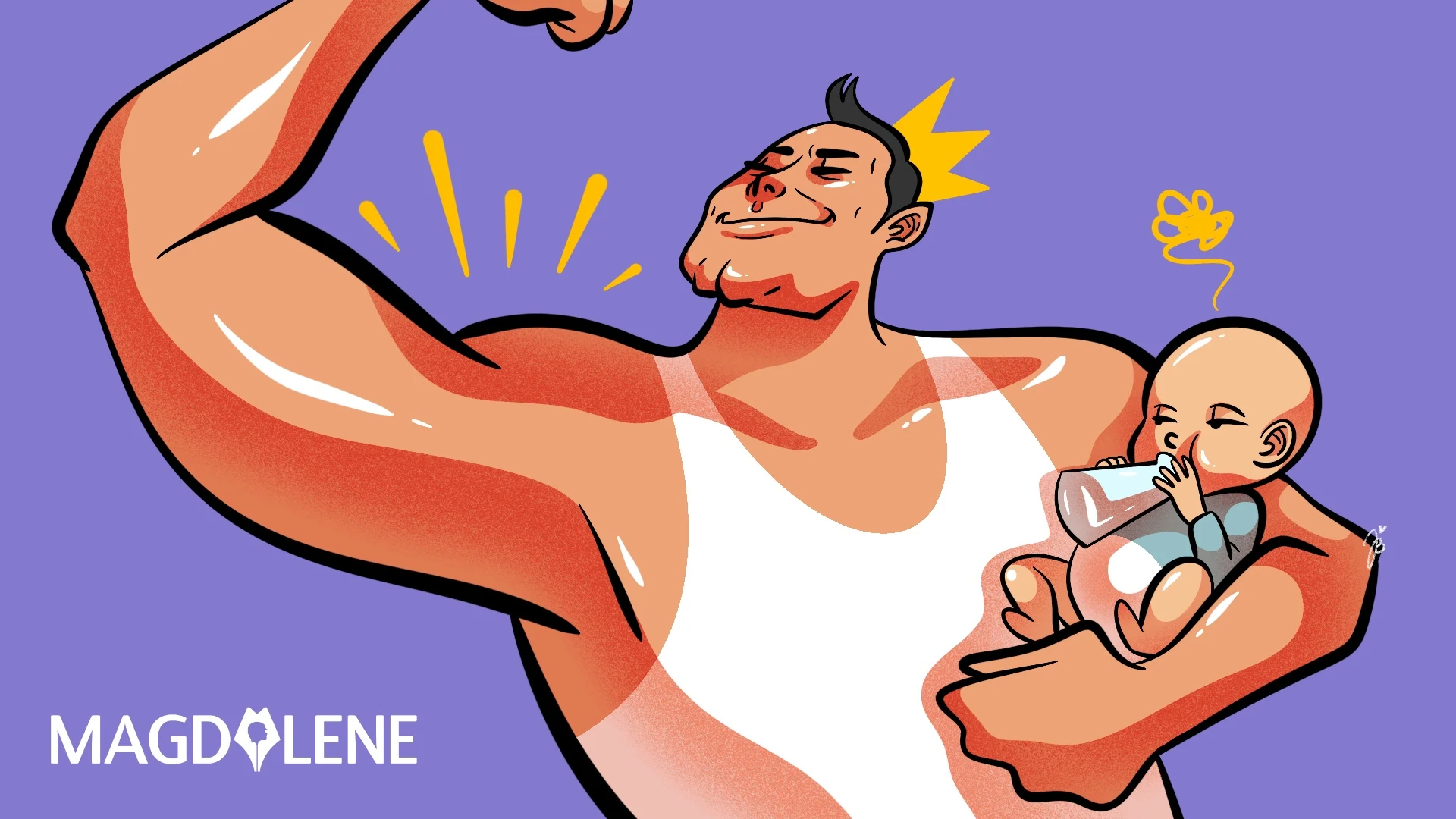
Researching gender-based violence teaches you that systems—not individual feelings—create inequality. Patriarchy harms women in countless ways, but it also harms men by forcing them into rigid scripts of power, strength, and dominance. Yet when we talk about dismantling these systems, some men hear something entirely different: that equality means they will lose rights, attention, or protection.
That “joke” wasn’t just ignorance. It was a tiny performance of fear. It turned a conversation about structural harm into a story about male victimhood. And when someone says “it’s just a joke” after saying something like that, it works like a soft form of gaslighting: you are invited to doubt your discomfort, to feel silly for taking it seriously.
But there is nothing silly about legal systems that have historically treated women as less than full persons. What gender justice asks for is not a world where men have fewer rights, but one where women finally have equal access to safety, education, legal recognition, economic opportunity, and political participation. These things have never been evenly distributed—not because women asked for less, but because societies decided they deserved less.
Doing this kind of research means constantly moving between two worlds: the analytical world of theory and case law, and the emotional world of lived experience. It means confronting uncomfortable truths, even in conversations that begin as small talk.
That afternoon, I chose not to push back. I let the moment pass. Next time, I hope I will choose differently—not by launching into a lecture, but by answering in a way that is calm, clear, and honest. Something like: “I’m sorry you feel that way. I study law and gender because it affects all of us—not to take away men’s rights, but to make sure women finally have the same ones.”
Also read: Female Burden in Healthcare: My Personal Story on Misogyny in Medicine
Because the real work of gender equality is not about winning arguments in crowded rooms. It is about slowly shifting what people think is “normal” or “just a joke.” It is about making it harder to dress fear up as humor, or to turn women’s demands for safety into a story about male loss.
I still believe that research matters—that chapters, footnotes, and legal analysis can change how institutions behave. But I’m also beginning to see that the brief, awkward conversations at parties and seminars matter too. They are tiny, everyday stages where people rehearse what they really believe about power, harm, and whose rights count.
Maybe, in the long run, the sentences we dare to say in those moments will be as important as any chapter I write.
Martha is an interdisciplinary thinker exploring law, gender, and culture from Eastern Indonesia. She likes melted ice cream.
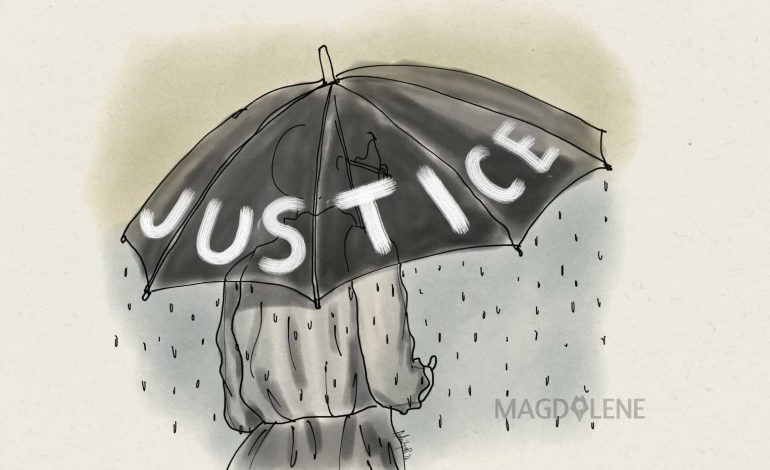
Ilustrasi oleh Karina Tungari