Will Anarchism Face the Same Fate as Communism in Indonesia?

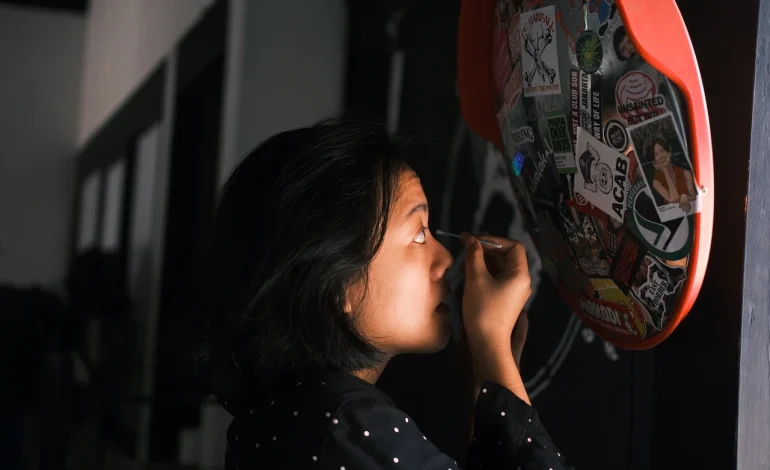
Jorgiana Augustine (28), a graduate law student who volunteers as a paralegal, attends Jakarta’s May Day wearing only a blue t-shirt, leggings, and a sling bag. Jorgiana, or known as Oji, plans to hang out afterward, expecting the demonstration to remain peaceful—unlike many recent protests in Jakarta. The festive atmosphere, with bands performing on a stage in front of the House of Representatives building, seems to confirm her optimism.
She had not anticipated that her attendance would make her a suspect, with national media outlets identifying her as an “anarchist intruder” at the protest. This characterization emerged after police held a press conference, making such claims.
“The use of the term ‘anarchist intruder’ carries a negative connotation, making it seem as if the word ‘anarchist’ is criminal when it really is just an ideology or idea,” says Oji.
Oji is one among 14 people arrested and charged as suspects during Jakarta’s May Day, including three of her paramedic colleagues. May Day protests in Bandung and Semarang also claimed to have been infiltrated by some anarchist collective, leading some to become suspects as well.
While Indonesia does not prohibit people from holding an anarchist ideology—unlike communism or Marxism-Leninism—police commonly label detained protesters as a part of the anarchist movement. Tough Oji is never part of any anarchist collective.
Oji files a complaint with the Press Council about media coverage that identifies her as an “anarchist intruder”. While this led one outlet to change its headline, many publications maintained their original framing. Oji wants to make the media platform understand that it is a problem to keep using the authority’s frame of “anarchist” and “intruder” to identify demonstrators or paralegals.
Cho Yong Gi (22), a paramedic who became a suspect on the May Day protest, says that soon after the police arrested him, they questioned him whether he was a part of the anarcho movement or not. “It was the second question after they asked my identity,” he says.
Also read: Apa itu Darurat Militer dan Kenapa Bisa Ancam Masyarakat Sipil?
Anarchism in Indonesia
The Indonesian Police Institution publishes a video series called “Police Answer: Chaos, Police Hunts Anarcho” on their official website. The series claims that anarcho-syndicalist groups have provoked some demonstrations and led them into chaos in recent years, citing the last May Day protests in Jakarta, Bandung, and Semarang as examples.
“Anarchist groups generally have the distinctive characteristic of intruding protests, [such as] wearing all black outfits, distributing propaganda through leaflets or graffiti, destroying the state symbols or public facilities,” says the voice-over in the series.
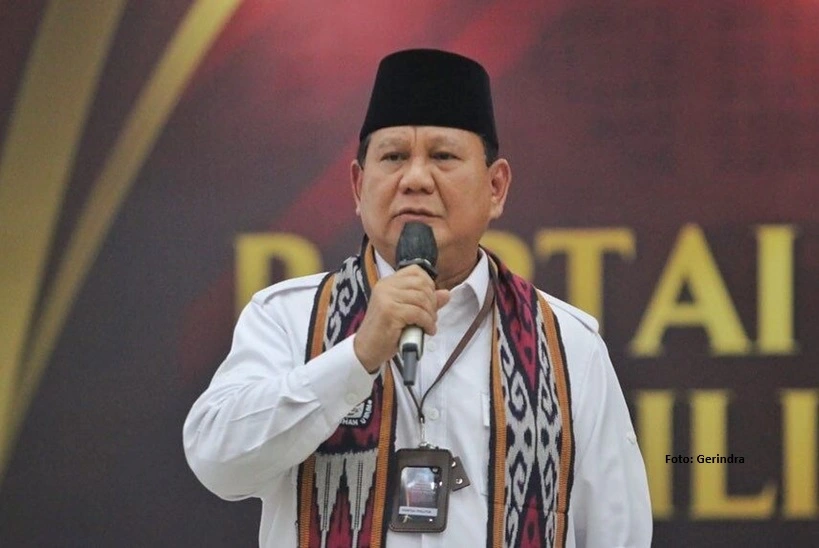
The video explains three police approaches to the anarcho movement, “intelligence, preventive, and proportional repressive,” which the publication says help balance freedom of expression with public order. Recently, the Police and Military Institution was also ordered by President Prabowo Subianto to take firm action toward “anarchist actions”.
When we requested an interview with two officials from the Indonesian Police Institution, as well as their public relations, none of them replied until this article was published.
Ferdhi Putra, an independent researcher and writer on the anarchist movement in Indonesia, states that the anarchist movement has grown in Indonesia since the 1998 Reformation and can now be found in both urban and rural areas across the country. However, there is a misconception of the movement that “anarchism is violence, so anyone who commits violence will be called an anarchist.”
The police had already used the “anarcho” label to describe protesters in Yogyakarta in 2018, with 11 people being detained. But Ferdhi argues this became a systematic pattern after then-National Police Chief Tito Karnavian declared that the institution would address Indonesia’s “anarcho-syndicalist problem”.
The statement comes after the regional police in Bandung arrested 619 people who wore black outfits, then publicly stripped off their clothes and shaved their heads. The West Java police institution’s fight against the anarcho community in Bandung continues until today, as they state, “anarcho is a common enemy” on their official website.
Ferdhi says the anarchist movement in Indonesia is very diverse. While there are some who use vandalism as a tactic, mainly toward authority symbols, such as police stations, not every vandalism comes from the anarchist movement.
With the current pattern, Ferdhi argues that the anarcho movement can be a new “communist” where the authority identifies a common enemy based on their ideology. “This is a repetition. They (the authority) used to target communists, then they targeted terrorists, now they target anarchists,” he says.
The challenge for authorities, Ferdhi explains, is that anarchists don’t have an organisation, structure, or leader, unlike communism in Indonesia. “The authorities are confused to identify who is responsible for the movement,” says Ferdhi.
Asfinawati, a law lecturer and academic at Indonesia Jentera School of Law, argues that Indonesian authorities still operate with the anti-subversive mindset from the New Order era under President Suharto. During that period, “subversive” activities were forbidden, and authorities could raid and confiscate printed materials, including books. The anti-subversive laws were revoked in 1999, and book-raiding rights ended in 2010.
“The police still adhere to authoritarian concepts in institutions. This is the most prominent indication in the anarcho cases,” says Asfinawati. “They don’t know that now we have freedom of thought. Even being an anarchist, as long as he doesn’t commit a crime, is not a problem.”
She sees the anarchist narrative as part of an old pattern. “In ‘65, communism was our common enemy. Under Susilo Bambang Yudhoyono, it was religious minorities, like Ahmadiyah or Shia. Then there is LGBT.”
Andi Achdian, a historian and lecturer from Jakarta’s National University, offers a different perspective, arguing that anarchism cannot be compared to Indonesian communism because communism had deep historical roots and significant political power through a party that was once among the world’s largest.
“It (anarchism) does not have a strong historical root,” says Andi.
Also read: Presiden Prabowo Minta TNI-Polri Ambil “Langkah Tegas Tindakan Anarkis”
Targeting Symbols
Rio Imanuel Adolf Pattinama (28), a rapper, was arrested along with friends after spray-painting graffiti that included the phrase“sudah krisis, saatnya membakar” (there is a crisis already, time to burn). Soon, they were arrested and labeled as “anarcho”.
During police interrogation, officers repeatedly asked who led the anarchist movement. Rio and his friends were later convicted of making “false news, deliberately causing unrest among the people” and imprisoned in 2020. Evidence used against them included a black t-shirt with the Circle-A symbol and some books, including a book written by Tan Malaka, a national hero, titled “Mass Action”.
“Whenever there is chaos, it is always labeled as anarcho even though there is no legal basis,” says Rio. “Anarchists have become the new scapegoat to replace the PKI (the Communist Party).”
Unlike the communist label, which can lead to severe social discrimination and exclusion, Oji says the anarchist designation hasn’t created significant social stigma in her daily life. “The real disadvantage is that it prevents people from studying different perspectives and ideologies,” she explains.
Oji and three colleagues face charges under two Criminal Code articles, disobeying authority (Article 216) and coming in a crowd and deliberately not leaving immediately after being ordered three times by the authority (Article 218). On the other hand, Simultaneously, Oji is suing the police for alleged sexual violence, and her three colleagues are suing the police for alleged abuse during their arrest. Both cases, where they are the suspects and have reported back on the arresting process, are still ongoing.
Also read: Serba-Serbi Respons ‘Absurd’ DPR: ‘Demonstran Brengsek’ hingga ‘Takut Enggak Bisa Pulang’
Despite their legal troubles, they continue working as a paramedic at demonstrations during Prabowo Subianto’s young administration. Meanwhile, police continue arresting hundreds of protesters and labeling them as anarcho or anarchist groups, as seen in incidents as recent as August.
We contacted and requested interviews with the Head of the Public Relations Division of the Indonesian National Police, Trunoyudo Wisnu Andiko, on 19 August; with Ade Ary Syam Indradi—the officer who labeled the cases of Jorgiana Augustine and Cho Yong Gi as “anarchist” cases—on 26 August; and with media relations officer Jihan Isnaini on the same day. Trunoyudo and Ade Ary did not respond at all. Jihan initially replied to my first message but stopped responding after I mentioned the subject of the interview request.
Forbidden Stories supports securing the reporting files in their SafeBox.
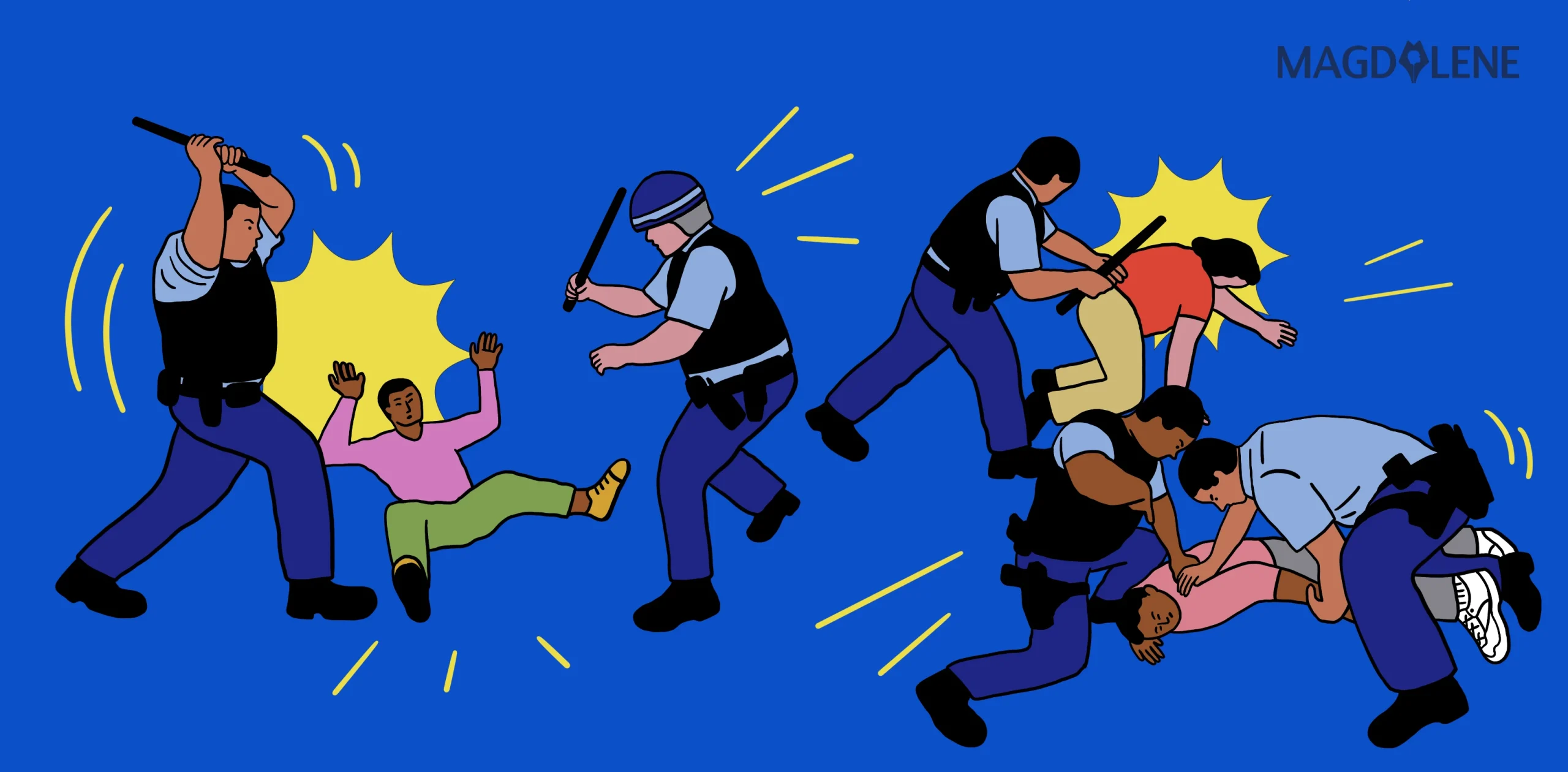
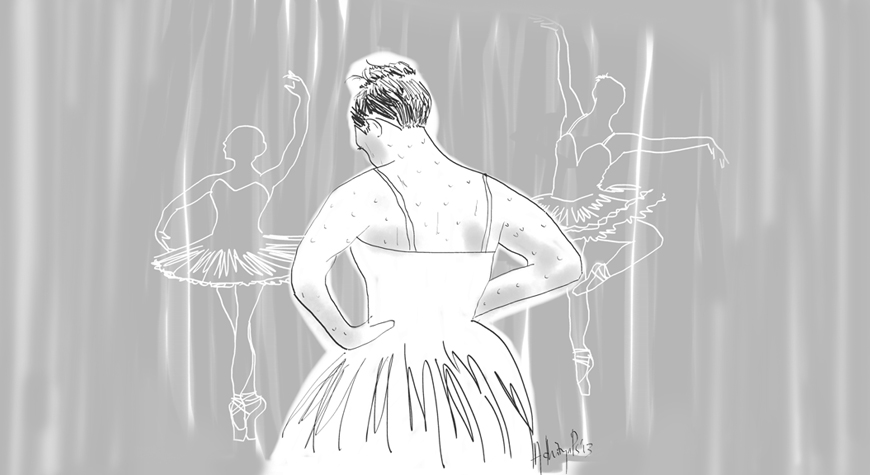
Ilustrasi oleh Karina Tungari