An Ask on Our 12th Anniversary

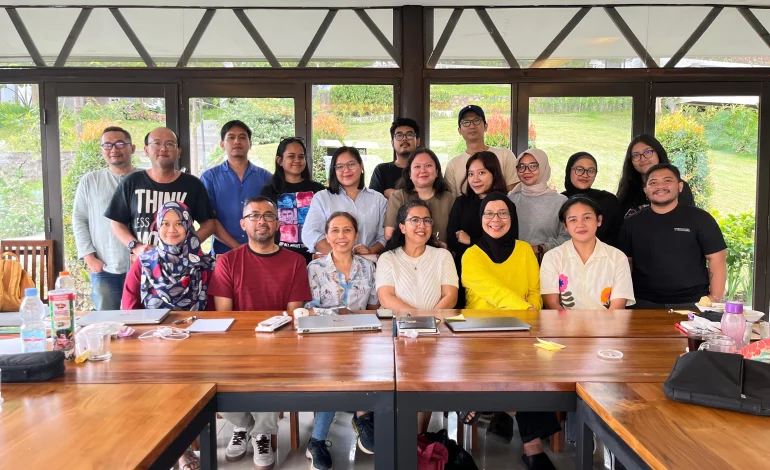
Today, September 19, Magdalene celebrates its 12th anniversary. In human years, this is a significant time that marks the onset of the tween years and early adolescence, a transition from childhood to teenagerhood. It is also a period when immense physical, emotional, and social changes can turn disruptive, if not managed well.
As its leader, and one of its founders, I can attest to all the challenges. While I feel immensely proud of where we are today, the growing pain is there to continuously remind me that quality and responsible journalism is a life-long work for those truly committed.
This is especially true at a time when the good work of journalism faces unprecedented pressures. Over the past decade, news media around the world have been bruised, battered, and in constant survival mode.
Also read: Satu Dekade Mengikis Patriarki: Refleksi 10 Tahun Magdalene
In Indonesia, both large and small media organizations struggle to survive financially. Their business models are disrupted by asymmetric competition with content creators, aggregators, Artificial Intelligence, homeless media — in an ecosystem completely controlled by mega-powerful platforms. And all these while having to navigate an oligarchic political climate that would rather feed an army of buzzers than support a healthy free press. Political pressures are more subtle but with equally grave impact.
Legal threats, covert censorship, or manipulations of commercial space, such as native ads or partnerships that disguise political, economic, or reputational interests.
These rapid changes in the media economy and political pressures impact journalists’ lives directly. In recent years, large media conglomerates and mid-sized newsrooms have carried out massive layoffs, leaving thousands of journalists jobless. The media industry that flourished after the 1998 Reformasi, with over 40,000 outlets (by some estimate), have never looked paler. According to the Press Council, by 2024, 5,019 media companies were active, 77.4 percent of which are online. For every new media founded by journalists who had been laid off, many have ceased operations or remain dormant, leaving only a small fraction continuing.
Amidst all this, Magdalene has continued, and I attribute our resilience to many things—chief among them the conviction and dedication of a mission-driven team, and the heartwarming trust and support of the public.
We have grown from a very humble beginning: two people plus one intern. Growth has been slow, as you would expect from a tiny organization run by its founders without external capital. For many years, we managed while holding two or three other jobs, until a significant grant in our sixth year allowed us to leave our day jobs and build a small team. Today, Magdalene remains a small organization of under 30 people, but still nearly ten times larger than at the start.
The slow growth has given us consistency. It allowed us to stay true to our core and mission, learning from both our own successes and failures, as well as those of others. Most importantly, slow growth enabled us to uphold the intersectional values embedded in Magdalene’s DNA. These values guide every decision—from recruitment and HR policies, to community activities and editorial products—ensuring inclusion in everything we do.
This growth also led to a strategic partnership last year with The Jakarta Post Group. This partnership has given us space and time to (in the words of a fellow media founder) “breathe longer,” explore our potential, adjust to changing audience behaviors, and develop a sustainable business model.
Growth is not only measured in size. Over twelve years, we have worked to strengthen our position as a community-driven media organization. From youth leaders, media practitioners interested in gender perspectives, to writers and book lovers, engaging with diverse communities allows us to widen our reach beyond echo chambers and foster positive social change.
Also read: Our Lives as Start-up Editors
The Evolution of Our Approach
Perhaps the most noticeable evolution, if you’ve been following Magdalene for some time, is how we use social media and technology to reach audiences. Mindful of our largely Gen-Z and millennial audiences, we continue to experiment with new ways to deliver stories. Our focus includes audiovisual content—podcasts, long-form videos, and short-form videos. We also run annual data journalism projects and develop new columns, including Madge PCR (focused on relationships), the Environment column on climate change, and Wave for Equality, a campaign supported by the Investing in Women initiative that focuses on care economy-related issues. These initiatives create a complementary content ecosystem, keeping Magdalene innovative and adaptive.
Our social media channels—Instagram, TikTok, YouTube and others—are not only used to share our content; they also serve as listening posts to track issues, hear audience feedback, and engage them directly. Formats range from simple explainers, moving comics, sharable memes, polls, “Add Yours” templates, to content competitions. All of this ensures we remain relevant in a fast-moving, algorithm-driven media landscape.
Social media has also become an extension of one of our pillars: solutions-driven journalism. Through Constructive Journalism, we aim to restore public interest and trust, while shifting focus from bad news to impact, dialogue, and engagement. This approach offers a more hopeful and empowering reading experience, encouraging audience loyalty and community participation.
Constructive Journalism began as a movement in Denmark and Northern Europe to address declining trust in media. It explores issues in a nuanced, solution-oriented, and engaging way. As a pioneering outlet adopting this framework in Indonesia, Magdalene has applied it across content and community activities, as well as sharing it through workshops for journalists nationwide.
As a small media organization, we are also aware of the importance of collaboration as a survival strategy in Indonesia’s resource-constrained, noisy, and hyper-competitive media ecosystem. Earlier this year, with support from International Media Support, Magdalene initiated the Women News Network (WNN), a collective of nine women-led and women-focused media organizations from seven provinces.
WNN embodies the principle of “women supporting women,” rather than competing or undermining each other. We leverage solidarity, shared resources, and collective influence to stay financially viable, credible, and impactful in a challenging media ecosystem.
This collaborative approach is even more crucial as political and legal pressures heavily affect media health. As a journalist who started my career on the eve of the 1998 Reforms, I witnessed a nation swept with hope alongside newfound political freedom and democracy. Over the past 25 years, however, many opportunities have been lost as democratic quality has declined, bringing us to today’s reality.
Also read: Era Baru Kolaborasi, ‘Magdalene’ Lakukan Kerja Sama Strategis dengan ‘The Jakarta Post’
Recent nationwide protests over parliamentarians’ high remunerations, ill-advised government economic policies, and police violence resulting in deaths remind us of the fragility of democracy and the importance of civil society in keeping those in power accountable.
When democracy is under threat, press freedom often acts as the canary in the coal mine. Intimidation, such as the delivery of a pig’s head to Tempo newsroom, and the deaths of journalists investigating critical stories, remind us that press freedom should never be taken for granted.
In the era of algorithms, AI, and the attention economy, supporting quality journalism has never been more urgent. Countering misinformation amplified by AI and algorithms, holding power accountable, and providing context in a fast-moving information landscape are just a few reasons why. Through editorial and community work, Magdalene aims to strengthen critical thinking and media literacy while ensuring space for diverse voices and inclusive perspectives.
So on our 12th anniversary, we have a simple ask: support independent media. Read, like, follow, share and contribute in ways that you can. We are here, fully committed, but your support matters to our survival.