Indonesia’s Digital Counterrevolution: How Authorities Outsmarted Social Media Uprisings

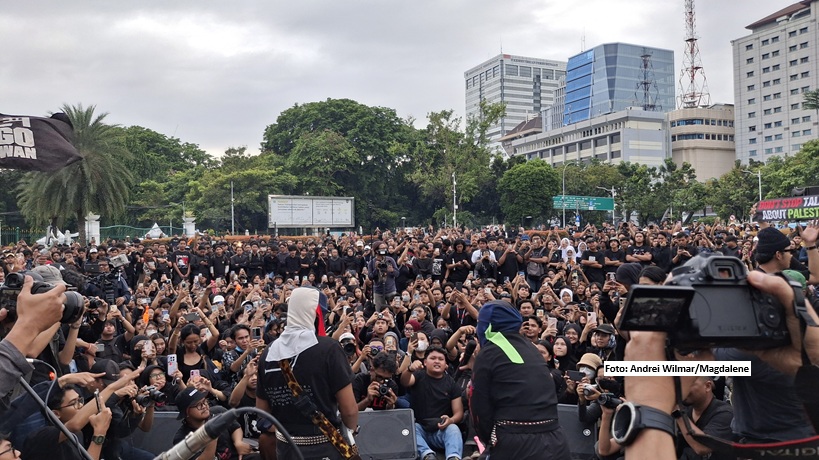
When Gojek co-founder Nadiem Makarim was led away in handcuffs on Sept. 4, 2025, he was overheard offering condolences to Affan. By then, the nationwide unrest over the death of Affan Kurniawan—a 21-year-old Gojek driver killed by police during demonstrations—had largely subsided. Yet here was Indonesia’s former education minister and tech billionaire, facing corruption charges in an unrelated case, invoking the name tied to the country’s most sophisticated social media uprising to date.
The timing was not coincidental. Makarim’s arrest, linked to a US$115 million Chromebook procurement scandal, was also political theater. It showed how authorities now manage dissent in the digital age: not through brute repression, but through carefully staged prosecutions, narrative deflection, and strategic use of social media platforms. His downfall was less about corruption than about signaling—to protesters, tech elites, and international observers—that the state remained firmly in control.
Also read: Ribuan Massa Demo di DPR Tuntut Penarikan Tunjangan Anggota DPR
From suppression to deflection
The evolution of Indonesian government responses to protest movements reveals a sophisticated adaptation to digital-age resistance. In 1998, Suharto’s fall was met with traditional suppression: military deployment, censorship, and brute force against student organizers. The New Order’s “responsible openness” was a contradictory mix of limited democracy and harsh repression. Protests were organized through campus networks and NGOs, and Suharto’s collapse owed as much to elite defections and economic crisis as to people power.
Fast forward to 2020. The protests against the omnibus labor law marked a digital turning point. Organizers coordinated across Instagram, Twitter, and WhatsApp. The government responded with “online-offline” power struggles—unleashing massive buzzer politik campaigns that drowned dissent and spread intimidation.
Buzzers—coordinated online operatives, often paid—became impossible to ignore. They amplified state messaging, discredited protesters, and simulated grassroots support. Activists, however, also fought back: young K-pop fans mobilized counter-hashtags and memes, transforming fandom literacy into political savvy.
The result was a noisy battle for visibility, not a conversation. By 2025, Indonesian authorities had refined this contest into a three-pronged playbook: platform weaponization, narrative deflection, and strategic prosecution theater.
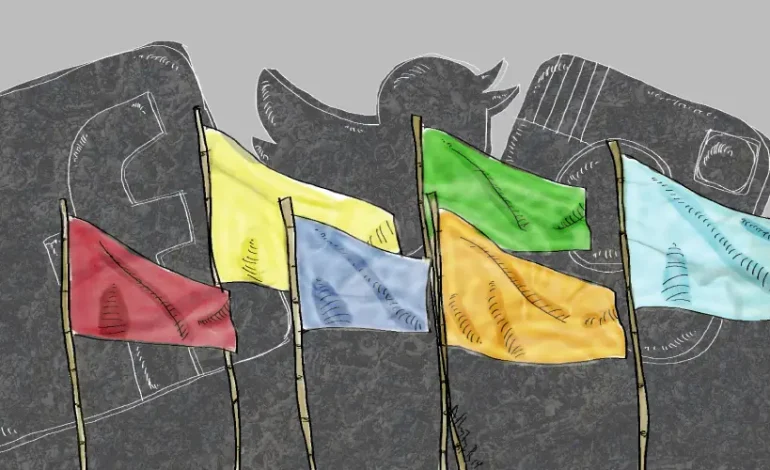
The most striking innovation in August 2025 was not state censorship, but how the government persuaded platforms to do its bidding. TikTok suspended live streaming in Indonesia, citing “escalating violence.” This instantly dismantled a key organizing tool honed through years of protest.
Officials framed the request as a matter of public order, but NGOs documented behind-the-scenes pressure. Instead of shutting down the internet—a blunt tool familiar in authoritarian regimes—Jakarta outsourced repression to platforms, maintaining plausible deniability while achieving the same effect: severing real-time coordination and muting viral evidence of police abuse.
Other censorship persisted. The Indonesian Broadcasting Commission instructed outlets not to air scenes of brutality. But the TikTok suspension signaled a qualitative shift: protesters’ own success at using live-streaming became the vector for their suppression.
Also read: Pengeluaran 3 Juta Dicap Super Kaya: Logika Keblinger Negara yang Korbankan Warga
Suharto’s playbook: Digitized
Parallel to platform pressure, authorities dusted off old authoritarian scripts. Former intelligence chief A.M. Hendropriyono alleged foreign orchestration behind the protests, echoing Suharto-era tropes of “hidden hands.”
Officials leaned on Meta, YouTube, and X to remove posts documenting police violence. Police arrested dozens of activists and online users for “inciting unrest,” a move widely criticized as criminalizing expression. President Prabowo revived familiar rhetoric branding civil society groups as “foreign lackeys.”
The message was clear: opposition inside Indonesia was illegitimate, its grievances reframed as tools of foreign interference.
Authorities also mastered symbolic concessions. President Prabowo imposed a moratorium on parliamentary perks and overseas trips but sidestepped deeper issues of inequity. The dismissal of Mobile Brigade Commander Cosmas K. Gae after Affan’s death served as a high-profile sacrifice.
The punishment looked like swift justice but avoided scrutiny of systemic crowd-control practices. The commander claimed he was following “orders,” inadvertently pointing to institutional failures. By scapegoating individuals, the government preserved the doctrines that made such violence inevitable.
Nadiem Makarim’s arrest fit this choreography. While the investigation predated the protests, the timing—charges unveiled as unrest subsided—was strategic. It sent layered signals: to protesters, that elites are not untouchable; to tech leaders, that sympathy with dissent carries risks; and to international audiences, that Indonesian institutions act against corruption.
Such selective prosecutions create an image of accountability while preserving the structures that spark protest.
Also read: #MerdekainThisEconomy: Korupsi itu Patriarkal, Pancasila itu Emansipatoris
Diaspora activism and nationalist pushback
The August 2025 protests marked a novelty: Indonesian diaspora communities moved from supportive spectators to active participants. Students in Australia, Singapore, and the U.S. became real-time influencers, translating and amplifying content while staging protests abroad.
In 1998, diaspora involvement was marginal; even during 2019’s #ReformasiDikorupsi, it remained supportive. By 2025, diaspora voices carried credibility—seen as detached yet informed. This transnational activism posed unique challenges for a state skilled at policing domestic space.
Jakarta could pressure local platforms and jail domestic organizers, but it could not silence students in Melbourne or Los Angeles livestreaming solidarity protests. The government responded by delegitimizing diaspora voices as “foreign interference,” reasserting nationalist boundaries in digital spaces that ignore geography.
Indonesia’s digital counterrevolution raises hard questions. Since 2019, protesters have grown more adept at gaming algorithms and mobilizing networks. Yet authorities have consistently adapted faster, refining neutralization tactics without overt repression.
The early belief that social media inherently favored grassroots democracy looks increasingly naïve. With state resources and platform leverage, incumbents can weaponize digital tools as effectively—if not more—than challengers.
Indonesia now offers a blueprint for digital-age authoritarianism: pressure platforms, manipulate narratives, stage accountability theater. These tactics preserve international legitimacy while muting dissent.
But they may only postpone deeper reckonings. The economic grievances, institutional failures, and police impunity that drove the August 2025 protests remain unresolved. Tactical victories cannot substitute for systemic reform. The next wave of protesters will adapt in turn. The only question is whether Indonesia’s leaders can continue outpacing movements indefinitely—or whether this digital cat-and-mouse game will eventually collapse under the weight of unaddressed injustices.