Society has become increasingly comfortable discussing men’s loneliness as a social crisis. We call it a “male loneliness epidemic” and ask what masculinity, social isolation, declining community, changing relationships, and pressure to appear emotionally self-sufficient have done to men.
Yet when women, particularly eldest daughters, describe the effects of caring for siblings, managing household responsibilities, accommodating parents, and carrying everyone else’s emotional needs, we use a different term: “eldest daughter syndrome.”
Why does his suffering become an epidemic while her survival becomes a syndrome?
This is not an argument against taking male loneliness seriously. Loneliness is real, painful, and socially consequential. Men deserve friendship, emotional intimacy, community, and spaces where vulnerability is not treated as weakness. But if socially produced suffering deserves structural attention, we should extend the same generosity to women.
In her song “Eldest Daughter,” Taylor Swift evokes the eldest daughter as “the first lamb to the slaughter”: someone who learns to protect herself by appearing tougher than she feels. The image resonates because many eldest daughters are praised for being strong long before anyone asks why they had to become strong.
Read also: ‘Eldest Daughter Syndrome’: Beratnya Jadi Anak Sulung Perempuan
What “eldest daughter syndrome” leaves out
Eldest daughter syndrome is not a recognised psychiatric diagnosis. It is a popular term for experiences commonly associated with being the eldest daughter: excessive responsibility, perfectionism, people-pleasing, emotional caretaking, difficulty asking for help, and guilt when prioritising oneself.
Giving people language for their experiences can be valuable. A label can provide recognition and the relief of knowing they are not alone. But describing the consequences does not necessarily explain their cause.
If a girl becomes hyper-responsible because she is repeatedly expected to care for younger siblings, manage the household, mediate family conflicts, or emotionally support her parents, the more important question is not what syndrome she has. It is why those responsibilities were placed on her.
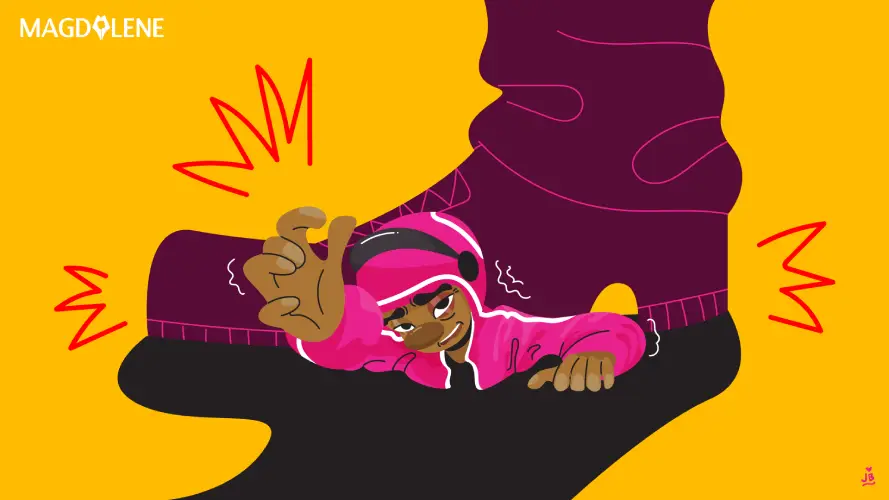
This is where parentification matters. A child does not choose to become a substitute parent. She does not create the family circumstances that require her to grow up prematurely, nor does she invent the gender expectations that tell her to be caring, patient, accommodating, and self-sacrificing.
Yet the label follows the child: she has the syndrome. Perhaps we should ask instead: Who parentified her?
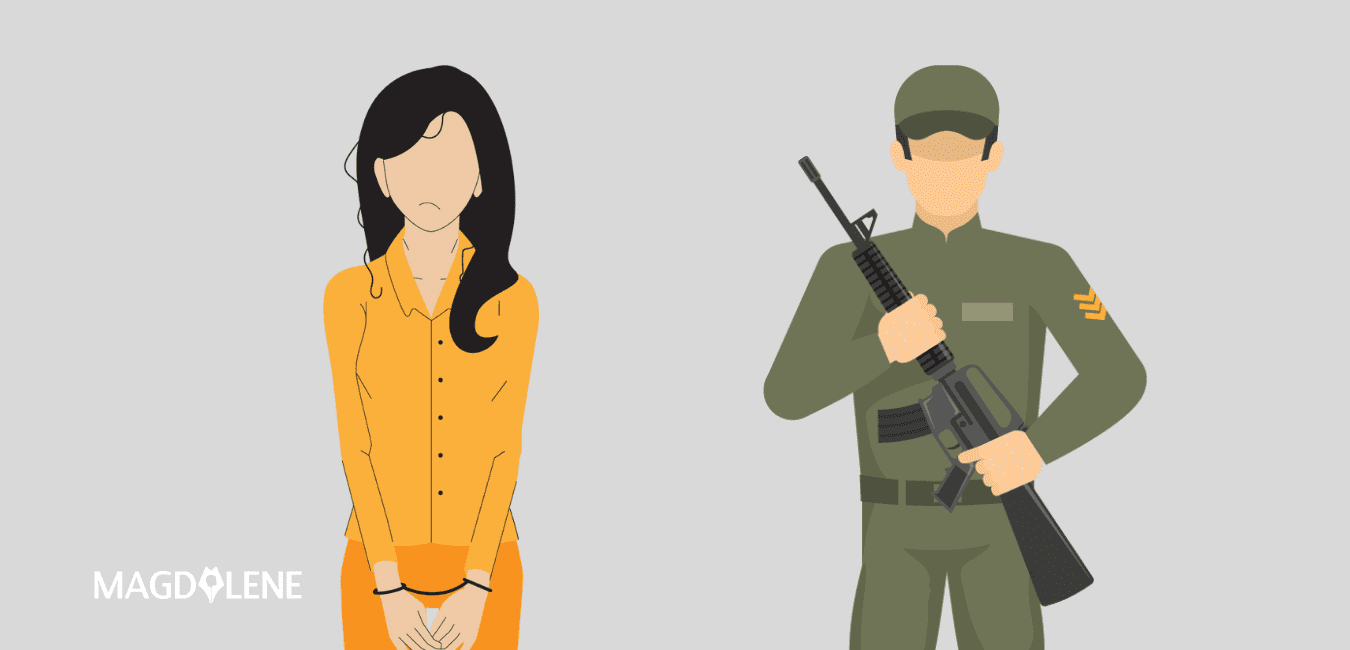
Patriarchal societies praise girls for being mature without asking what that maturity has cost them. She has always been responsible. She can handle it. She understands her parents. She is such a good older sister. These statements may describe genuine strengths, but “maturity” can also be the socially acceptable name for a child carrying responsibilities that belong to adults.
Because these expectations are gendered, this is not simply a story about birth order. It is also a story about who is expected to care.
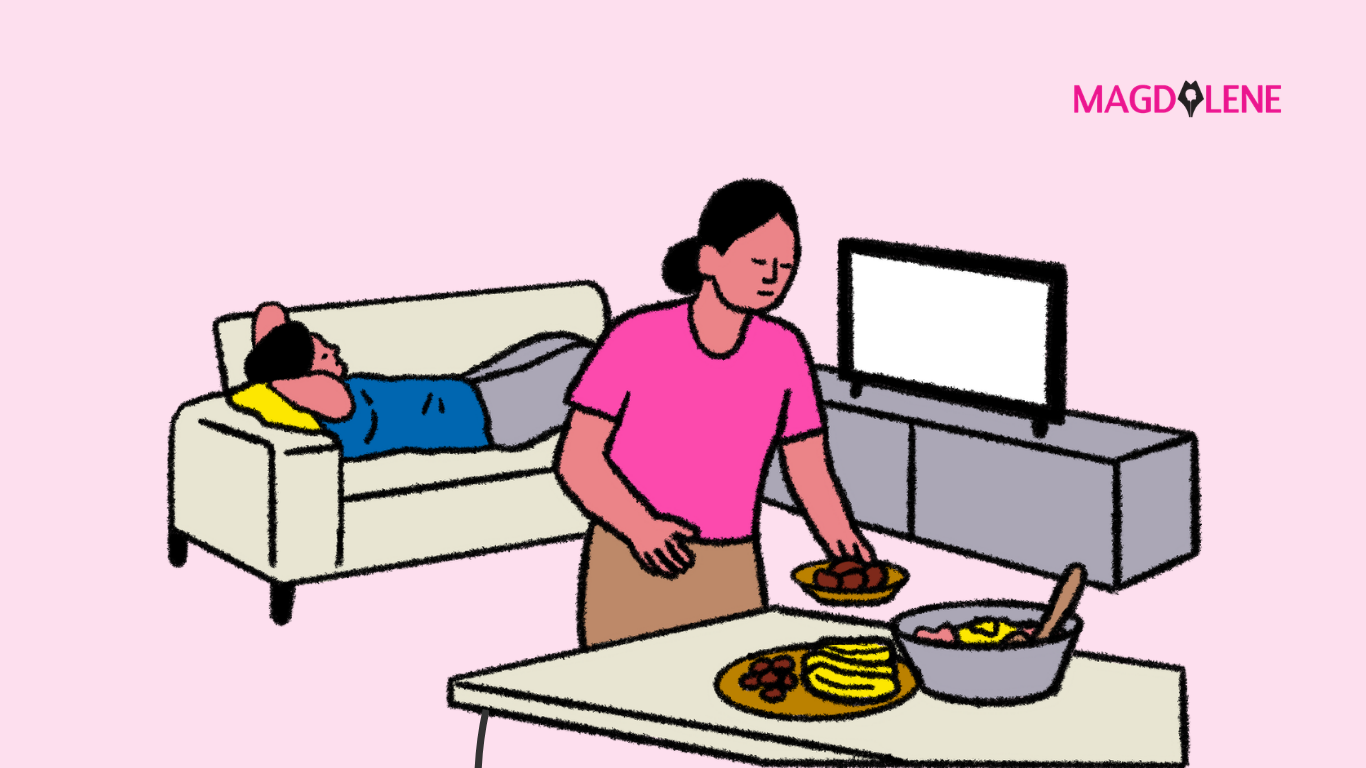
Girls are often pushed into caregiving earlier and more intensely than boys. They may be asked to look after younger siblings, perform household work, mediate disputes, and maintain family relationships. The eldest daughter becomes the convenient person to absorb whatever the family cannot—or will not—carry.
Years later, the consequences are treated as personality traits. She is controlling. She cannot relax. She struggles to ask for help. She needs better boundaries. She is a perfectionist who needs to heal.
All of that may be true. But before asking how she should change, we should ask what happened to her.
Read also: Women Are Less Happy Than Men?
Why “epidemic” directs us upstream
The word “epidemic” does something rhetorically powerful. When we hear about a male loneliness epidemic, we are encouraged to look beyond the individual man.
We ask what happened to male friendships and community life. We examine how masculine norms discourage vulnerability and emotional intimacy. We consider how economic and social changes affect relationships, and what families, communities, institutions, and governments might do in response.
In other words, we look upstream. We do not automatically assume a lonely man is personally defective; we investigate the environment that helped produce his loneliness.
We should do the same for eldest daughters.
If an eldest daughter learned that her value came from being useful to everyone else, what family and social structures taught her that lesson? If she struggles to receive care, why was she so often expected to provide it? If she feels guilty when prioritising herself, why was self-sacrifice repeatedly rewarded as a feminine virtue?
The problem is not that “syndrome” is inherently sexist or “epidemic” inherently progressive. It is where these words direct our attention. “Syndrome” can draw our gaze towards an individual’s symptoms, coping mechanisms, and recovery. “Epidemic” encourages us to consider prevalence, environment, institutions, and social causes.
These distinctions are not absolute. Many discussions of eldest daughter syndrome acknowledge gender norms and family structures. Conversely, male loneliness is sometimes reduced to individual failure—or turned into a misogynistic story in which men are supposedly lonely because women have become too independent.
That is not structural analysis. It merely shifts the blame from individual men to women.
We should be able to recognise that men’s loneliness is shaped by gender norms without blaming women. We should also be able to recognise that eldest daughters can be deeply affected by gendered family expectations without treating those consequences as personal defects.
Read also: Hormat Saya Untuk Kakak Perempuan, Si Sulung yang Martir
Look beyond the person carrying the consequences
Instead of asking what is wrong with eldest daughters, we could ask what was expected of them. Instead of asking why men cannot make friends, we could examine which forms of masculinity make intimacy and vulnerability difficult. Instead of asking why she needs to learn boundaries, we could ask why she became responsible for everyone else’s needs in the first place.
Individual healing matters, but it cannot do all the work. Psychotherapy may help someone recover from parentification, but it cannot by itself redistribute unpaid care work within a family. A woman can learn to say no, but that does not dismantle the expectation that daughters should always say yes. A man can learn to communicate his emotions, but that alone will not transform a culture that equates vulnerability with weakness.
Perhaps the real issue is who gets to be understood as someone shaped by forces beyond their control.
We often try to understand men through the structures that formed them, but do not always extend the same structural imagination to women. The eldest daughter is praised for her resilience rather than asked why she needed so much of it. Her ability to endure becomes evidence that she can endure more. Her responsibility justifies giving her more responsibility, while her competence becomes an excuse not to care for her.
When the consequences finally appear, we give them a name: syndrome.
Naming an experience should be the beginning of analysis, not the end. A child does not choose parentification. A daughter does not create gendered expectations, just as a man does not necessarily choose the masculine norms that leave him emotionally isolated.
If men’s loneliness can be understood as something society helps produce, women’s hyper-responsibility can be understood the same way. His loneliness may be a social crisis. Her exhaustion may be one too. The real difference lies in where we choose to look for the cause—and whether we are willing to look beyond the person carrying the consequences.