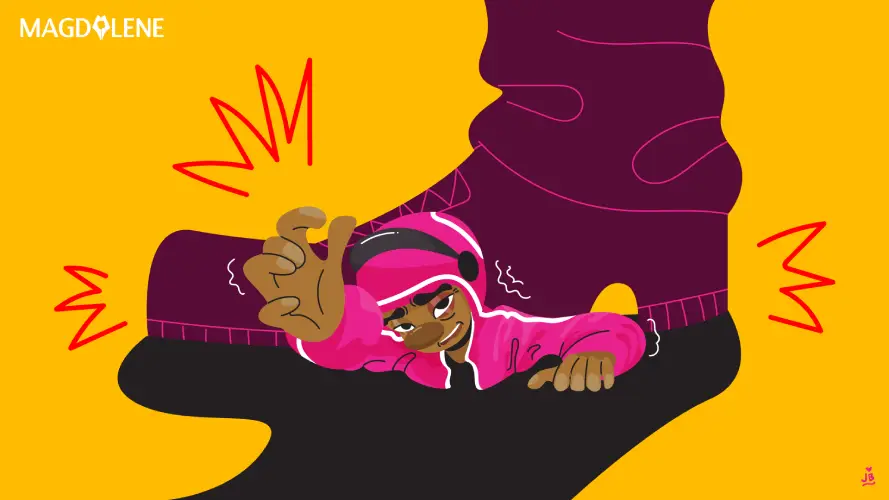
“Aulia” lay curled up on an emergency room bed, their body contorted by unbearable pelvic pain. It was not the first time endometriosis had driven Aulia to the hospital in the middle of a menstrual cycle.
Yet the physical agony was only half the burden.
The other half was the weight of an unyielding reality: Aulia is not a cisgender woman, even as the world around them continues to treat menstruation as exclusively women’s business.
“I don’t view myself as a woman, but I accept that my body menstruates,” said Aulia, who is nonbinary.
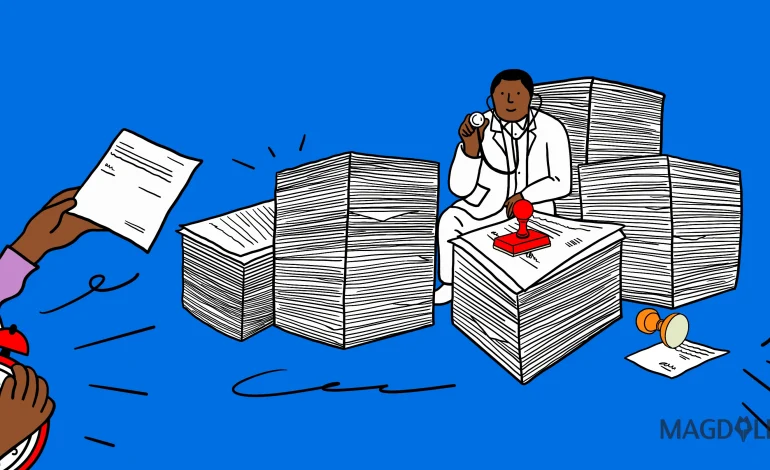
At work, rather than receiving empathy, Aulia said their sick leave is often met with suspicion, dismissed as laziness or an excuse. It is the direct consequence of a workplace that lacks inclusive menstrual policies.
“When the pain becomes too severe and the workplace offers no safe space, my final defense mechanism is simply detachment,” Aulia said.
“I choose the ER or take time off without worrying about how management reacts. Survival mode, if you will.”
Aulia’s story exposes a glaring blind spot in a policy long considered progressive.
Indonesian labor law guarantees the right to menstrual leave. But the law was written and enforced under a rigid assumption: that only women menstruate.
The question remains: What happens to those who do not identify as women, yet go through the same biological cycle?
Does the law truly afford dignity, or does it merely reinforce marginalization?
Read also: Why Menstrual Leave Could be Bad for Women
Bearing the taboos alone
“Banyu,” a 33-year-old trans man from Surabaya, experienced a similar dilemma before starting testosterone replacement therapy.
For years, he navigated psychological trauma and workplace taboo every time his period arrived.
“In my previous workplace, a menstrual leave policy practically didn’t exist,” he recalled.
“Besides, talking about menstruation is deeply taboo. For many trans men, discussing it triggers intense gender dysphoria. Requesting menstrual leave is equivalent to outing yourself or bracing for uncomfortable interrogation.”
According to Banyu, the topic is often suppressed within the trans male community because it is considered too sensitive. This makes it difficult for them to support one another when facing reproductive health issues.
“Raya,” another trans man in Surabaya who works as a psychologist and entrepreneur, views things through a different lens.
Raya, who chose not to undergo hormone therapy for health reasons, sees menstruation as a natural function of the uterus rather than a source of gender dysphoria.
“For me personally, menstruation doesn’t trigger gender dysphoria because I see it objectively as a biological process,” he said.
“However, the social stigma is brutal. Society uses menstruation to mock trans men, as if that blood erases our manhood. The problem isn’t the biological cycle itself. It’s the belief that a trans man who menstruates is somehow ‘less of a man.’”
Raya said he was fortunate because his family, most of whom work in medicine, taught him plain language about the body from a young age.
“Menstruation, for instance, was just called menstruation,” he said.
“Not ‘the monthly guest’ or ‘that time of the month.’”
Read also: I Am a Woman, Even If I Do Not Menstruate
Public spaces are not always safe
The dilemma for non-cisgender people during menstruation extends far beyond workplace leave. Accessing safe public restrooms can pose a real threat to their physical safety.
Aulia often finds themselves hesitating in the hallway of public toilets. If the line for the women’s restroom is too long, they sometimes step into the men’s room, only to be met with bewildered stares.
For trans men whose appearance is fully “passing”—meaning they are read by society as cisgender men—the situation is reversed.
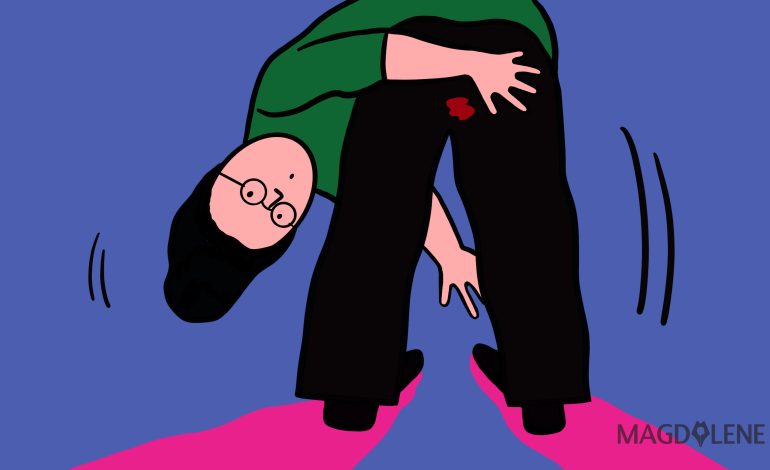
Entering a women’s restroom while carrying sanitary products can trigger panic, while using the men’s room carries the risk of harassment or violence if their biological reality is exposed.
Banyu resorted to an extreme measure: asking permission to go home every time he needed to use the bathroom while on his period.
Fortunately, his office was only a 15- to 20-minute motorbike ride away.
If he was caught in an emergency while traveling long distances, his only safe option was finding a convenience store with a single-occupancy, unisex restroom.
Raya, who always keeps a pouch of pads in his car, describes safety as a shadow that never leaves.
“Because my presentation is passing, my biggest fear in public spaces is safety, the threat of persecution if people discover my biological status,” he explained.
Even something as simple as buying pads at a convenience store counter became a psychological ordeal for Banyu, who used to conceal them beneath soap, toothpaste, and snacks.
“The overwhelming mental burden comes down to this feeling: ‘I shouldn’t be menstruating,’” he said.
The same struggle follows them into healthcare settings.
Indonesian ID cards only offer two gender options. When Aulia seeks medical care while doubled over in excruciating endometriosis pain, healthcare staff automatically address them as Mbak or Ibu. Explaining their gender identity in the middle of a medical crisis takes energy they simply do not have.
Banyu now feels a sense of relief since hormone therapy stopped his menstrual cycle. But he acknowledges a new challenge: trans men still require periodic gynecological exams to monitor uterine health, yet reproductive healthcare facilities are rarely equipped or welcoming toward trans patients.
Read also: Why Do We Have to be Ashamed of Menstruation
Toward dignified menstruation for all
The experiences of Aulia, Banyu, and Raya align closely with the framework established by Radha Paudel, founder of the Global South Coalition for Dignified Menstruation, in her book Dignified Menstruation: A Handybook (2019).
Paudel emphasizes that dignified menstruation is not merely a matter of sanitary pads or clean water. It is a fundamental human right, free from stigma, shame, discrimination, and violence.
Championing this right for everyone does not erase the experiences of cisgender women. Rather, it expands our framework of justice.
The umbrella term “menstruating people” is a simple recognition that menstruation can be experienced by anyone with a uterus, including nonbinary people and trans men.
In practice, this means providing sanitation facilities that are truly gender-neutral: single-stall restrooms without rigid binary signage, equipped with proper disposal bins in all facilities.
Workplace language and policies must also evolve, shifting from “female employees” to “any worker who experiences menstruation,” while ending the systemic skepticism toward workers suffering from severe menstrual pain or endometriosis.
Healthcare services must similarly become more gender-sensitive.
Medical staff can start with something as simple as asking a patient’s preferred form of address before an examination, rather than relying on assumptions. Equally vital is fostering open reproductive health literacy within gender-minority communities, ensuring that routine uterine checkups are no longer met with fear.
For Raya, dismantling the patriarchal and transphobic stigma surrounding menstrual blood is an imperative step if Indonesia is to build a more empathetic society.
“Trans men can menstruate, and that is okay. Nonbinary people menstruate, and that is okay. Cisgender women menstruate, and that is okay,” Raya emphasized.
“We must dismantle the stigma that ties menstrual blood to forced gender roles, and see it for what it truly is: a natural human bodily function.”
As long as Indonesian legal policies, healthcare services, and public facilities continue to confine menstruation within a rigid binary box, the right to dignified reproductive health for people like Aulia, Banyu, and Raya will remain a long, silent struggle.
This article was written as part of the Dignified Menstruation fellowship. All names have been changed for their safety.
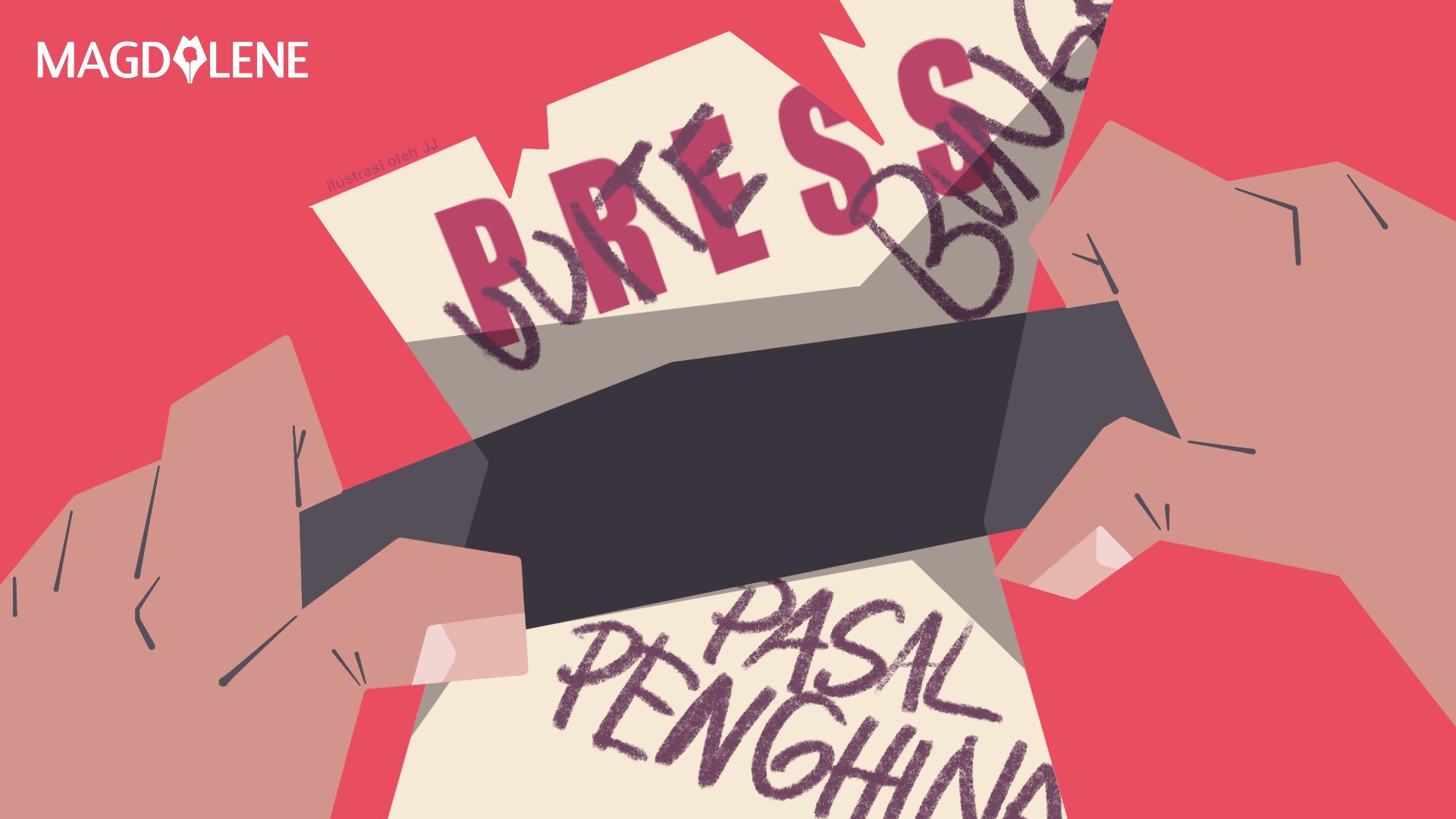
Ilustrasi oleh Karina Tungari