I read a recent ABC article about Australia’s Islamophobia envoy several times before I understood why it affected me so strongly. It was not only the report itself, or the frustration over government delays in implementing its recommendations. It was the emotional tone underneath the comments from Muslim communities: fear, exhaustion, not feeling heard, and the dread of “another Christchurch”.
I had heard that language before.
Part of why I am writing this for an Asian audience is because many people in the region may already understand something Australians still struggle to admit openly: these things rarely appear suddenly. Asia has a long memory when it comes to communal tension, racial politics, securitisation, and political hardening. The past six months of declining political standards in Australia may feel alarming, but they are not especially unfamiliar across much of the region. The emotional patterns are recognisable.
Reading the envoy article brought me back to Melbourne around 2017, when I took a secondment to the Islamic Council of Victoria as a senior policy adviser. I was a gay Chinese-Indian-Australian, not Muslim, and certainly not walking in with a fully formed theory of Islamophobia. Post-Orlando, I carried many of the fears other queer people carried then. Some of those fears were not irrational. That needs to be said honestly, because too much public discussion now demands ideological purity.
I honestly thought I was helping with a staffing issue, which sounds absurd to me now.
At the time, I was working at a senior level in multicultural policy. Muslim communities were under immense pressure, struggling to respond to what was happening around them. I thought perhaps I could help translate some things, steady the ship a little, and support policy responses. Why I thought I could help is complicated. But treating it as a staffing issue meant I was nowhere near as prepared to learn about Islamophobia as I thought.
I still remember standing at a Premier’s gala dinner when two senior government figures realised I had started this secondment. Their reaction startled me. They looked at each other almost in panic. “Why didn’t we know about this?” someone blurted out before catching themselves. I remember thinking, know about what exactly?
Read also: How to Deal with Islamophobia While Traveling Abroad
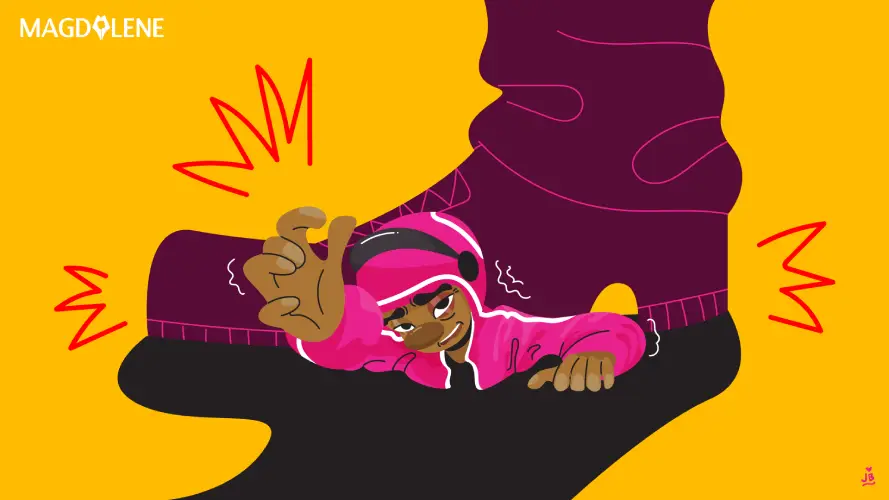
When civic life becomes a security problem
The atmosphere in Melbourne was intense then. Brighton. Terror raids. Endless commentary about extremism, Muslims, integration, and Australian values. It feels familiar now, which is why 2026 worries me.
In 2017, as today, you could feel the emotional temperature changing not only in politics, but in ordinary conversations. Looking back, I think that was part of what Muslim communities were trying, often unsuccessfully, to explain: the normalisation of suspicion comes before violence. We were trying to interrupt that cycle.
Then the “safe spaces” controversy exploded. One sentence about a well-established youth work concept was ripped from our May 2017 submission on freedom of religion. Media coverage twisted it to suggest we wanted safe spaces for terrorists to speak freely. That was never true.
I still remember seeing my words splattered across the front page of the Herald Sun on the tram home and thinking, “This is not happening.” Suddenly, counter-terror conversations became personal.
What I did not yet understand about Islamophobia was the feeling that ordinary civic relationships could be interpreted through security frameworks. That was probably the first time in my life I properly understood what Islamophobia felt like physically and professionally. It was a steep learning curve.
What complicated things further was that I genuinely liked the community. I do not mean as a romantic image or abstraction. I mean as actual people.
The Muslim leadership challenged me hard sometimes. There were obvious religious and cultural tensions. I was a gay Christian Asian-Australian man moving through a conservative environment during a period of enormous pressure. The queer world, meanwhile, often interpreted any warmth toward Muslims as naïve at best, betrayal at worst. Post-Orlando, many people had emotionally settled into a civilisational narrative about Islam that became difficult to interrupt.
And yet my lived experience during this secondment kept refusing that simplicity.
There were iftar dinners, families, young people, devout and non-devout Muslims all facing the same tsunami of hate every day for months and years at a time. There were workers trying to hold communities together while being publicly spoken about as if they were security problems first and human beings second. Against that landscape, oddly, I had never felt so embraced by a community in my life.
That changed me. It also changed how I understood Australia.
I did not understand then how much of the post-Orlando atmosphere I had internalised myself. Looking back, some of the fears I carried into Muslim community spaces were probably forms of pinkwashing too. Fear stopped being the only emotional lens through which I saw Muslim communities. Then the friendships flourished. The empathy became natural. The articles, the talkback radio, the hate speech stopped feeling abstract. I felt them rather than analysed them.
That changed me. It also changed how I understood Australia.
Read also: ‘Who’s Afraid of Aymann Ismail’ Confronts Islamophobia in America
Why Asia should pay attention
Many Asian commentators still read Australia primarily through alliances, elections, military agreements, and strategic anxiety. Those things matter. But another Australia exists underneath all that: multicultural, multifaith, and deeply entangled with Asia emotionally, historically, and socially.
Those lives rarely appear clearly in regional discussions about Australia, even though they are often the communities carrying these tensions most directly. An analysis from Singapore’s S. Rajaratnam School of International Studies recently warned that rising Islamophobia in Australia is increasingly being interpreted across the region as a social cohesion and governance issue.
Multicultural Australians are not a footnote in the Asia-Pacific story. When Islamophobia hardens and Australian public debate becomes more racialised and securitised, many Asian-Australians and diaspora Muslim communities start to feel psychologically isolated not only from Australia, but from the region itself. We are discussed through alliance systems, security frameworks, and domestic political conflict, rather than through our actual human relationships.
Christchurch did not emerge from nowhere. It followed years of escalating suspicion, humiliation, media distortion, and public hardening that many people inside multicultural communities recognised long before the wider public did. That is not prophecy. It is pattern recognition. Reading about Australia’s Islamophobia envoy in 2026, I feel some of those storm patterns gathering again. The same extreme elements from 2017 are still listening into current debates about immigration.
Terrorism is real. Homophobia and transphobia are real. Religious conservatism is real. But anti-Muslim racism has sat publicly inside Australian life for so long that many people barely notice it anymore. Once fear becomes the primary framework through which entire communities are interpreted, complexity collapses. Human beings disappear behind abstractions.
That is what I hear underneath the envoy’s frustration now. Not simply a demand for policy, but a plea to create enough social safety for people to remain in relationship with one another before fear hardens completely. The recommendations should be implemented urgently.
I am older now, more tired certainly, and less innocent about Australia than when I walked into that secondment years ago thinking it was an operational staffing matter. Still, I am glad I crossed that boundary. Kinship in this tangled mess we call multiculturalism is often invisible, both inside Australia and regionally.
I wish it were not. Many people in Asia would recognise that what is happening inside Australia is not separate from the Asia-Pacific story. It is part of it: the same old struggle over race, religion, security, fear, and whether we can still see one another clearly before the next crisis arrives.
Carl Gopalkrishnan is an Australian artist and writer whose practice moves between visual art, literary writing and international policy. His essays on war memory, AUKUS and how Australia’s strategic choices are interpreted across the Indo-Pacific have appeared in Australian Policy and History and Critical Military Studies, and his art in Collateral Journal. He has contributed to international workshops on intervention and emerging military technologies, and writes from Perth, Western Australia.