Apin Imun was in the middle of revising her thesis when her body started sending warnings she did not recognize. The Yogyakarta-based writer and content creator is now 35, but she remembers the pattern clearly: nausea, a crushing headache and a stomach that turned when she skipped a meal to squeeze in more work. She thought it was nothing, so she pushed through.
Then one night, she woke to a stomach so empty and hostile that anything she swallowed came back up within seconds. She was taken to the emergency room, where doctors told her there were sores on the lining of her stomach. She was hospitalized for several days.
“Before that,” Apin recalled, “I thought it was just ordinary gastritis.”
It was not. It was gastroesophageal reflux disease (GERD), a chronic condition in which stomach acid repeatedly flows back into the esophagus. Over time, GERD can erode tissue and trigger pain that may radiate into the chest, jaw and throat.
GERD is largely incurable, but it can be managed, adapted to and worked around. For millions of young Indonesian women navigating the heavy demands of both career and family, however, the condition can become a much bigger challenge.
Apin described her worst days as waking to pain that announced itself immediately. Her worst episode left her vomiting repeatedly, with nothing to bring up but pale fluid, her stomach long since empty.
“Only white and yellow liquid came up, because my stomach had nothing left,” she recounted.
Resya, 28, who lives in Cibubur, East Jakarta, works at a private company while pursuing a university degree. Her week is a careful negotiation between deadlines, coursework and managing a body that can turn against her with little warning.
She first noticed something was wrong when she began feeling pain in her chest, a burning sensation that rose from her stomach as her mouth suddenly flooded with saliva that tasted sour, sometimes bitter.
“It comes on suddenly and keeps returning,” said Resya. “It feels like dying. The panic, the inability to breathe deeply, the sensation that my brain has been cut off from oxygen. Even moving from lying down to sitting feels impossible.”
She attributed her first symptoms to masuk angin, a catchall term for feeling unwell. Clinics sometimes agreed with her, or nearly did.
There were visits where the pain was linked to stress and an irregular diet, and she was sent home without further examination. Resya started to doubt herself, while the episodes kept coming.
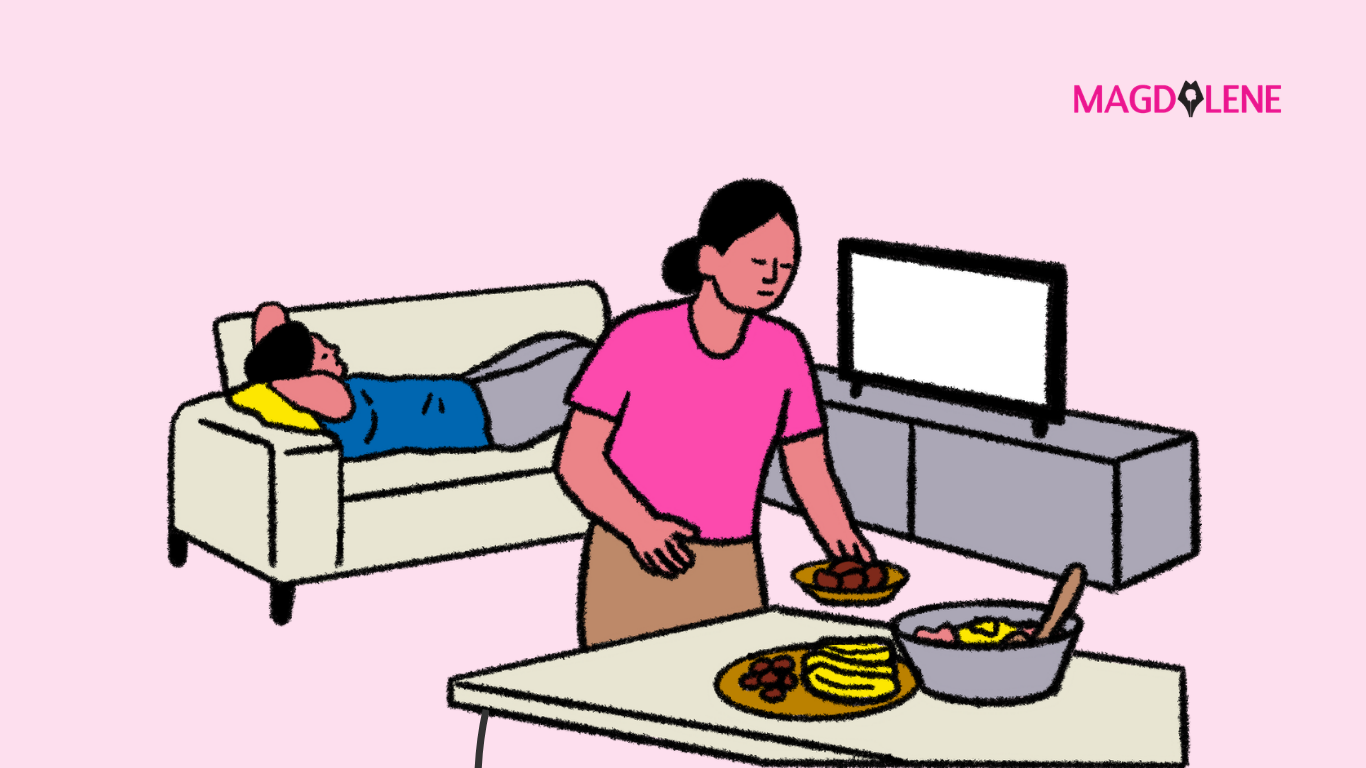
Both women described a condition entailing daily demands most people around them did not understand. Apin’s friends knew she had GERD and accommodated it the way they did her food restrictions: as a quirk, a dietary inconvenience.
They did not know about the days she woke unable to eat or the nausea that made deadlines impossible to meet.
“Not everyone truly understands how heavy the sensation is when symptoms appear,” she said.
Read also: Ketika Ozempic Jadi Tren, Aku Berhenti Menyalahkan Tubuhku
Self-perpetuating cycle
Noah Jefferson Permana, a physician at Riau’s Bintan Regional General Hospital who also runs a science-based fitness facility, sees this pattern frequently. He encounters GERD among Gen Z and millennial women in their 20s and early 30s daily in his practice: “Nearly every shift,” he said.
The uptick, Noah said, had been noticeable since the COVID-19 pandemic. But the drivers were not new: irregular eating, high consumption of spicy or acidic foods, habitually lying down after meals and psychological pressure that often escapes attention in a standard consultation.
What he has specifically observed among young women is a toxic combination: chronic sleep deprivation compensated with too much caffeine, irregular eating compensated with large meals when hunger finally wins and sustained stress that disrupts hunger hormones and worsens existing sleep problems.
As Noah describes it, the cycle feeds itself. The medical explanation involves the gut-brain axis, a two-way communication channel between the two organs.
Sustained stress raises permeability in the esophageal lining, activates pain receptors along vagal and spinal pathways and weakens the lower esophageal sphincter, a ringlike muscle that keeps stomach acid where it belongs.
“Stress is not just a contributing factor. It is the fuel poured on the fire,” Noah said.
Physical triggers such as fatty food or excess weight still matter. But correcting diet alone rarely resolves the condition if stress goes unaddressed.
GERD, he said, could not be cured outright but only managed, which required treating the whole picture. But the healthcare system is not always built for that.
Noah described consultations constrained by time, when prescribing a proton pump inhibitor, a type of medicine that reduces stomach acid production, was easier than exploring a patient’s psychiatric history. Health systems focused on volume would consistently miss the root cause of GERD, he noted.
Apin, who has lived with the condition long enough to map her own triggers, knows this firsthand. She has learned stress is as much a driver as anything on her plate: a heavy week, a crowded mind and a stomach that then responds in kind.
She has adjusted her schedule, diet and relationship to rest periods. Resya, too, has made changes.
She monitors what she eats, watches the clock and asks the people around her to help her maintain regular mealtimes. Her family, once worried and unsure, now understands enough to remind her, but not everyone in her life does.
GERD, she said, was not taken seriously by those who never had it.
Read also: Perempuan, Kesehatan Jiwa, dan Akses yang Tak Pernah Netral
No honor badge
Noah has a message for women who view chest pain and acid burn as proof they are working hard enough.
“Please, do not normalize pain. Do not treat chronic gastritis or chest pain as badges of honor for your hard work. If your heartburn is starting to ruin your sleep or if you find yourself relying on antacids just to get through the workday, please see a doctor immediately,” he advised.
“Knowing your body’s limits, seeking medical help and giving yourself room to heal is the most basic form of self-respect,” said Noah.
He also cautioned: “While researching your symptoms online is fine, never rely on it completely. It is easy to encounter misinformation if you are not selective about your sources.”
This article was published in thejakartapost.com with the title “Burning inside out: GERD’s quiet toll on young women“