Photo by Tommy Triardhikara/Magdalene
Novita Murni vividly remembers the obstacles she faced after deciding to become a professional athlete more than a decade ago. Her family and friends rejected the idea, believing that being an athlete was not a sustainable career for women. No one in her family had ever pursued sports professionally.
Determined to prove them wrong, she persevered. While studying at the Indonesian University of Education (UPI), she tried several sports — from rowing to badminton — before eventually joining her campus futsal team. After a year of training and competing, she was invited to join a scouting program for the national women’s futsal team.
“There was a tournament in Jakarta where the national team’s head coach scouted young players to join the squad for the 2011 SEA Games. I played in that tournament,” Novita told Magdalene after a panel discussion at the British Embassy in Jakarta on Friday (March 6).
She has now played for the national team for 16 years. Her achievements have changed her parents’ perspective, and they are now proud that she represents the country.
Read also: Misinformation, Abuse and Injustice: Breaking Down the Olympic Boxing Firestorm
Personal struggles, however, are only part of the challenge for women athletes like Novita. Lower financial rewards, limited visibility and a lack of access to training facilities and competitive opportunities remain persistent problems for women athletes around the world.
Ironically, some of women athletes’ biggest “enemies” are sports fans themselves, who often fixate on their physical appearance and leave sexist or degrading comments online or during competitions. Constant exposure to this type of abuse can be demoralizing.
As team captain, Novita says she reminds her teammates to stay away from social media before matches to avoid being emotionally affected by such comments.
“It can affect how we play. And when some players are on their period, for example, it may impact them psychologically even more,” she said.
The obsession with women athletes’ appearance is also reflected in media coverage. Former futsal coach Sicilia Setiawan recalled an interview she once gave after her team had just won a trophy. While the interview itself went well, the resulting article left her disappointed.
With a headline calling her a “pretty coach”, the story focused more on her appearance than on her team’s hard-earned victory.
The experience made her more cautious about speaking to journalists.
“Now I ask journalists what they want from the interview first, something I didn’t do before the article that called me a ‘beautiful coach’,” she said.
After interviews, she also makes a point of emphasizing what she hopes will be highlighted.
“I tell them: ‘Please focus on the important parts of the interview—the work.’”
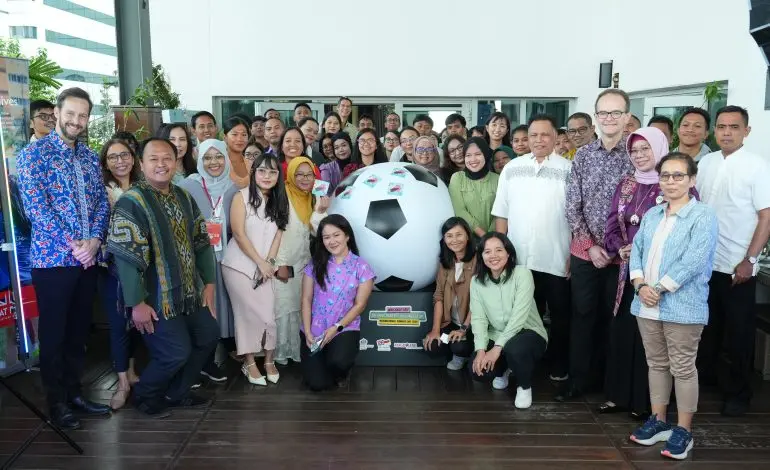
Sicilia now coaches with Inspire Indonesia, an organization that over the past two months has held football clinics for around 600 teenage boys and girls across Indonesia. The program combines football training with education on gender-based violence.
The clinics are part of the “Breaking Barriers, Building Future #KickOutGBV” campaign, a partnership between the British Embassy in Jakarta, Inspire Indonesia and Magdalene.
Speaking at Friday’s community discussion, British Ambassador to Indonesia and Timor-Leste Dominic Jermey said football could play a powerful role in promoting gender equality.
“As a sport loved passionately in both Indonesia and the UK, football offers a powerful platform to challenge stereotypes, elevate women’s leadership and open more inclusive spaces in a field long dominated by men,” he said.
Read also: Celebrating Olympic Mothers without Losing Sight of the Postpartum Struggle
Shifting perspectives
Online harassment is only the tip of the iceberg. Sri Agustini, a commissioner at the National Commission on Violence Against Women (Komnas Perempuan), said gender-based violence remains widespread in the sports world, with rape, physical abuse and verbal harassment among the most common forms.
“For example, inappropriate touching of sensitive body parts during practice or physical therapy sessions, or comments about athletes’ bodies such as their breasts or stomach,” she said.
The absence of a clear reporting mechanism has further worsened the problem.
“There is no specific department or task force to receive and process athletes’ complaints about sexual harassment, leaving many cases unreported. Reporting to the police can also put their careers at risk,” she added.
Freddie Brunt, deputy development director at the British Embassy in Jakarta, highlighted the importance of ending stigma and stereotypes surrounding women in sports traditionally seen as male-dominated, such as football.
The United Kingdom government, he said, is committed to creating a more inclusive sporting environment and equal opportunities for everyone to pursue sports, whether as a career or a hobby.
“Though historically marginalized, the UK women’s sports industry has made remarkable progress at the professional level. That inspires new generations to see that participating in sport is a realistic opportunity for them alongside boys and their male peers,” Brunt said.
Read also: Girl Skateboarders Love the Sport, But Risk Sexual Harassment
Ultimately, everyone has a role to play, including the government, said Desy Andriani, Deputy for the Protection of Women’s Rights at the Ministry of Women’s Empowerment and Child Protection.
Citing Inspire Indonesia’s work in educating young people about gender-based violence, she emphasized the importance of changing perspectives.
“There are 171 women’s football teams across Indonesia. The government can play a role in strengthening gender perspectives within these teams, because in the end, it is about changing perspectives,” she said.