Trapped Between Heat and Hunger in the Rice Barn: The Burden of Women Farmers in Indramayu

Several years ago, while nine months pregnant, farm laborer Darsini, 54, spent much of her day doing the back-breaking work of rice planting in her village of Mekarsari in Indramayu, West Java. The extreme heat and physical exhaustion made her almost lost her baby. Though the baby survived, the experience has left her with lasting trauma.
I visited her village during a severe rainy season that had affected many regions in Indonesia in December 2025, but her story echoed those of other farmers when extreme heat struck the area. For farmers in the northern coastal areas of Indramayu—particularly those with minimal vegetation cover such as Patrol, Sukra, Losarang, Kandanghaur, and Krangkeng—the prolonged heat has left lasting impact.
Data from the Meteorology, Climatology, and Geophysics Agency (BMKG) show that the Indramayu region has experienced rising daily maximum and nighttime temperatures over the past decade. The highest spikes were recorded during the 2015–2016 El Niño period and intensified again in 2023–2024. At the peak of the 2024–2025 dry season, temperatures in several parts of Indramayu ranged from 35 to nearly 40 degrees Celsius.
These conditions prolonged ecological pressure in coastal areas that historically depend on paddy farming and water availability.
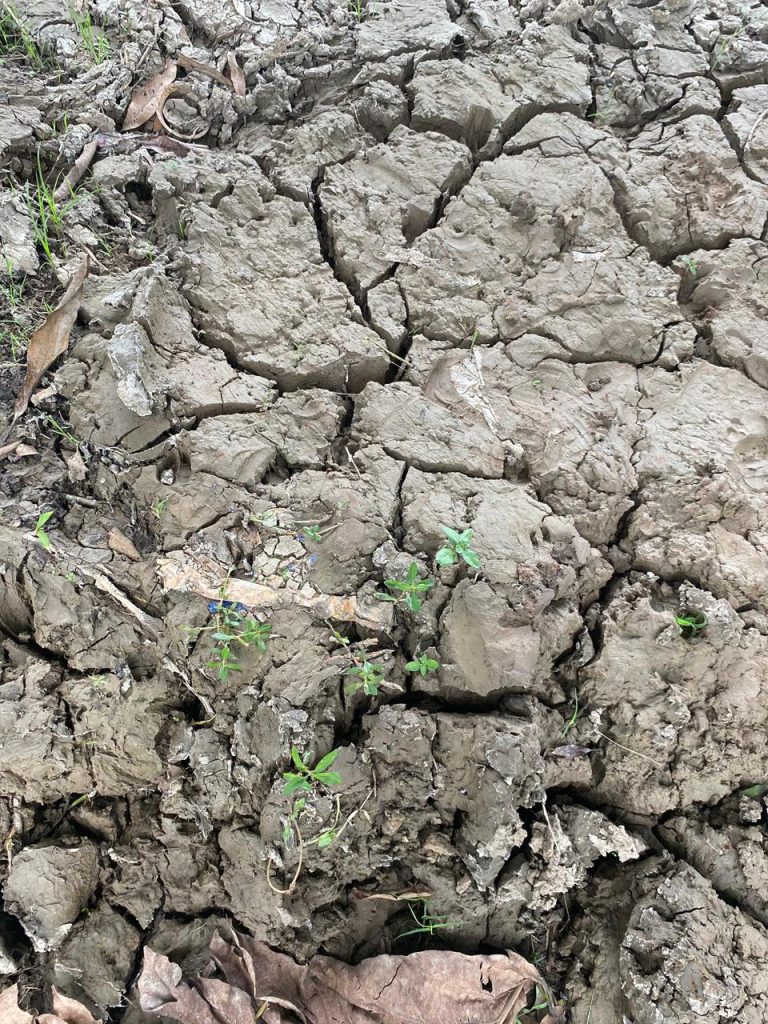
Extreme temperatures have also turned rice fields into hazardous workplaces, particularly for women. Darsini still remembers risking her life under a sun she described as “geni,” or fire.
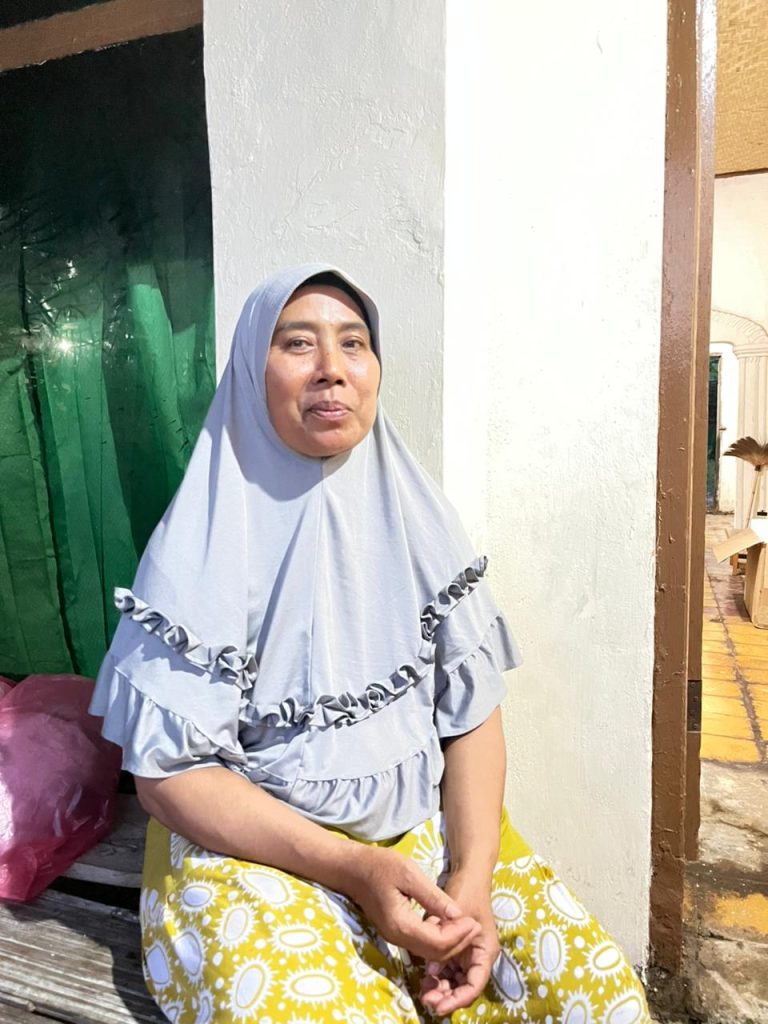
Another woman farmer, Satiah, 54, recalled similar struggle. She works as a farm laborer earning around Rp100,000 per day. When extreme heat strikes, planting and weeding become far more exhausting. But despite frequent body aches and dizziness, she continues working in the fields.
“If I don’t work, I don’t eat,” she told me on Dec. 26, 2025, at the office of the Indramayu Coal-Free Network (JATAYU) in Mekarsari.
But women’s work does not end in the field. When they finish a day of farmwork, domestic work awaits them, cooking, cleaning the house, and caring for family members. Extreme heat has increased the risk of fatigue and health problems while offering women no space to rest or stop working.
Darsini and Satiah’s stories reflect the broader reality of women farmers in Indramayu Regency, a region known as the nation’s rice barn. Statistics Indonesia (BPS) recorded that in 2024 Indramayu produced about 1.39 million tons of harvested dry paddy from more than 125,000 hectares of rice fields. This figure is often cited as an indicator of food policy success.
Ironically, behind this high production, extreme heat increases the risk of crop failure, raises water demand and production costs, and erodes farm household income. At this point, women’s labor becomes even heavier, while protections for their bodies, health, and livelihoods grow increasingly fragile.
Read also: Walhi: Flood and Landslide Risks in West Java Could Be Worse Than Sumatra
High Rice Production, Why Is Farmers’ Economy Stagnant?
Economic stagnation among farmers in Indramayu is shaped by a combination of interrelated factors at the local level. Economic data, spatial planning policies, national strategic projects, and changes in production conditions create layered pressures felt differently across districts, but producing similar impacts at the household level.
To begin with, indicators of farmers’ welfare show very limited movement. The 2025 Agriculture Policy Brief published by the Student Executive Council (DEMA) of Kampus Putih recorded that the Food Crop Farmers’ Terms of Trade (NTPP) in Indramayu rose only 0.02 percent in December 2024. This indicator measures the ratio between price indices received and paid by farmers during the same period.
Akmal Maulana, head of DEMA Kampus Putih and author of the policy brief, said the marginal increase is directly linked to production cost structures.
“The rise in grain prices is offset by fertilizer costs, pesticides, equipment rental, and labor. Farmers keep working, but the margin is tiny,” Akmal told me via Zoom on Dec. 24, 2025.
According to him, this condition leaves farmers without a safety buffer when production disruptions occur. A single replanting or drop in yields immediately affects a household’s ability to meet daily needs.
“One problematic season, and the family economy is immediately disrupted,” he said.
Secondly, spatial changes and the establishment of national strategic projects in the area have contributed to shrinking land access. Indramayu Regional Regulation No. 9/2024 on the 2024–2044 Spatial Plan allocates around 20,835 hectares for industrial zones as part of the Rebana regional development. This area is linked to regional industrial and infrastructure networks included in the National Strategic Projects (PSN).
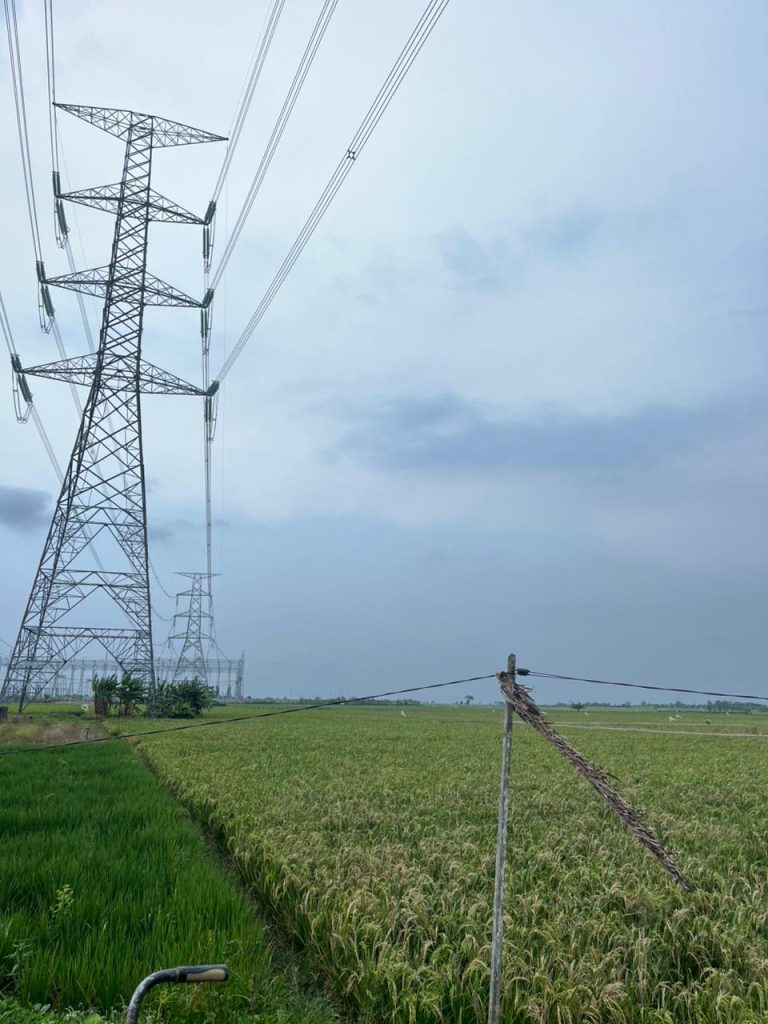
The same policy brief details industrial allocations spread across Patrol District (4,144 hectares), Losarang District (6,710 hectares), and Tukdana District (563 hectares). These are, in fact, farming areas where many farm laborers earn their living.
Try Utomo, head of the Indonesian Farmers Union (SPI) Indramayu, said the land-use changes alter farmers’ land ownership structures.
“Farmers sell their land for a low price, not enough to buy a new one. They end up working as farm laborers or rent plots from landowners,” Try told me on Dec. 24, 2025.
He added that would-be industrial estates usually started by acquiring rice plots that have road and irrigation access. Once the industrial estates are built, accesses to plots behind them are blocked.
“Land located behind factories loses its value. Eventually the farmers have to sell at a low price,” he said.
Regional land data show that in 2023 there were about 111,000 smallholder farmers in Indramayu. These are people controlling less than 0.5 hectares of land. Most depend on work as farm laborers or tenant cultivators without income certainty.
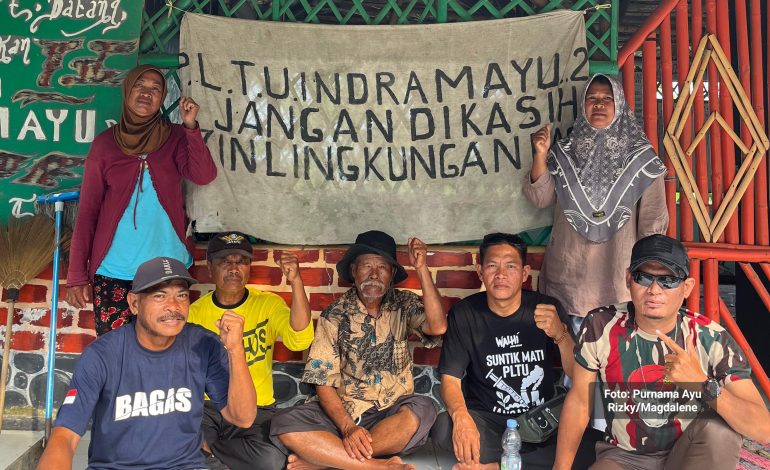
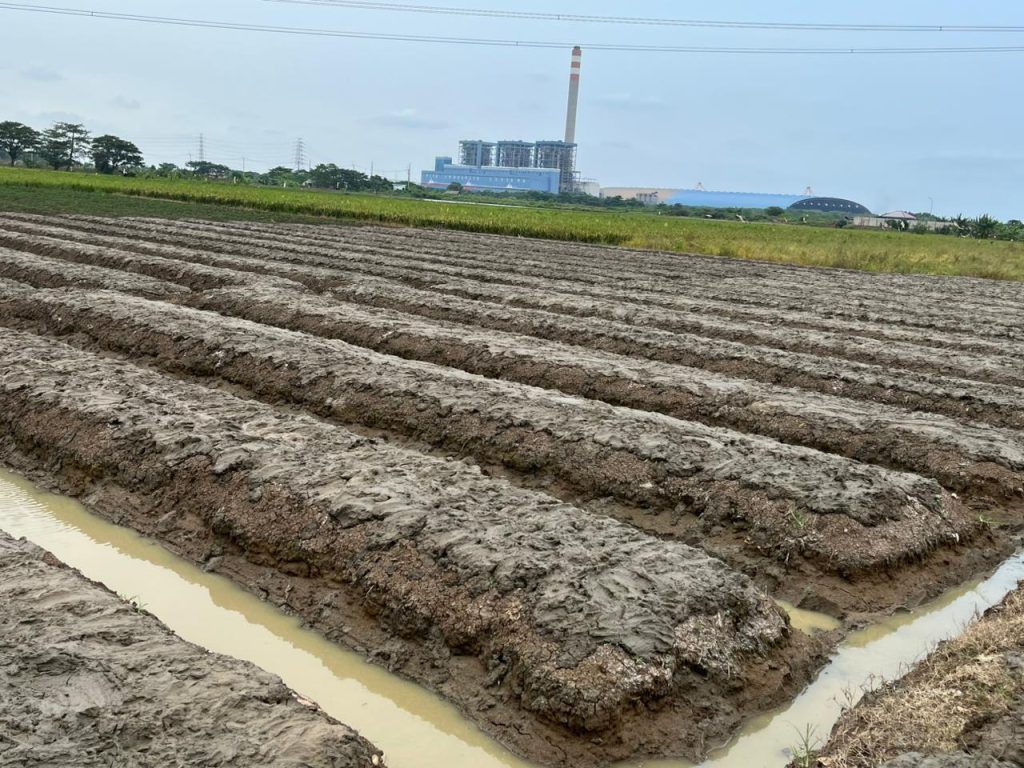
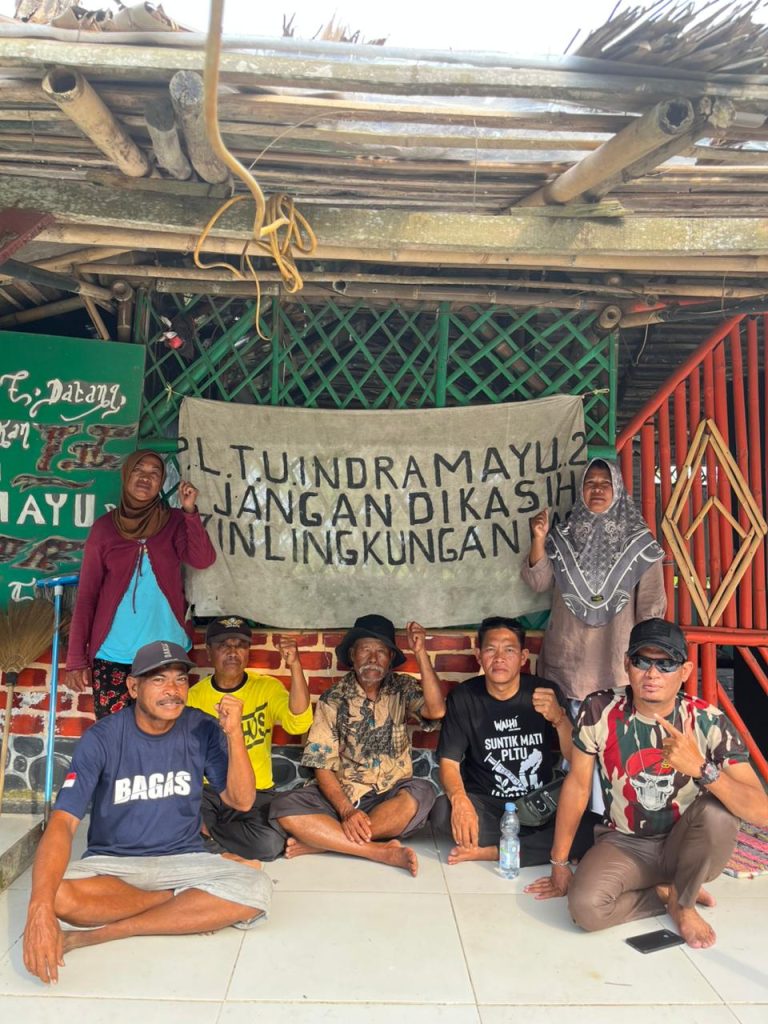
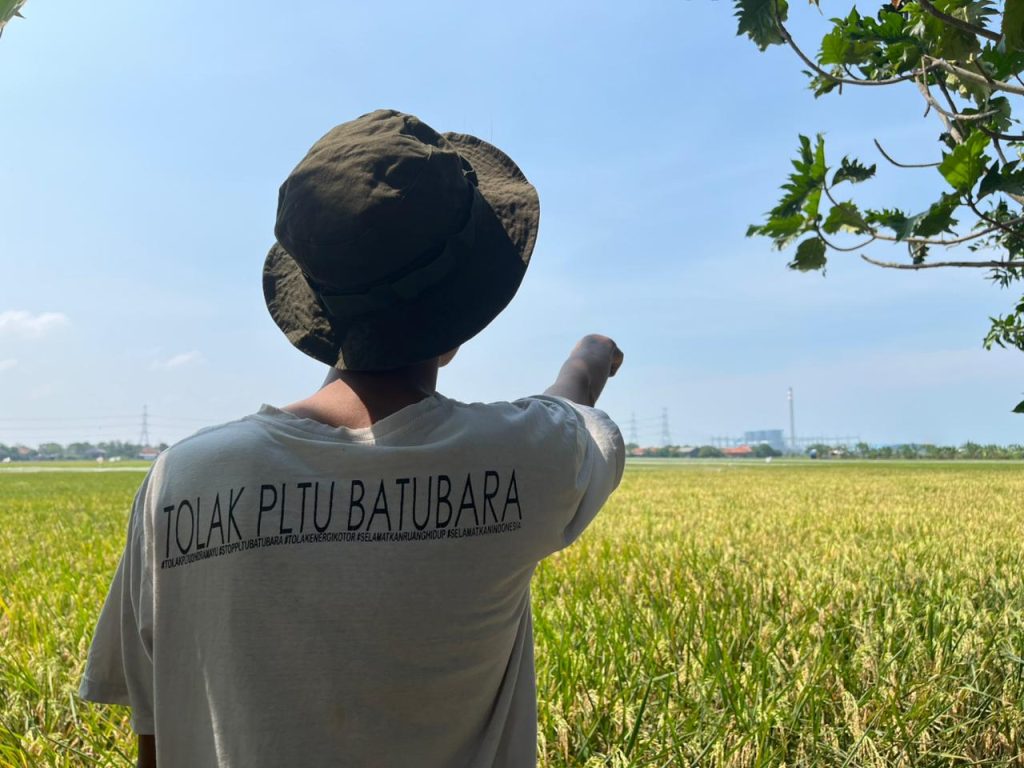
Asides from the Rebana industrial zone, farmers also feel the pressure of energy projects categorized as national strategic projects. At Mekarsari, home to Darsini and Satiah, the Indramayu coal-fired power plant (PLTU), which began operation in 2011, has become a center of agrarian and environmental conflicts affecting farming activities.
Tarmudi, JATAYU field coordinator, said after the energy project began operation, production began to feel the impact.
“Previously the second planting season was the best. Now it’s the riskiest,” Tarmudi told me on Dec. 26, 2025.
The development of industrial complex and the energy projects compounded with climate crisis and raises production costs causing even further pressure to the local farmers. Bengbeng from Losarang, said farmers like him in his area rely on the Kalijangga River for irrigation, the same river supplying water to chemical and textile industries developed since the 1990s.
“During dry seasons, farmers must pump water themselves. It costs about Rp500,000 (about US$29.5) per week for one channel of waterway,” Bengbeng told me on Dec. 26, 2025.
These costs are borne by farmer groups in addition to fertilizer, seed, and labor expenses. Limited capital means some farmers cannot continue the next planting season.
“If the capital runs out at the start, the next season doesn’t happen. The farmers end up handing back over the land to their landowners,” he said.
Tarmudi detailed production cost calculations and loss risks. Initial production capital for one hectare of rice fields under normal conditions reaches about Rp20 million per planting season. When crops die early due to extreme heat and environmental conditions, farmers must replant.
“The crops die at one month old. Replanting and more chemicals mean a delay in planting schedules,” he said.
Extending the planting period from four to six months can rack up Rp6 million in household spending. Land recovery and replanting can cost up to Rp8 million.
“The total can reach Rp34 to Rp40 million per hectare per season,” he said.
In partial crop failure situations, harvest yields may reach only two to three quintals of grain. A farmer can receive a net income of Rp2–3 million per hectare.
“Losses can exceed Rp30 million,” Tarmudi said.
Most farmers I interviewed described the same pattern of challenges. Their net incomes shrink, production costs rise, and their only way to survive was to incur debt from one season to the next.
Read also: When Floods Strike: Climate Crisis and the Double Burden on Women
When Debt Becomes a Survival Choice
Economic stagnation pushes farm households in Indramayu to seek other forms of livelihood. When harvests can no longer cover production costs and daily needs, women become the group most quickly pushed out of villages, whether as migrant workers, informal workers, or by being involved in revolving debt schemes.
Data from the Indonesian Migrant Worker Protection Agency (BP2MI) show Indramayu consistently ranks among the regions in West Java that send the most migrant workers. In 2023, more than 17,000 migrant workers from Indramayu were deployed overseas, about 70 percent of them women. They are mainly sent to Hong Kong, Taiwan, Singapore, and Saudi Arabia, working in domestic and caregiving sectors.
Hanna Adriani Savitri, researcher and activist at WALHI West Java, said the migration of women from farming families cannot be separated from structural rural crises.
“Women become the last economic buffer of the family. When the fields no longer produce, women are pushed out to cover household needs,” Hanna told me on Dec. 24, 2025.
According to her, areas experiencing agrarian conflicts, energy projects, and industrial zone such as Sukra, Losarang, Patrol, and Tukdana show higher patterns of female migration.
“This is not an individual choice, but a response to layered pressures,” she said.
In Losarang, Bengbeng sees the same debt trend around him.
“In my village, most of those leaving to work abroad are women–mothers and daughters,” he said.
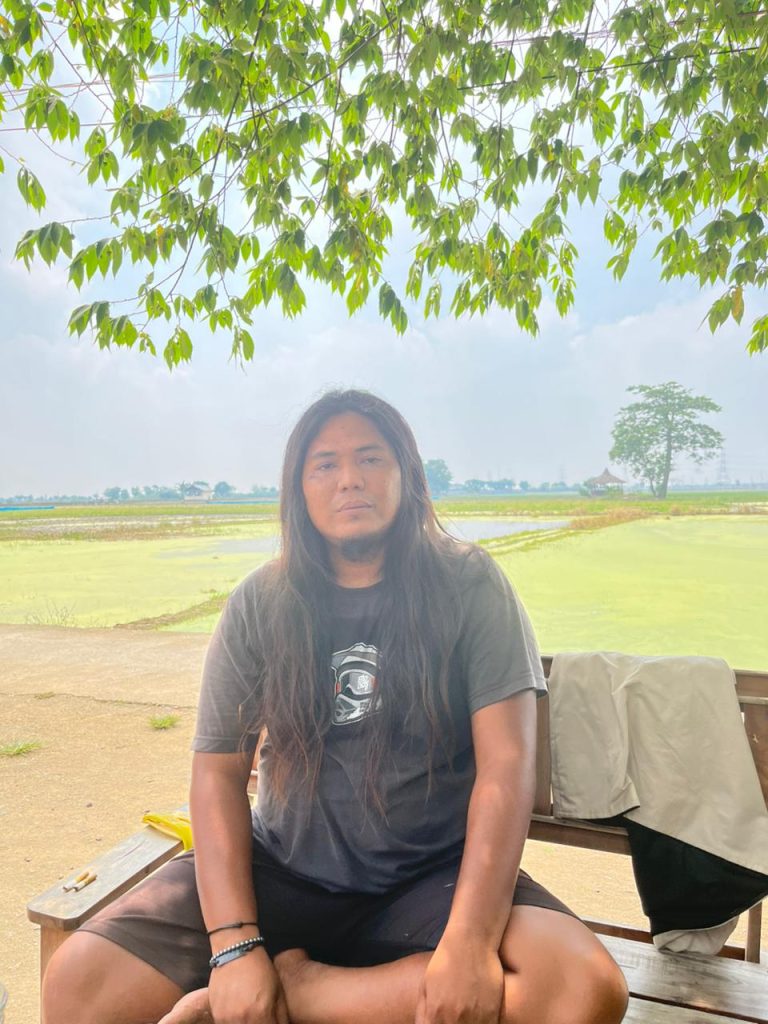
He said such decisions are often taken after several failed planting seasons or when harvests are insufficient to repay debts.
Bengbeng illustrated the vulnerability of small farmers’ economies. Once, he was so penniless that he resorted to selling the T-shirt he was wearing so that he couldprovide for his young child.
“I sold the shirt on my body to a friend for Rp20,000 to buy milk and diapers,” he said. “I went home shirtless.”
For families that do not choose migration, debt becomes the most common survival mechanism. In Indramayu, farmers’ debts come from various sources: formal banking, micro financing (KUR), savings and loan cooperatives, as well as informal institutions such as mobile lenders, “bank emok,” and women’s group-based loan schemes.
BPS recorded agricultural, labor, and forestry sector debt in Indramayu at Rp1.49 trillion in 2024. However, Hanna stressed that the figure reflects only recorded formal debt.
“What’s invisible is informal debt: bank emok, mobile lenders, daily loans. They’re not recorded in statistics, but they’re most used by women,” she said.
Debt patterns are often cyclical. Farmers pay old installments with new loans or repay consumption debt using harvested grain. When harvests fail, debt shifts to the next season.
“This is a dig-a-hole-cover-a-hole practice,” Hanna said. “And household debt management is usually handled by women.”
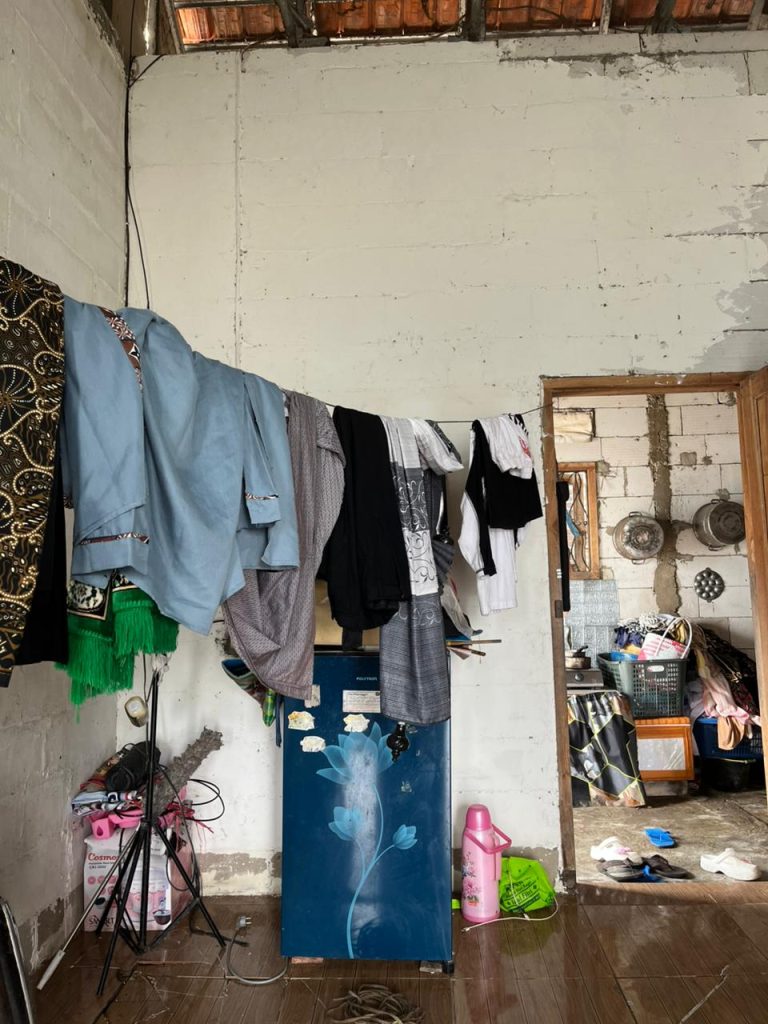
In extreme conditions, when debt and overseas migration are no longer viable, Bengbeng said some women end up working in nightlife entertainment and prostitution sectors in major cities.
“Some work in Kopi Lendot, a prostitution center in Mangga Besar. Those stories come from neighbors themselves,” he said.
To trace informal lending practices, I contacted several Facebook groups containing savings-loan cooperatives and community “bank emok” groups in Indramayu. I sent messages to group administrators and active loan-offering accounts, but by the end of December 2025, none had responded.
In Tukdana, Kartini, 50, a woman farmer who once worked as a migrant worker in Saudi Arabia and Brunei, said even migrant work is not a long-term solution. With her overseas earnings, she bought farmland now cultivated with her husband, but rising production costs have again made conditions fragile.
“Even now, without going abroad, we still have debt. Planting capital is borrowed, harvests are used to pay installments,” Kartini told me.
She said women in her village face two narrow choices: migrate for work or survive with continuously revolving debt.
“If you don’t become a migrant worker, then it’s debt forever. We can’t stop planting either,” she said.
For these reasons, Bengbeng believes farming should no longer be treated as a livelihood source but merely as an effort to preserve tradition.
Read also: Interfaith and Gender Cooperation Helps Climate Adaptation in the Pantura Region
“Farming now is just about preserving culture,” he said.
He said ecosystem degradation, minimal irrigation infrastructure, and the absence of state protection mean farm work no longer guarantees economic certainty. Farmers keep planting not because profits can be calculated, but because the fields are the only remaining living space in the village.
In that situation, he added, remaining farmers actually pushes households deeper into poverty cycles.
“If you calculate it, the returns don’t cover costs. What grows instead is more debt,” he said.
Without policy support improving production ecosystems and farmers’ basic access, he believes farming today only leads to repeated losses.
“Farming now produces nothing but misery. Meanwhile, the only thing our government controls is making the lives of poor people like us more miserable,” he added
Akmal Maulana and Try Utomo of the Indonesian Farmers Union (SPI) Indramayu assisted and accompanied the reporting.
This article is part of a reporting series supported by the Global Climate Resilience for All fellowship.