Hoe in the Right Hand, Book in the Left: How Indramayu Farmers Adapt to Extreme Weather

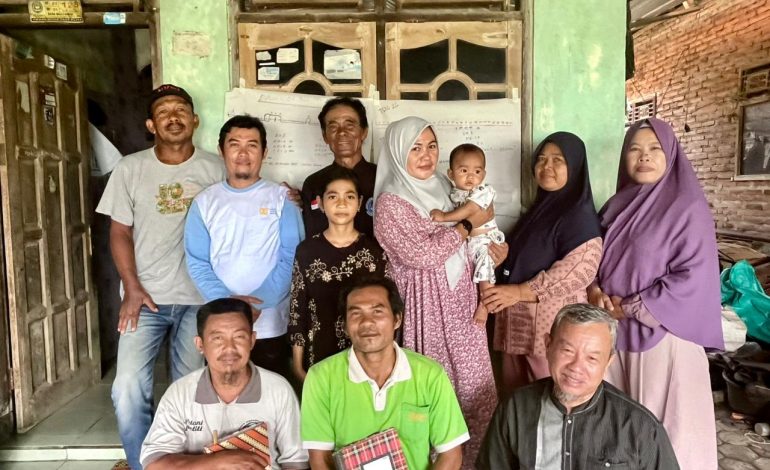
I arrived at Yusuf’s house in Mulyasari Village, Bangodua District, Indramayu Regency, at around 8 a.m. on Christmas Day 2025. In his modest home, painted bright green like the color of rice field across the road, he welcomed me warmly with coffee and snacks, then invited me to walk to his rice field just a few steps away.
On the field embankment, he stopped near a 150-centimeter wooden pole. At its top was a cylindrical tube made from a recycled can.
“This is called an omplong, used to measure daily rainfall,” he explained.
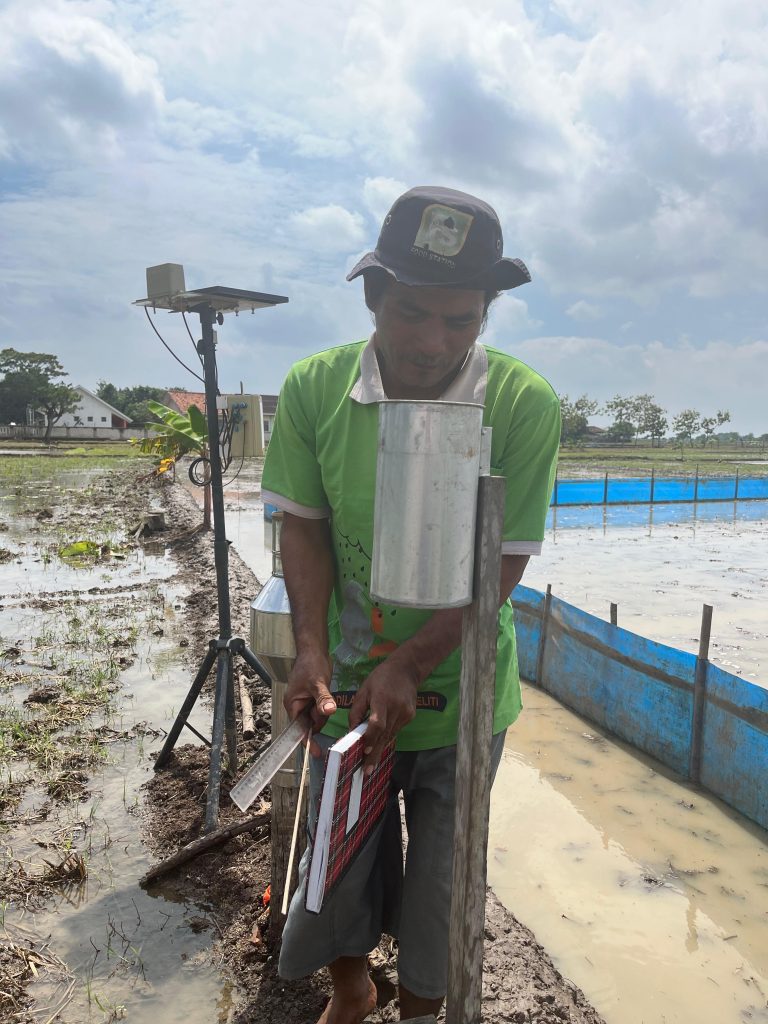
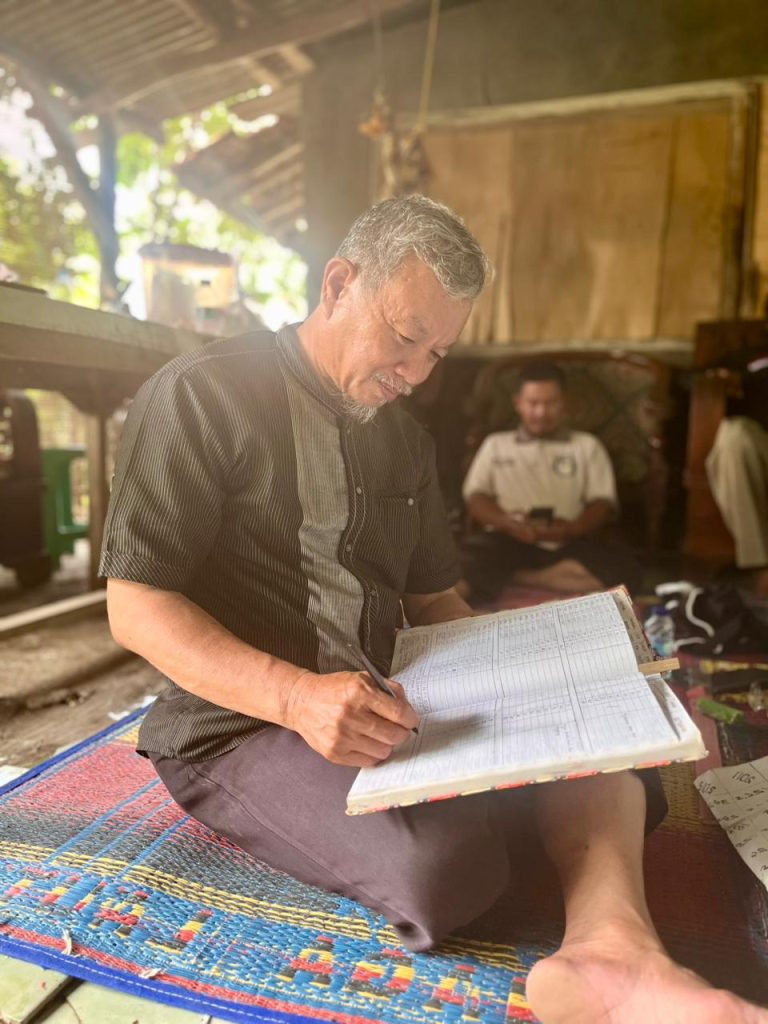
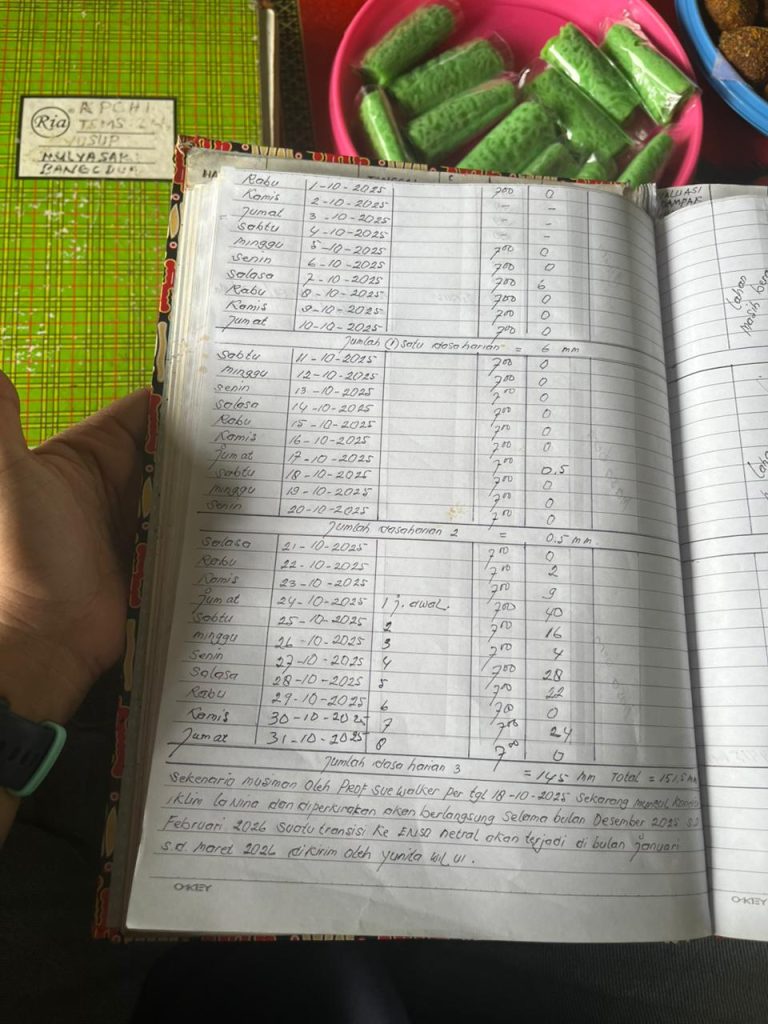
Yusuf took a small wooden ruler from inside a notebook, measured the water level in the tube, and recorded it. Inside his notebook was a table with several columns: rainfall was only one of them. Others included seedling age, rainfall characteristics, and impacts.
Recording rainfall is a daily routine for Yusuf, usually done between 6:30 and 8:00 a.m.—considered the ideal time, as it captures rainfall accumulated overnight before evaporation occurs. If rain falls again after the morning recording, he records it the next day.
“Rainfall is extremely important,” he said.
From the data, he learns rainfall patterns and links them to water levels, crop growth, and potential pest outbreaks. This is part of agrometeorology, a discipline that no longer relies solely on seasonal speculation, as reported by BBC Indonesia.
Read also: Trapped Between Heat and Hunger in the Rice Barn: The Burden of Women Farmers in Indramayu
Labeled “Crazy Farmers” for Bringing Books to the Fields
For Yusuf, however, this routine was not easy at first. He and fellow farmers in the Climate-Responsive Farmers Association (P2TPI) said they were once ridiculed by neighbors.
They recorded rainfall daily, carried notebooks to the fields, and discussed data using charts. “People called us crazy farmers, insane farmers—bringing books to the fields,” said Tarsono. Some farmers felt embarrassed and even stopped recording because of social pressure.
Initially, the practice was seen as useless. Farmers were already burdened by rising fertilizer and pesticide prices, land rental costs, and unstable grain prices. Measuring rainfall seemed like an unnecessary extra task.
But changing weather patterns made traditional farming habits unreliable. Since 2019, Indramayu has experienced increasingly unpredictable weather: long dry seasons, wet dry seasons, rain falling in normally dry months, and extreme heat. Between 2020 and 2022, these conditions triggered pest outbreaks, especially rats.
Normally, rats migrate during dry seasons due to water and food shortages. But wet dry seasons allow water and crops to remain available, enabling rats to breed in the same fields. Yusuf said he once caught 700 to 800 rats in a single season, still far fewer than their reproduction rate.
The impact was immediate on production costs. Before climate recording practices, Yusuf and Tarsono sprayed pesticides 12 to13 times per planting season. Each spraying required at least three types of pesticides, costing Rp3.6 million (about US$212.4) to Rp10.8 million per hectare, excluding labor and other expenses. Total production costs could reach Rp12 to 15 million per hectare per season.
In normal harvest conditions, rice yields in Indramayu average about eight tons per hectare. After harvest-sharing deductions, farmers receive around six tons of clean grain. With grain prices in 2024–2025 ranging from Rp6,500 to Rp7,000 per kilogram, gross income reaches about Rp40 million per hectare, an amount quickly reduced by production costs and land rent.
When harvests are disrupted by weather or pests, deficits are unavoidable. Some farmers are forced to take loans to finance the next planting season. In this context, climate recording began to be seen not as extra work but as a risk-reduction strategy.
Chandra, who in 1993 migrated to Jakarta and worked in engineering until 2004, initially doubted the practice. Besides farming, he runs a repair shop and trades goods to support his family.
“Farming alone isn’t enough,” he said.
But after seeing years of collected data, he began to feel the benefits. Knowing rainfall patterns and pest risks allows farmers to delay planting or choose alternative strategies, reducing the chances of total crop failure during extreme weather and limiting potential losses or debt.
Tarsono experienced the most tangible impact in pesticide use. From spraying 12 times per season, he now sprays only about four times. Reduced pesticide use not only cuts costs, but also allows natural pest predators such as spiders, dragonflies and frogs to return to the fields.
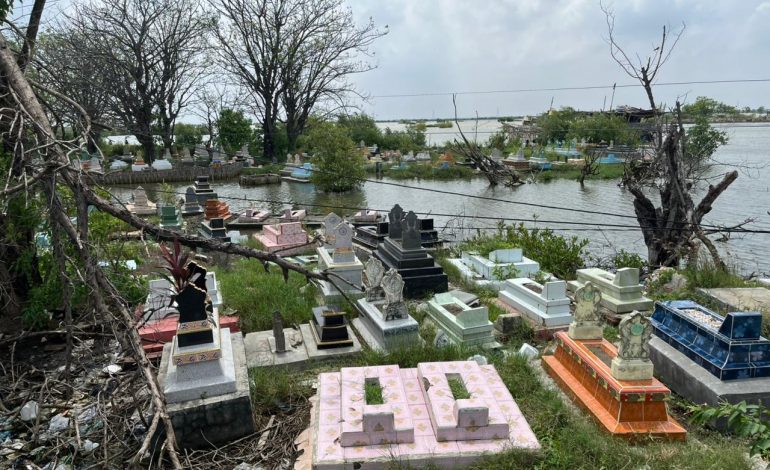
Read also: Sunken Graves in Indramayu: Even in Death, Residents Still Struggle
Learning Climate Knowledge from Their Own Fields
Rainfall recording did not emerge overnight. According to Yunita T. Winarto, Professor of Anthropology at the University of Indonesia, the farmer-researcher approach stems from criticism of short-term, project-based agricultural education.
In a Dec. 24, 2025 interview, Yunita said many government farmer-field schools operate for only one planting season, then stop without ensuring farmers fully internalize the knowledge.
“Farmers haven’t truly internalized the knowledge. When the project ends, the learning ends too,” she said.
Based on her observations since the 1990s, Yunita developed an approach positioning farmers as the main subjects of learning. The concept was introduced more systematically in 2008 through networks of Farmer Field School communities under the FAO.
The approach was introduced in Indramayu about 16 years ago. Although the community briefly paused, it continued and remains active today. Initially, the group consisted of about 50 farmers from various districts, representing diverse ecosystems, from irrigated fields and rain-fed lands to coastal and upland areas.
“Why spread across locations? Because Indramayu’s ecosystem is highly diverse. You can’t learn climate from just one land type,” Yunita explained.
(Source by Regina M. Rusli)
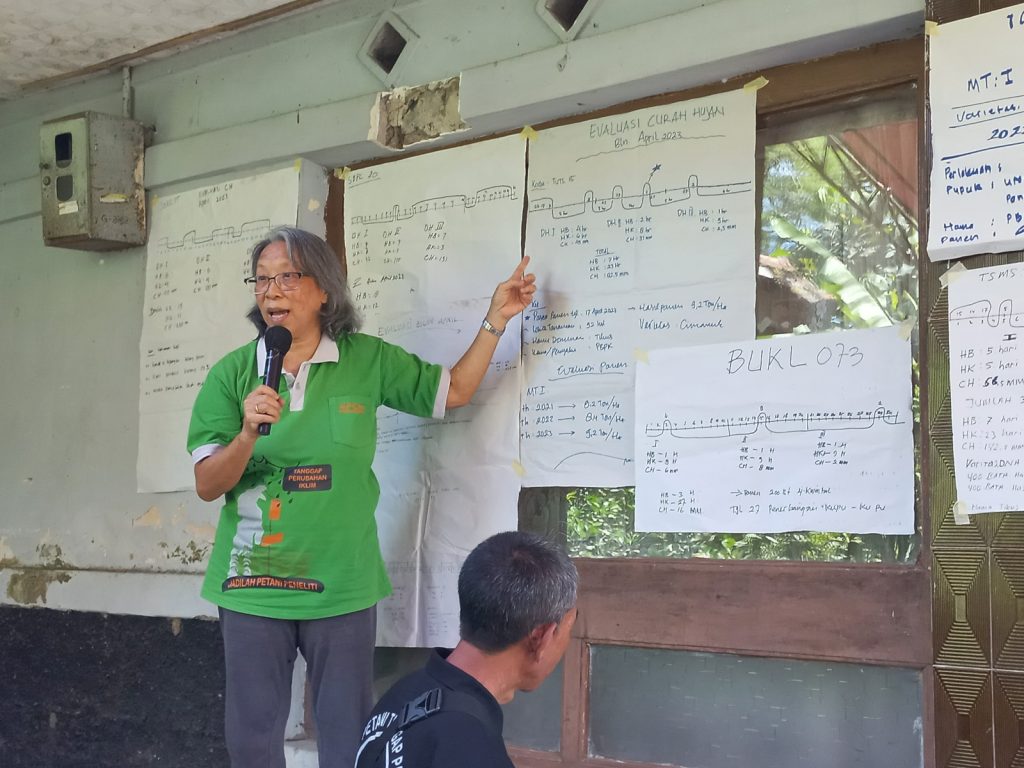
In this system, each farmer measures rainfall daily on their own fields. Data are recorded in journals and analyzed collectively during monthly meetings. Through this process, farmers learn to understand relationships between rainfall patterns, agroecosystem conditions, pest dynamics, and harvest outcomes.
“What we introduced was not technology transfer, but the transmission of ways of learning,” Yunita said. “Farmers’ local knowledge is not abandoned—it is enriched with more systematic learning methods.”
Farmers also study El Niño and La Niña dynamics and design planting strategies based on three-month climate scenarios. The benefit is not always higher income but reduced risk. “If other farmers experience total crop failure, at least they won’t fail completely,” she said.
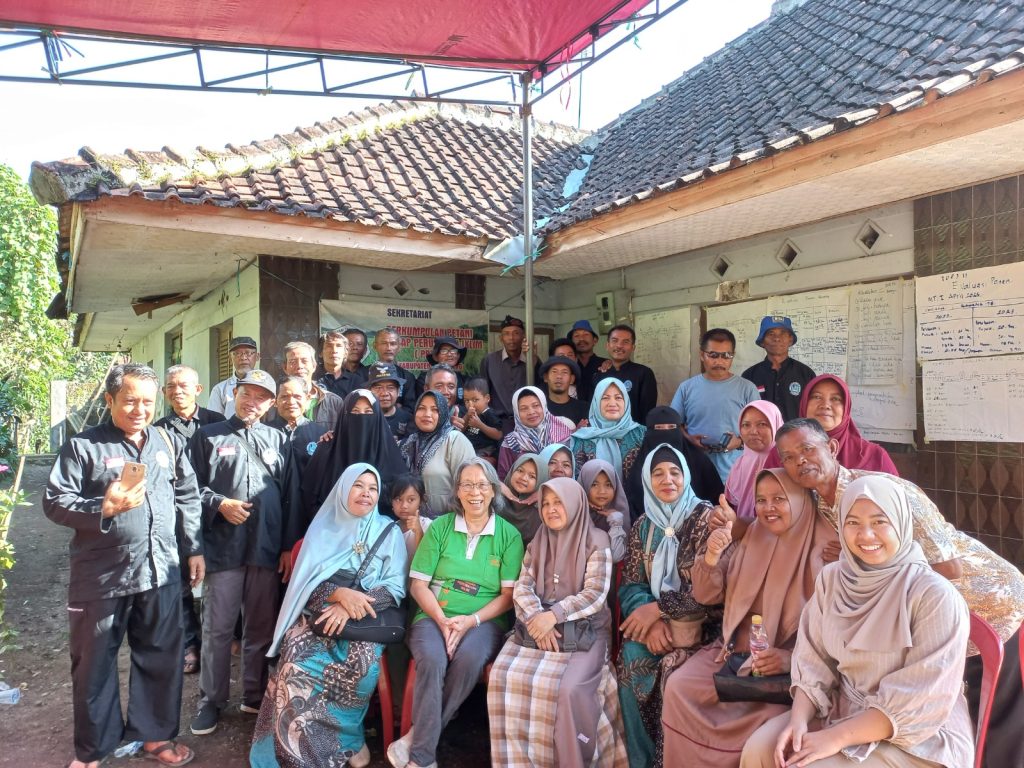
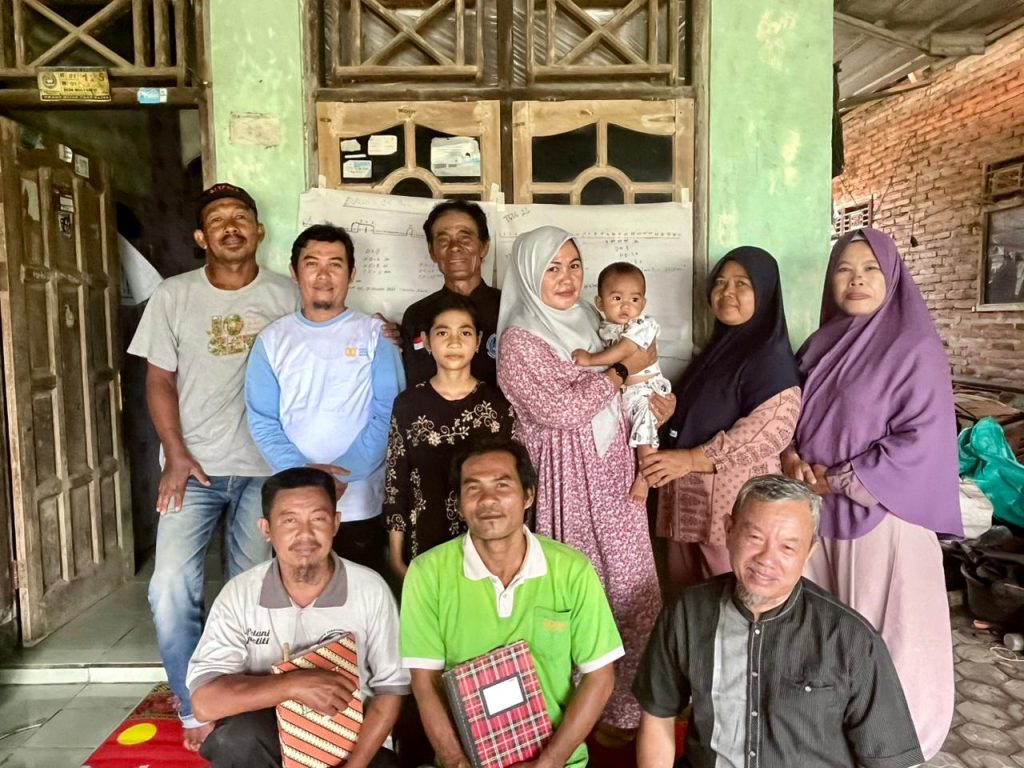
At Yusuf’s home, community chair Nurkillah explained that before learning agrometeorology, farming relied on inherited habits and natural signs, and crop failures were considered normal. After learning rainfall data analysis and climate scenarios, farmers began adapting strategies to avoid losses.
“Failures can actually be anticipated,” Nurkillah said. Daily rainfall data combined with seasonal forecasts help determine planting schedules, anticipate pests such as stem borers and brown planthoppers, and manage irrigation water.
Local knowledge such as observing bird behavior remains in use, but is now combined with data recording and analysis. “It’s more comprehensive,” he added.
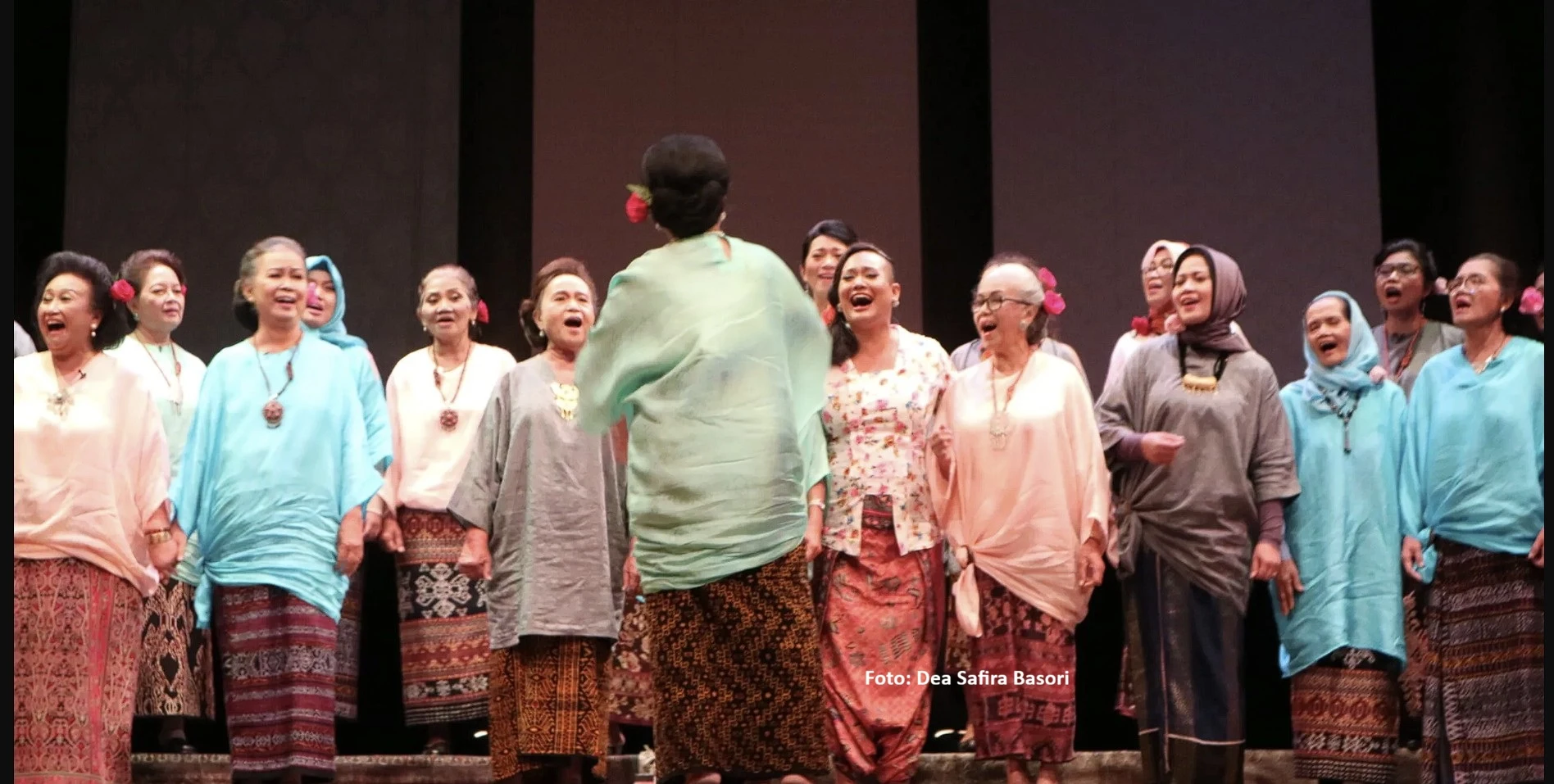
Read also: The Compounded Burden of Women in Oko-Oko Village After Mining and Nickel Smelters
Women’s Active Participation
This approach involves entire farming households. “Decision-making is not only the husband’s responsibility; it must be a joint agreement,” Yunita said. In Indramayu, women’s participation in rainfall recording grew organically, from accompanying meetings to actively recording data and joining evaluation discussions.
Nunung, 54, recalled initially attending meetings only to accompany her husband. “Eventually we started observing as well,” she said. Over time, she understood what was being recorded and why not all pests needed to be eliminated with pesticides.
“I used to wonder why neighbors bought spraying chemicals while we didn’t,” she said. The answer appeared in their own fields: fields that looked “unclean” because they were not sprayed actually survived when neighboring fields were attacked by pests.
Women’s involvement directly affects household financial management. Reduced pesticide use means cost savings. Amid extreme weather and rising production costs, such observation-based decisions help sustain farming households.
Today, the Indramayu climate farmer-researcher community has accumulated aroud 16 years of data. Active membership has decreased to 25 farmers due to limited funding, but their practices have attracted interest from farmers in other regions, and some members have shared experiences outside Java.
Challenges Ahead
Yunita acknowledged challenges in sustaining mentorship. She has repeatedly encouraged local governments to adopt the approach as an official program, but efforts often stall due to leadership turnover and policy focus on production targets alone.
“The government pursues productivity, even when climate conditions are not aligned,” she said.
As state support declines, the community survives through self-funding and limited external assistance. Yet dependence on sponsors is not a long-term solution.
“Replicating this model requires funding, but what matters most is the continuity of farmers’ own learning,” she said.
Amid extreme weather, climate change, and development pressures, this community-based approach has become a way for Indramayu farmers to maintain control over knowledge, decisions, and the future of their agriculture. The practice does not promise perfect harvests every season. But for Yusuf, Nurkillah, Tarsono, and others, rainfall records, worn notebooks, and monthly discussions offer something more important: control over their own farming decisions, not waiting for seasons to arrive, but learning to read them directly from the fields in front of their homes.
Akmal Maulana and Try Utomo from the Indonesian Peasant Union (SPI) Indramayu assisted and supported this reporting.
This article is part of a reporting series supported by the Global Climate Resilience for All fellowship.