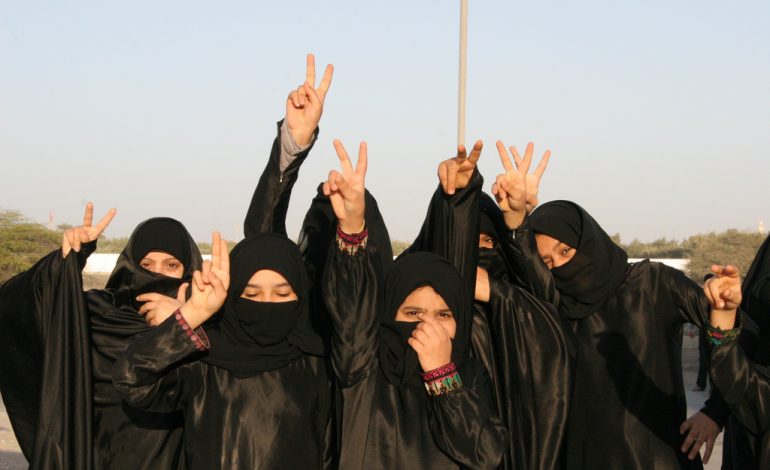
Photo by Al Jazeera
Many Indonesians have voiced opposition to the joint United States–Israel strike on Iran, widely criticized as part of ongoing aggression in the Middle East. The Indonesian Ulema Council (MUI) has condemned the attack and expressed solidarity with “fellow Muslims.”
Yet domestically, attitudes toward Shia Muslims—the majority sect in Iran—remain marked by suspicion and, at times, hostility.
In Sunni-majority Indonesia, Shia communities have long faced discrimination. While adherence to Shia Islam is not illegal, several MUI edicts have labeled some of its teachings as deviant, contributing to social stigma. In 2012, violence in Sampang, Madura, forced hundreds of Shia residents from their homes. Similar tensions have surfaced intermittently since.
Also read: Panduan Feminis Lawan Penjajahan AS-Israel atas Iran ala Dr. Lailatul Fitriyah
Recent geopolitical developments appear to have reignited sectarian sentiment. Disinformation about Iran and Shia Islam has spread widely on social media.
Dian Wirengjurit, Indonesia’s former ambassador to Iran, recalled having to debunk basic misconceptions among acquaintances.
“A friend asked if there were any mosques in Iran. On the same day, a relative asked the same question,” he said. “They had received information claiming there are no mosques there.”
Having served four years in Tehran, Dian dismissed such claims as baseless. “I told them to check online themselves,” he said, adding that the repetition of such narratives suggested coordinated attempts to portray Shia communities negatively.
For Danu, a 62-year-old lecturer at an Islamic university, such narratives have tangible consequences. He said sectarian tensions often resurface in professional settings during periods of global conflict involving Shia populations.
Some students, he said, refused to attend his classes after rumors circulated about his beliefs, triggered by his view he shared to other faculty members and students that Sunni and Shia Islam share many similarities.
Danu identifies as a devotee of Ahl al-Bayt, referring to the family of the Prophet Muhammad, a central concept in Shia Islam.
Also read: Akal-akalan AS dan Israel: Klaim Sesat Perang Iran yang Jauh dari Kenyataan
“It is difficult to label myself,” he said. “A Shia is expected to think positively of others, and I’m not sure I’ve lived up to that.”
He also challenged common misconceptions. “There is a claim that Shia Muslims have a different Quran. I have asked people to show the difference, but they cannot. There is no fundamental difference.”
Ade, a scholar and activist, recounted similar experiences. Invitations to speak at universities were canceled, sometimes at the last minute, due to his association with Shia teachings.
“I was invited for my expertise in Islamic philosophy, not to discuss sectarian issues, but the event was canceled anyway. After that, opportunities gradually disappeared,” he said, adding it felt like he was being “quietly fired”.
Beyond individual experiences, both Danu and Ade pointed to structural challenges.
Ade cited the government’s handling of the 2012 Sampang incident as a turning point. Instead of ensuring the safe return of displaced residents, then President Susilo Bambang Yudhoyono’s government relocated them to Surabaya.
“For us, that signaled acceptance of the persecution,” he said.
He added that similar patterns persist, including the disruption of Shia religious events such as Ashura commemorations in Bandung in 2024, which was forcefully dispersed. “There are rarely consequences for those responsible,” he said, despite constitutional guarantees of religious freedom.
Also read: Negara yang Merestui: Legalisasi Perkawinan Anak di Irak
Kholid Al Walid, a scholar of Islamic studies, argued that polarization persists partly due to limited dialogue between Sunni and Shia communities.
“If you want to understand Shia, speak directly to Shia individuals,” he said. “Do not rely on assumptions.”
He warned that sectarian narratives tend to resurface in cycles, often in connection with global conflicts.
“We have seen this pattern in Iraq, Syria and now Iran,” he said. “It is as if the same narrative is being replayed.”