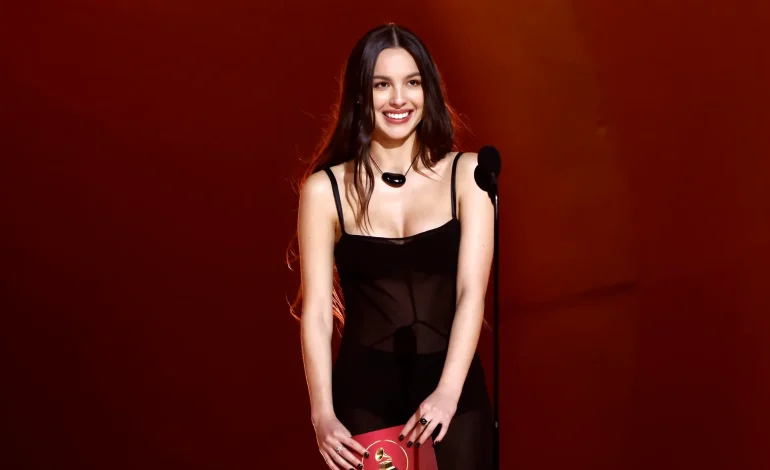
Photo by Emma McIntyre/Getty Images for The Recording Academy
The older Olivia Rodrigo gets, the more the backlash grows. And the more it grows, the more I find myself asking: do people like a young woman, or only the version of her that makes them feel comfortable?
There was a time when it felt nearly impossible not to like Olivia Rodrigo. At least, that was how it looked from my corner of the internet.
When SOUR was released in 2021, Rodrigo quickly became one of the most beloved young stars in pop music. Her songs about heartbreak resonated with millions of listeners, especially young women who saw their own experiences reflected in tracks like “drivers license” and “traitor.” She was successful enough to dominate the charts, yet relatable enough to avoid the resentment often directed at female celebrities.
Today, the conversation surrounding Rodrigo feels different. The more I come across discussions about her online, the more I notice that people seem less interested in talking about her music and more interested in talking about her as a person. Discussions increasingly revolve around her appearance, her outfits, and whether she is presenting herself in the “right” way.
What fascinates me is that Rodrigo has not experienced a dramatic fall from grace. She has not been involved in a major scandal or undergone an extreme reinvention. She is simply growing up.
By the time GUTS arrived in 2023, Olivia’s music had begun to reflect a different stage of life. The album explored the messy transition into adulthood: insecurity, jealousy, desire, anger, embarrassment, and self-awareness. Her performances became bolder, her stage presence more confident, and her public image less defined by vulnerability alone.
But what should have been a fairly ordinary step for a young pop star quickly became a topic of scrutiny. Discussions increasingly focused on whether Rodrigo was becoming “too sexual,” whether her outfits were appropriate, or whether she was setting the wrong example for young fans.
The more I thought about it, the less this felt like a story about one pop star. It started to feel like a familiar pattern: a young woman is celebrated when she appears wounded, relatable, and safe, then criticized once she begins to express confidence, desire, or control over her own image.
Read Also: Lagu Patah Hati Olivia Rodrigo: Saatnya Rayakan Kehilangan dengan Elegan
The narrow rules of acceptable empowerment
I kept coming back to media scholar Rosalind Gill’s Gender and the Media (2007), where she argues that women are encouraged to be confident and empowered, but only within carefully negotiated boundaries. Empowerment is celebrated right up until it begins to make people uncomfortable.
That discomfort becomes especially visible in conversations about Rodrigo’s appearance. Critics have accused her of being overly sexualized or sending the wrong message to young women. Some have even described her aesthetic as “pedo bait,” pointing to her use of bows, lace, babydoll dresses, and coquette-inspired styling alongside more mature themes.
This is the part that keeps confusing me. Rodrigo’s image has always been deeply feminine. The bows, ribbons, lace, and girlish styling people debate today were never completely absent from her public image. What seems to have changed is not the aesthetic itself, but the way people respond to it now that Olivia is no longer read only through innocence and heartbreak.
Bows and babydoll dresses are often associated with girlhood, while Rodrigo’s performances increasingly reflect adult experiences and desires. Yet perhaps that contradiction says less about Olivia Rodrigo and more about the narrow categories women are expected to fit into. We seem comfortable with femininity when it appears innocent. We seem comfortable with sexuality when it is clearly separated from girlhood. What unsettles us is when a woman refuses to choose between the two.
Communication scholar Kathleen Hall Jamieson describes this tension in Beyond the Double Bind: Women and Leadership (1995). Women are often expected to embody conflicting ideals at the same time and are criticized regardless of which expectation they fail to satisfy. Rodrigo’s public reception reflects this impossible standard. If she embraces youthful aesthetics, she risks being accused of infantilizing herself. If she presents herself as more openly sexual, she is criticized for being inappropriate. In other words, she cannot win.
Read Also: Dari Adele hingga Rodrigo, Kenapa Dengar Lagu Sedih Menyenangkan?
When the girl becomes a woman
At some point, I stopped thinking about Olivia Rodrigo and started thinking about why this pattern felt so familiar.
The answer that made the most sense to me came from journalist Alicia Menendez’s The Likeability Trap (2019). Menendez argues that women are often judged by standards that extend beyond talent or achievement. Success alone is rarely enough. Women are also expected to remain easy to root for.
Rodrigo fit these expectations almost perfectly during the SOUR era. She was talented without appearing threatening, successful without seeming untouchable, and vulnerable in ways that invited audiences to project their own experiences onto her. She was heartbroken, expressive, and young. She made pain feel intimate, but not disruptive.
The problem is that likeability often depends on remaining within a very specific set of boundaries. For young women in pop culture, those boundaries can be especially narrow. They are allowed to be emotional, but not messy in ways that make people uncomfortable. They are allowed to be beautiful, but not too aware of it. They are allowed to grow, but only at a pace the public finds acceptable.
Olivia is hardly the first woman to experience this. Britney Spears, Miley Cyrus, and more recently Sabrina Carpenter have all faced similar scrutiny as they moved from girlhood into womanhood. The details differ, but the pattern remains familiar. Young women are celebrated when they embody a version of femininity that feels safe and relatable, only to face resistance once they begin defining themselves on their own terms.
Scholar Catherine Driscoll argues in Girls: Feminine Adolescence in Popular Culture and Cultural Theory (2002) that girlhood is more than a stage of life. It is also a cultural ideal onto which society projects its expectations, anxieties, and fantasies. People often become attached to the idea of the girl while struggling to accept the woman she eventually becomes.
Maybe that is why I keep coming back to Olivia Rodrigo whenever this conversation appears online. The question is not whether she has changed. Of course she has. Growing up was always inevitable. What I find harder to understand is why so many people seem uncomfortable watching that process happen in real time.
Perhaps women do not become less likable as they grow older. Perhaps what expires is the public’s comfort with seeing them step outside the roles they were once praised for performing.
If Olivia Rodrigo’s story tells us anything, it is that the challenge is not simply growing up. The challenge is growing up in front of an audience that has already decided which version of you it prefers.