From Heaven to Dining Table: How Women Religious Community Drives Green Revolution


What happens when religious leaders do not only preach spiritual enlightenment, but also promote a salvation of an earthly kind—an “ecological conversion”?
I visited the Ath-Thaariq Ecological Islamic Boarding School in Tarogong Kidul, Garut, in West Java, late December 2025 to learn about this movement. The pesantren (Islamic boarding school) was named a representative of the Family Farming Decade by the United Nations Food and Agriculture Organization (FAO) for the 2018–2028 period.
Arriving at 2 p.m., I had to park my car along the main road and continued to the boarding school by foot. For roughly 600 meters, I walked along an old railway track overgrown with wild grass on both sides. At the end of the footpath stood a single building complex without any noticeable signboard.
Situated on eight thousand square meters of land, Ath-Thaariq Pesantren is flanked by the remaining stretch of lush rice fields in the middle of an urban area that continues to expand. It is something of a hidden gem, considering the complex is only two kilometers from the Garut Regency Government office complex.
At the front yard, free-range chickens ran about. A wooden hut with a long pavilion stood in front of the main building, serving both as a discussion space and a gathering place for guests.
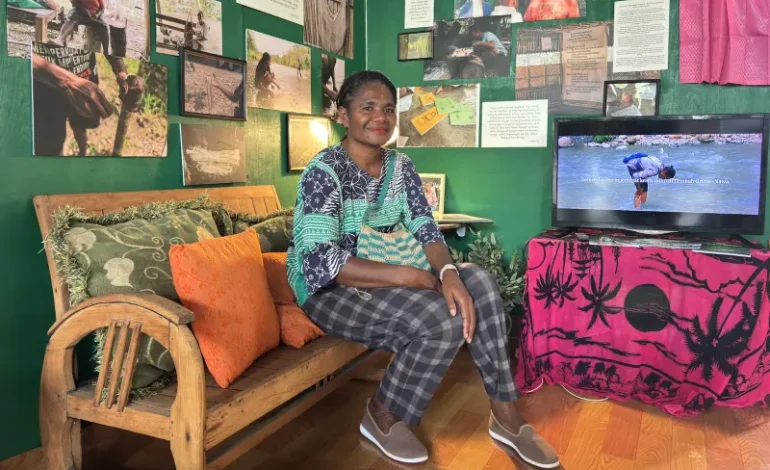
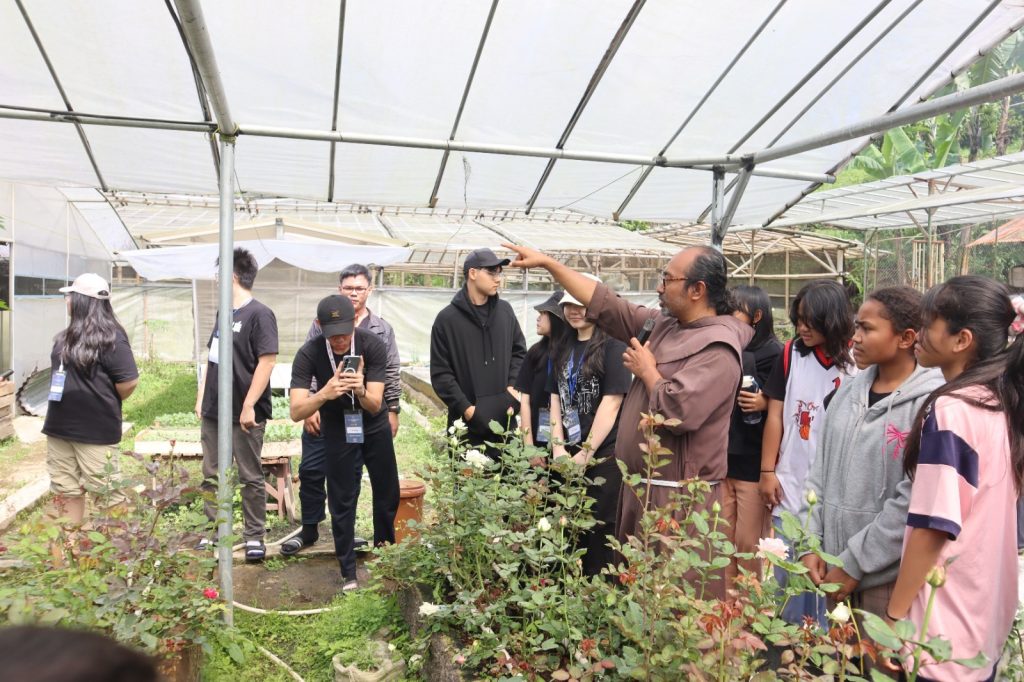
That afternoon, the pesantren dining room felt lively. Several Franciscan Missionary Order (OFM) candidates who were participating in an interfaith co-living program were preparing lunch, frying tofu, chopping vegetables for soup. Others were sweeping the yard and tidying the front pavilion. The aroma of freshly made tomato shrimp-paste sambal filled the dining room, where I was talking to 25-year-old Salwa Kanza.
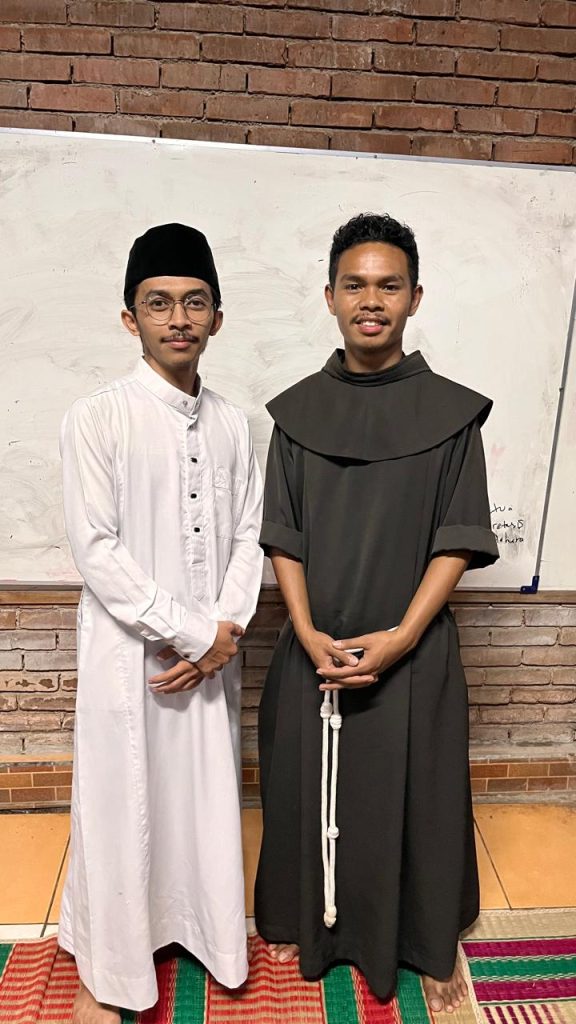
Salwa is now the second-generation leader of the pesantren after its founder, environmental activist Nissa Wargadipura, retired. Although the pesantren is no longer inhabited by resident students, it remains active as an interfaith learning residence that brings together Muslim and Catholic communities to study agroecology, local food processing, and sustainable community economies.
In the spacious high-ceilinged mezzanine room hung several paintings made from coffee-waste residue hung neatly. There was no air conditioning and the windows were left open.
“Aren’t you afraid snakes from the rice fields might enter the house?” I asked.
Salwa said, smiling: “We believe that if ecosystems and food chains are balanced, animals will still have their own food and space. They won’t enter human spaces.”
Her response encapsulated the concept she has been promoting since taking over the pesantren’s management: the most fundamental green economic transformation begins from a simple place—the dining table.
Salwa’s passion in this movement springs from her own personal belief. The young mother believes that with proper management, local food production, garden processing, and returning organic waste to the soil can open opportunities for community-scale green jobs.
“If the kitchen changes, the household economy changes too. That’s actually where green jobs can grow,” she told me.
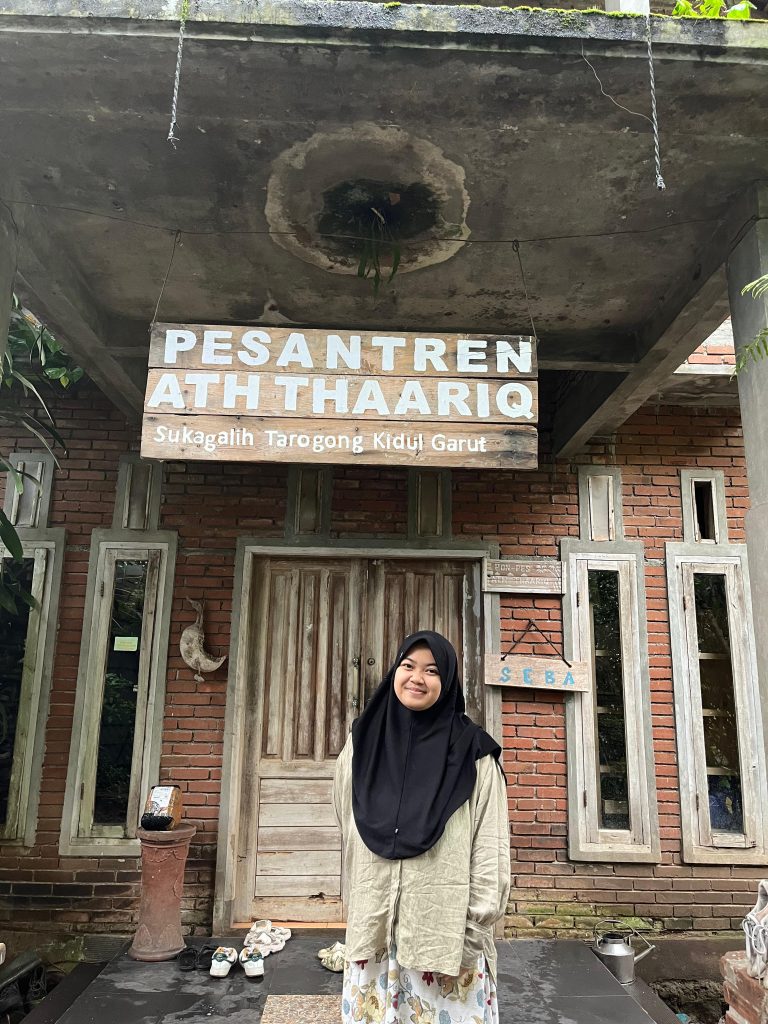
She continues to echo the idea of a green revolution from the dining table through ecological classes at the boarding school. Over the past four years, Salwa has consistently shared knowledge while providing a space where interfaith participants can learn productive ecological work.
She explained that every harvest from the pesantren—rice, coconuts, vegetables, and secondary crops—can be fully utilized. Besides ensuring that she and her family never worry about food shortages, she often distributes harvest products to neighbors for free. In fact, these practices are widely imitated in participants’ respective communities by those who have participated as “ecological students” at the school.
“We want to show that green jobs don’t always have to be large-scale projects. Even a small garden can create impact, as long as it is done collectively and sustainably,” she said.
Read also: Apa itu ‘Eco-Pesantren’: Saat Santri Terlibat dalam Ekonomi Hijau Nasional
Across Diverse Faith Communities
Ath-Thaariq is not the only religious community that has adopted ecological practice.
At the Santo Yusuf Sindanglaya Orphanage in Cianjur Regency, West Java, Brother Trimuryanto FM manages a 13-hectare complex of organic and livestock farm, including the organic waste processing. The work involves 230 children of different religious backgrounds from elementary school to university.
“We manage all organic materials, especially from the kitchen. Vegetable scraps, fruit peels, rice-washing water—all are processed again into liquid fertilizer or animal feed,” he said in a Zoom interview on December 31, 2025.
Within Catholic communities, women play an important driving role. Besides the Santo Yusuf Orphanage, initiatives to create green jobs have also emerged in Catholic communities in Yogyakarta. I spoke with Sister Theresina CB of the Carolus Borromeus Congregation via text message on December 31, 2025.
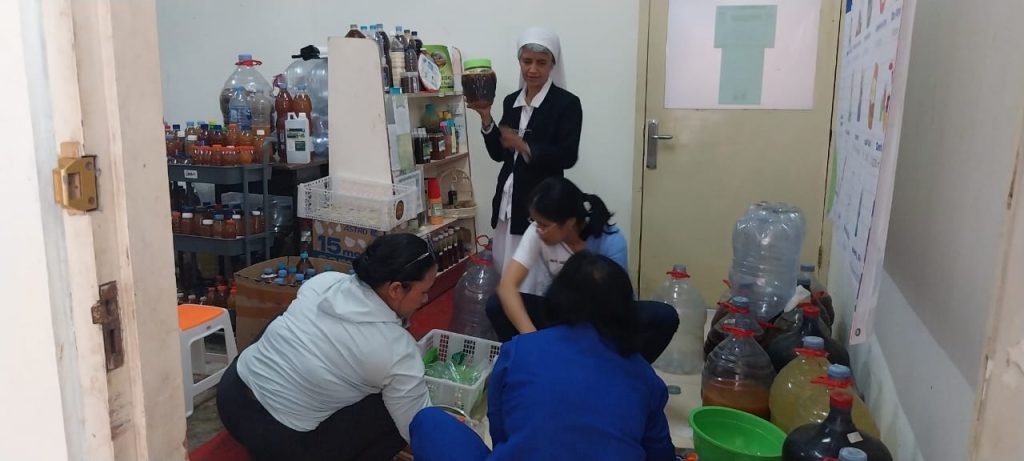
Sister Theresina actively encourages novices and church communities to participate in the “Ecological Conversion” movement through simple activities such as tree planting, waste reduction, eco-enzyme production, and environmental education in communities. She is mentors prospective nuns so that from the beginning they develop concern for environmental sustainability, while also encouraging social-environmental activities around convents as part of public service.
Similarly, in Bekasi, West Java, Pastor Meilani of the Protestant Church in Western Indonesia (GPIB) promotes the Eco-GPIB movement, encouraging congregations to reduce single-use plastics, bring their own tumblers to worship, and develop community waste management.
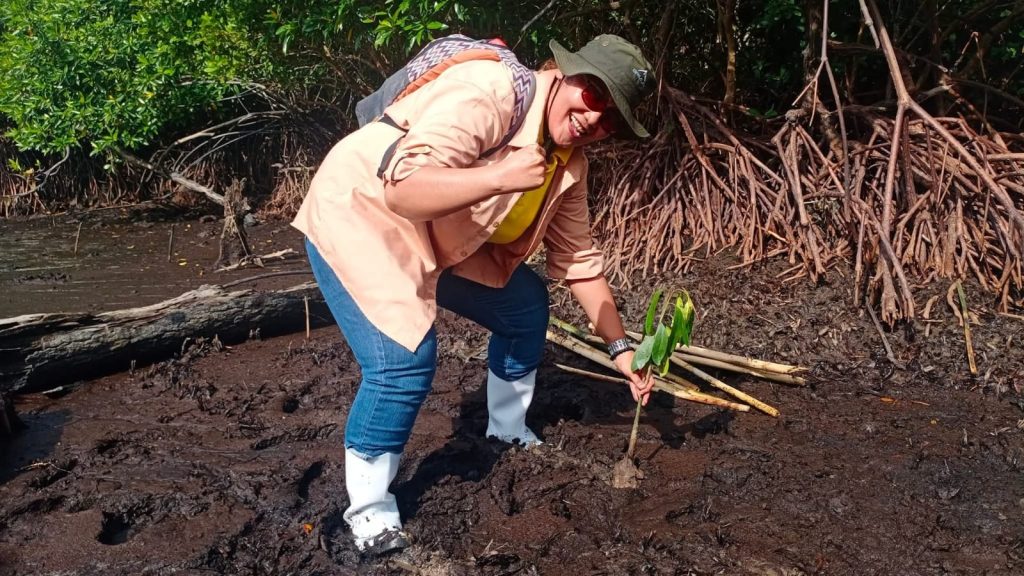
“The most impactful work starts with ourselves, within our own religious communities, from the grassroots,” she said separately on December 31, 2025.
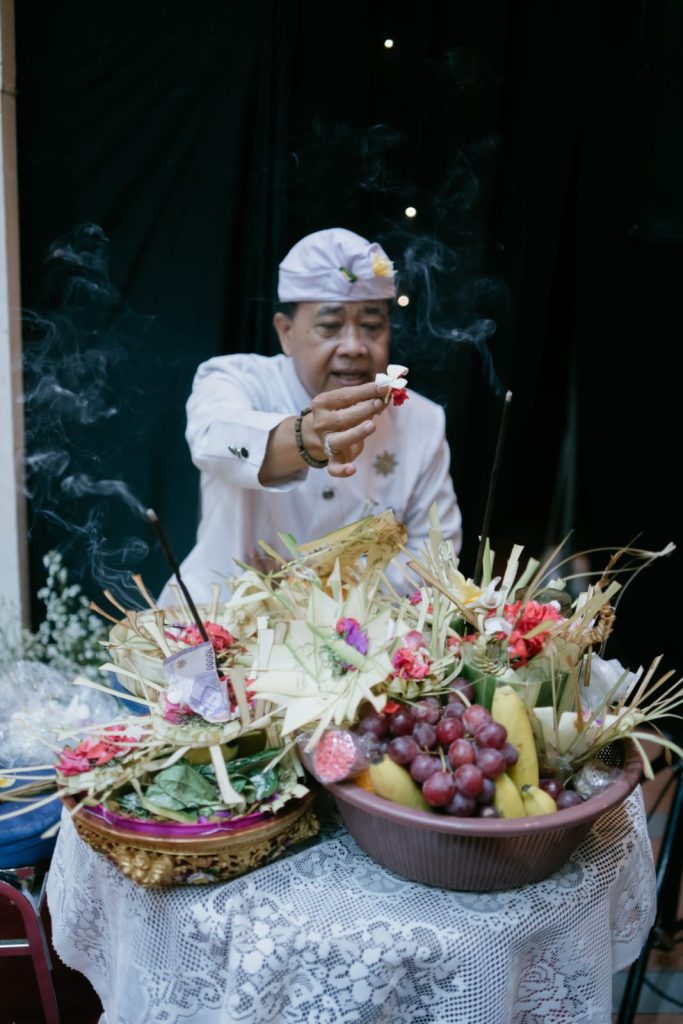
Meanwhile, Hindu religious leader Sonocandra Dana noted that similar practices have long existed in the Tri Hita Karana teaching, which emphasizes harmony between humans, nature, and God.
“Many jobs have actually been green for a long time; they just weren’t called green jobs,” he said.
He cited how women in Bali, including non-Hindus, play an important role in cultivating plants and flowers for religious rituals, contributing to local livelihood sources.
“In the end, it becomes a circular economy,” he said.
Meanwhile, Maitreya Buddhist volunteer (Hong) Kurnia, 41, through the Rumah Alam Bahagia community, has developed greening initiatives across approximately 20 hectares of land in Samarang, Garut, West Java. His community plays a role in reforestation while inviting local residents to participate as workers. They cultivate Arabica coffee and endemic trees across dozens of hectares.
“Protecting the Earth isn’t about religion; there’s no need to divide it. Anyone can participate,” he emphasized.
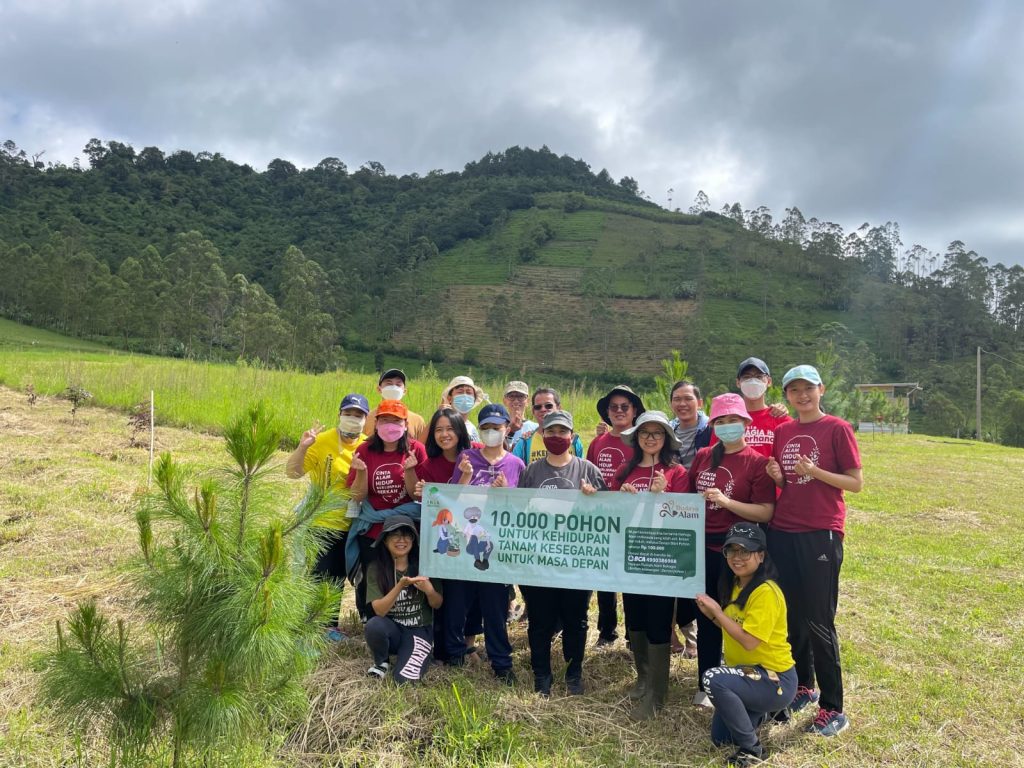
In addition to developing Arabica coffee plantations, the largely vegan community cultivates organic food crops and eco-enzyme programs since 2017. The harvest supports community operations, helps local workers, and funds environmental education activities for nearby residents.
What about indigenous belief communities such as Sunda Wiwitan?
In a Zoom interview at the end of last December, Dewi Kanti, a cultural guardian of the Sunda Wiwitan Indigenous community in Kuningan, West Java, said Indigenous women hold a central role in green-job practices rooted in local wisdom.
The spiritual relationship of Sunda Wiwitan communities, which view nature as “mother,” inevitably places women in a strategic position in maintaining environmental sustainability—from managing local food systems and preserving traditional seeds to protecting community water sources.
“For us, nature is mother. Caring for nature is the same as caring for ourselves and our descendants,” she said, emphasizing that ecological practices are not merely economic activities but part of cultural responsibility passed down across generations.
In various environmental conflicts, including the rejection of a geothermal project in the Mount Ciremai area in 2012, she added, Sunda Wiwitan women also became key mobilizers through cultural approaches such as performing arts, songs, and rituals that build collective awareness of protecting nature.
“In many difficult situations, women are the ones who tend to take the initiative,” Dewi Kanti said.
For her, women’s involvement in managing local resources—from preserving rice varieties to guarding sacred forest areas—shows that green jobs in Indigenous communities have long existed, even if often unrecorded.
Read also: 24 Jam Terpanggang dalam ‘Oven Raksasa’: Bagaimana Perempuan Khlong Toei Bertahan dalam Cuaca Panas
Unrecorded Grassroots Green Work
These interfaith practices are unfolding as national green-jobs policies continue to center on the energy and manufacturing sectors. The report Green Jobs & Their Potential in Indonesia’s Energy Transition (2022) by Koaksi Indonesia, an Indonesian NGO focusing on just energy transition, estimates that renewable energy alone could generate 432,000 technical jobs by 2030, increasing to 1.12 million by 2050. Beyond these sectors, Bappenas has also identified additional areas for green-jobs development.
However, projections of green-job availability remain largely focused on large-scale industrial sectors. At the community level, various ecological jobs such as small-scale organic farming, local food enterprises, compost processing, and household circular-economy practices are not yet fully visible in green-jobs mapping, although such activities continue to grow across regions.
Indra Sari Wardani, who is known as Ai, Director of Strategic Partnership and Development at Koaksi, said religious spaces actually hold the potential to become centers for community green-jobs growth.

“All religions and beliefs teach something good, including protecting or not damaging the environment,” she said.
According to interfaith environmental activist Hening Parlan of Greenfaith Indonesia, the gap between community practice and policy recognition is closely linked to who carries out ecological work at the grassroots level. Many of these initiatives are driven by women, from family food management and household waste processing to local food production, yet women’s contributions, including within religious communities, often remain invisible in formal economic frameworks.
That is why she emphasizes that green jobs should not simply be understood as a job category but as a development approach rooted in justice.
“Green jobs are jobs that we obtain without neglecting social justice and climate justice. We gain employment while at the same time caring for the Earth.”
She added that various interfaith green-jobs initiatives are already underway, from organic farming in Catholic convent communities and Hindu community waste management to conservation programs in Muhammadiyah schools. However, many are still undocumented as part of national economic strategy.
“Sometimes many people are working, but not many are campaigning,” she said.
In the communities I visited, green jobs often emerge from simple practices carried out consistently. These include cooking garden harvests, tending food crops, and returning organic waste to the soil.
From domestic spaces often considered small, these practices gradually form the foundation of a community-based green economy, movements that in many places have existed long before national policy frameworks were fully designed.
Read also: #PerempuanRawatBumi: Menuju Kampung ‘Zero Waste’, Perlawanan Senyap dari Rawageni Depok
Policy Gaps and Overlooked Economic Potential
Indonesia’s green-economic transition narrative is still dominated by technocratic indicators—renewable-energy targets, electric vehicles, and low-carbon industrial investment. Meanwhile, women-led community ecological economic practices are rarely recorded as part of national employment strategies.
Globally, however, the Green Jobs and the Future of Work for Women and Men (2024) report by the International Monetary Fund (IMF) shows green employment continues to rise, with around 14 percent of workers in advanced economies and about 11 percent in developing countries already in the sector. Yet gender gaps remain strong: men occupy roughly two-thirds of green jobs, while women account for only about one-third.
The same report also notes that green sectors provide a green wage premium—around 7 percent for men and approximately 12 percent for women. This means demand for female labor in green sectors is relatively high, but the supply of skilled workers remains limited due to barriers in STEM education, limited access to training, and unpaid domestic workloads.
In Indonesia, the economic potential of green jobs is significant. A 2024 Bappenas working paper titled Optimizing Green Jobs Opportunities through Preparing a Green Workforce estimates that the green economy could create around 1.8 million new jobs by 2030, rising to 15.3 million by 2045.
However, the August 2023 National Labor Force Survey recorded women’s participation in formal green jobs at only around 13.2 percent, indicating that emerging economic opportunities are not yet fully connected to women’s workforce readiness.
Ai from Koaksi believes this is partly influenced by the state’s overly narrow definition of green jobs. Many community economic activities such as local food farming, organic waste processing, community-based conservation, or environmentally friendly micro-enterprises, are not recorded as green jobs even though they contribute to environmental preservation.
“Often what is recognized as green jobs are only large projects. In fact, if we count community-based green work, the numbers could be far greater,” she said.
She also stressed the importance of ensuring green jobs are not only environmentally friendly, but economically sufficient.
“We cannot simply call a job green; we must also ensure decent work—income guarantees, social protection, and business sustainability,” she said, referring to waste-picker work as an example.
This definitional gap becomes clear when community practices are compared with formal statistics. In many pesantren, churches, monasteries, temples, and Indigenous communities, women manage food gardens, waste banks, local food production, small-scale forest conservation, and circular-economy training for residents. These activities create skills, generate additional household income, and reduce ecological impacts. Yet, because they are outside formal industrial sectors, most are not recorded in national green-employment mapping.
Hening sees this as a structural issue within top-down environmental policy.
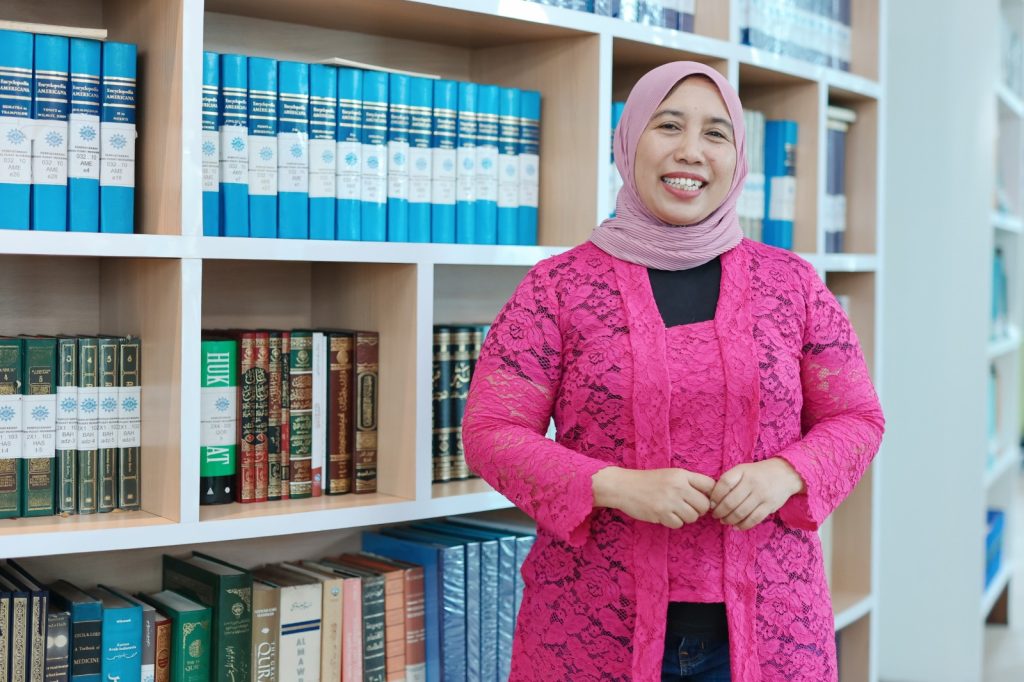
“If women are not involved in planning, even though they are the main actors in the field, policies often fail to connect with reality,” she said.
She believes interfaith approaches could become strategic spaces to strengthen women’s leadership while expanding the definition of green jobs to include community economic practices.
At the same time, youth interest in the green sector is actually quite high. The 2024 study Green Jobs in the Eyes of Youth by Koaksi Indonesia and Surveyou!, involving 622 respondents aged 17–35, found that 76 percent were interested in working in the green sector after understanding its definition. However, only about two out of five respondents accurately knew which jobs fall into the green-jobs category.
A total of 84 percent expressed positive attitudes toward environmental issues, yet only 52 percent consistently applied environmentally friendly practices in daily life. This gap between interest, knowledge, and skills shows a missing link between the potential green labor market and workforce readiness.
These findings also highlight that the success of a green-economic transition does not depend solely on technological investment or renewable-energy infrastructure development. It also depends on recognizing community economic practices and investing in gender-inclusive green-skills training.
Without expanding definitions and policy support connecting grassroots practices to the formal economic system, Hening added, millions of ecological jobs already carried out by communities risk remaining invisible in national development planning—even though in reality their work forms the social foundation for long-term green economic transformation.
Read also: Mengurai Komitmen Pertamina dalam Transisi Energi Terbarukan
Eco-Theology, Women’s Leadership, and the Future Direction
Amid the gap between community practices and policy recognition, some activists see eco-theology, the integration of spiritual values and ecological work, as an emerging entry point for more systematic change.
Hening believes religious community involvement in climate-justice issues did not emerge suddenly but grew from long experiences of humanitarian and disaster advocacy involving religious networks since the early 2000s. These experiences, she said, show that religious institutions possess grassroots social networks capable of accelerating the transition toward a green economy.
Confirming this, the book Eco-Theology: Practicing Faith, Preserving the Environment (2025), published by the Ministry of Religious Affairs, notes that Indonesia’s eco-theology movement has a long history—from food self-sufficiency efforts at the Sindanglaya Orphanage in 1947 to micro-hydro energy development by the GBKP church community in 1974. Awareness strengthened with a 1994 Nahdlatul Ulama fatwa declaring environmental destruction a criminal act. International encouragement through the 2015 Laudato Si’ document later prompted the government to integrate eco-theology into national policy.
Government policy also emerged in response to record global temperatures in 2024. The government then leveraged 1.3 million houses of worship and 279 million religious adherents to shift public behavior from environmental exploitation to environmental stewardship. This step was formalized through Minister of Religious Affairs Decree No. 244 of 2025 concerning Asta Prota, which established eco-theology as a national priority program, including the construction of 160 Green Religious Affairs Offices by 2026 and the integration of ecological curricula for millions of Islamic students nationwide.
What does the reality look like today, particularly in relation to green jobs in religious communities?
According to the same source, the Istiqlal Mosque has obtained green-building certification, one million matoa trees were planted simultaneously in 2025, and the Ammatoa Kajang community was designated a model forest guardian. Government support also includes innovative financing mechanisms such as Green Zakat and Green Waqf for ecosystem restoration and community-based economic empowerment.
The problem, however, is that these steps are still not sufficient. Hening emphasized that green-jobs practices and religious eco-theology involvement should not remain symbolic.
“Women do not have equal access to space compared to men… if this is treated as normal, it is dangerous,” she said.
She added that internal organizational change within religious institutions is essential for ecological programs to run effectively, including opening space for women’s leadership. Religious community involvement, she said, is also crucial for creating green skills and enabling environmentally friendly economic transitions.
Ai, meanwhile, explained that green jobs must be inclusive and sustainable, requiring government participation to ensure this.
“The basic principle is that it must contribute to the environment; the second is inclusivity… these jobs belong to everyone and can be carried out by anyone without exception, including women and people with disabilities,” she said.
She also stressed the importance of program sustainability so that initiatives do not stop at symbolic activities. “Long-term sustainability and the impact produced are the indicators… symbolic actions are usually one-time events and then disappear.”