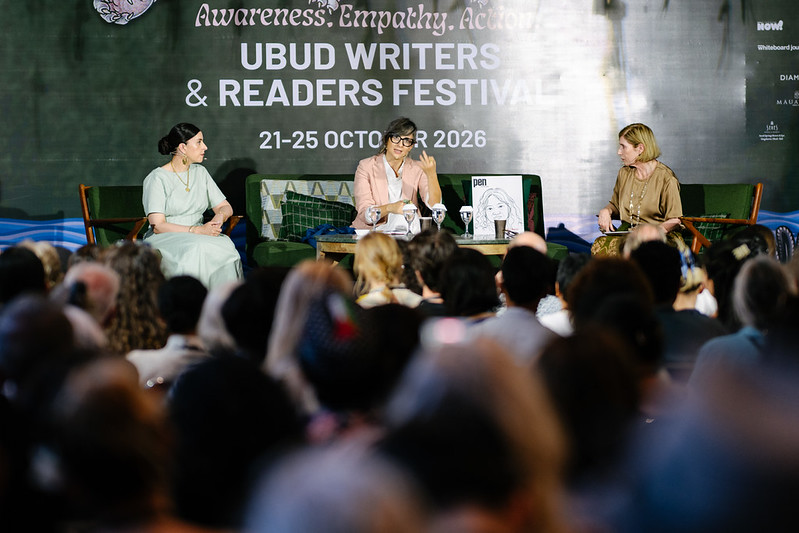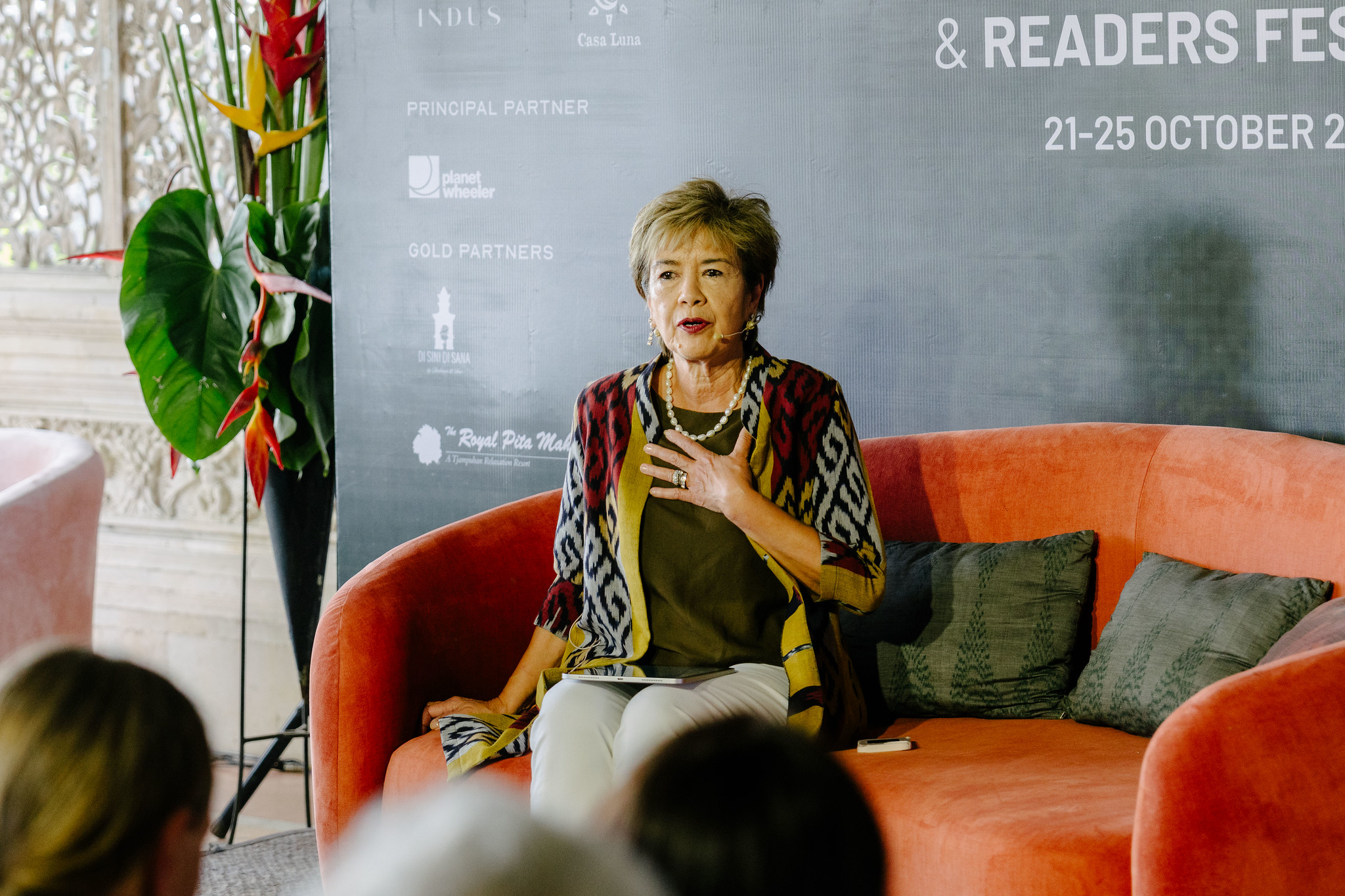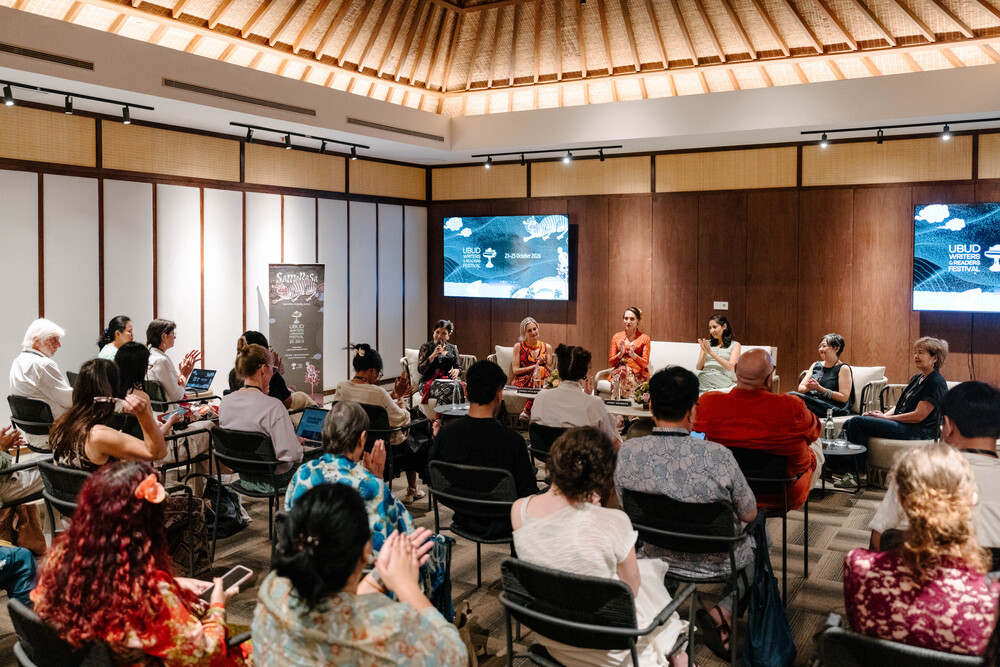
Photo by Satya/Ubud Writers and Festival 2026
When the Bendigo Writers Festival in Victoria, Australia, sent an email asking speakers to refrain from discussing controversial topics that were likely to offend, Palestinian Australian author Randa Abdel-Fattah took it as a coded reference to the Israeli-Palestinian issue. She pulled out of the festival last year.
“I’m a Palestinian, Muslim, Egyptian woman. Speaking at a time of genocide about a book on censorship, I am going to bloody offend people,” she said.
The book is Discipline, her latest novel, which explores the systematic oppression of Palestinian and Muslim voices through its two main characters, a journalist and an academic.
Dozens of writers also boycotted the event over censorship concerns. Abdel-Fattah has since sued Bendigo Council and festival sponsor La Trobe University, alleging discrimination on the basis of her political beliefs or activity.
Shortly afterward, she was disinvited from the Adelaide Writers Festival in South Australia, which reportedly felt her presence might be “offensive” following the 2025 shooting in Bondi. As a result, 180 writers withdrew from the event, leading to the festival’s cancellation.
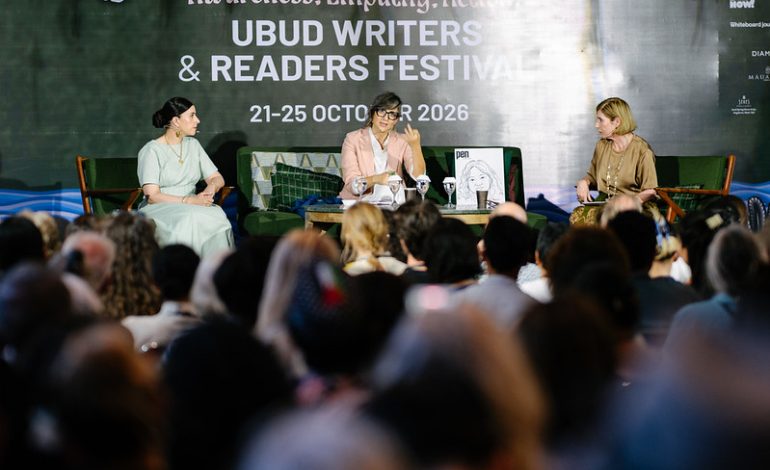
Those experiences were on the table at the annual Ubud Writers and Readers Festival (UWRF) in Bali last week (Oct. 23), where Abdel-Fattah and Francesca Albanese, UN Special Rapporteur on the Occupied Palestinian Territory, shared a panel entitled “The Practice of Resistance and Grace.” Writers decried the oppressive climate of policing and silencing voices speaking out against Israel’s genocide of Palestinians, highlighting the hypocrisy of Western media, as well as academic and cultural institutions.
Abdel-Fattah, an academic and author, recalled her suspension from Macquarie University over alleged potential conflicts of interest in her research grant. After a 10-month investigation, she was cleared of the allegations. Her experience, she said, was shared by many others who are increasingly being silenced or sanctioned for speaking out against Israel’s occupation and genocide in Palestine.
“These universities that posture as democratic institutions that love the contestation of ideas and intellectual freedom,” she said during the panel. “They use our faces for their marketing, and they posture as these bastions of liberal ideals and places where you have diversity, equity, inclusion, committees, but you cannot say the word genocide. You can be in a law department, but God forbids you actually try and run a workshop on international law and its graveyard in Palestine.”
“These universities that posture as democratic institutions that love the contestation of ideas and intellectual freedom,” she said during the panel.
“They use our faces for their marketing, and they posture as these bastions of liberal ideals and places where you have diversity, equity, inclusion, committees, but you cannot say the word genocide. You can be in a law department, but God forbid you actually try and run a workshop on international law and its graveyard in Palestine.”
This “apathy,” she said, has contributed to the normalization of the massive and prolonged slaughter and destruction in Gaza and Palestine.
“Would we be watching a livestream genocide if people who knew, particularly in the media, in academia, had spoken up when they had the chance? And the answer is, absolutely. If they had spoken up, if they had had the courage to name our realities, if they had shown us solidarity, then we wouldn’t be witnessing the normalization of a genocide on our phone screens,” she said.
Anti-Zionism has been equated with antisemitism and weaponized in the West to “shield Israel,” making it the number one discursive battleground in Western societies, she said. But heightened public support for Palestine and growing pressure on Israel might lead to a tipping point.
“What I call the hunting down of our voices in the academy, in mainstream media, in public life, in literary spaces, escalated. And I take that as a sign of pride. That means we’re doing something right when they come after us,” she said.
Read also: Macklemore Didepak dari Tur Ed Sheeran, Empat Musisi Ikut Mundur
Calling apartheid by its name
Albanese echoed Abdel-Fattah, pointing to this dynamic as a reason the international community has failed to hold Israel accountable for imposing an apartheid system in Palestine.
“Israel has always practiced apartheid, and the Palestinians have said it the first time in 1956. So, before there was a question or an international debate around the evil of apartheid South Africa, the Palestinians were already writing and saying, this is apartheid,” said Albanese, who recently published her book When the World Sleeps: Stories, Words and Wounds of Palestine.
While international support through economic sanctions, as well as political and cultural isolation, helped end apartheid in South Africa in 1994, the same could hardly be said of Israel’s apartheid regime against Palestinians. Palestinians, she said, have the right to name, see and hate the ideology on which 100 years of dispossession of their people has been predicated.
“So, if the Palestinians were to call an ideology, racist, if they want to say that Zionist is racist, who are we to forbid them?” Albanese said, adding, “If you can criticize fascism, if you can criticize Scientology, if you can criticize communism, then you can criticize Zionism.”
She said this reluctance often stems from Israel’s and its ally the United States’ global economic and financial power.
Albanese, several International Criminal Court judges, and some Palestinian human rights organizations have been subjected to US government economic sanctions, including asset freezes, transaction bans, and visa and travel restrictions. These measures mean she cannot even open a bank account or have a credit card.
“I pay the price—I’ve been smeared; my profession has been destroyed by the pro-apartheid squad,” Albanese said, adding that because she had not broken any code of conduct, they could not suspend her, and the US could not bring her under its justice system.
“It was clearly retaliatory,” she said.
This poses a great danger to everyone, she warned, as it demonstrates the unchallenged financial power the US wields globally and the potential for that power to be abused against those it considers enemies.
“…in the integrated economy, we are under US sovereignty, because of the SWIFT Code system. This is such an abusive tool that makes us realize the world we live in no longer has the rule of law, but the rule of lawlessness. And this is what we are fighting against.”
Read also: Naksa, Operasi Militer Enam Hari yang Ubah Nasib Palestina
No time for despair
For both speakers, the struggle over Palestine is therefore not just about Palestine itself, but also about the broader systems of power that shape our world and the need for people to stand together to challenge them.
Still, the two contended that this was no time for despair. Instead, it was time to focus on building a movement, mobilizing support, and understanding the role everyone can play in helping. Empathy, they suggested, plays a significant role in this effort.
“Palestine is the epicenter of every struggle. Every subjugated, oppressed population. It is coalescing in Gaza, whether it’s the Silicon Valley’s playground, whether it is the extractive capitalism, Palestinian land is now being used for in these dystopian blueprints with the Board of Peace,” Abdel-Fattah said.
“Whether it’s the arms contracts and the technology and surveillance contract, whether it’s the mining for coltan in the Congo being used in the technologies used to kill and surveil Palestinians in Gaza and the West Bank. There are so many ways that we can understand how what is happening in Palestine impacts us all,” she added.
Albanese echoed this: “So I’ve often said, and I mean it, Palestinian children, in a way, are now more important than my children. And every time I say that, there is something that pierces my heart, but at the same time, it’s true.”
Moving forward together, rather than as individuals, will sustain the fight.
“Even if they if they harm me and they silence me, there will be someone else who will carry the message forward. This is the way we have to see selflessly and this is how we will progress moving forward,” Albanese added.