#GeothermalHorror: Lives Disrupted at Clean Energy Project Sites

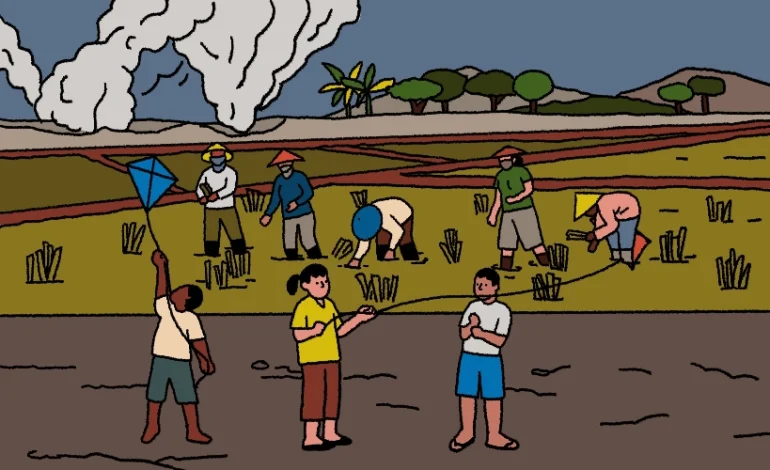
The children at Pusparini Kindergarten in Kalianyar Village, Ijen Subdistrict, Bondowoso Regency, East Java, have their own name for the odor that frequently wafts through their village: “the drilling smell.”
They have started to notice the smell since drilling began on the Panas Bumi geothermal exploration site in April 2020. Now the pungent odor has become a part of the daily life’s for residents surrounding the site.
When Magdalene team visited Kalianyar last April, the odor resurfaced after the rain stopped that afternoon— a combination of a leaking gas and rotten eggs. On several occasions, the odor lingered for up to twenty minutes before gradually fading away.
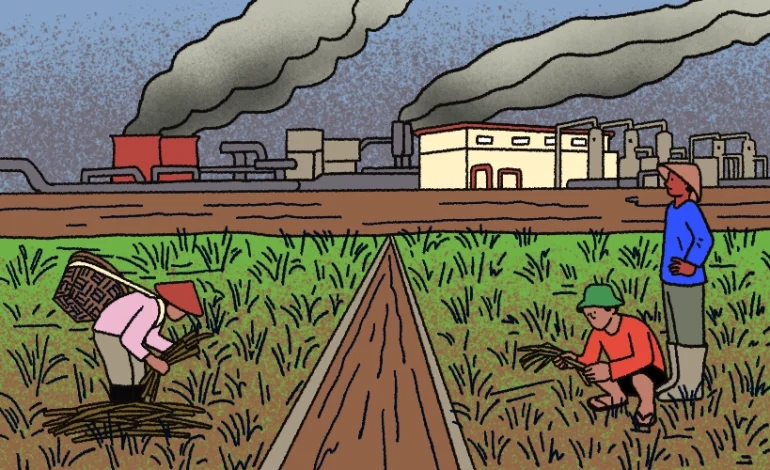
The odor comes from sulfur released by the Ijen Blawan Geothermal Power Plant, which began operations on February 7, 2025. Pipes carrying geothermal steam stretch across residents’ farmland, while some homes are less than 100 meters from the operational facilities.
For the locals though, the problems is more than just the noxious smell. In recent years, residents have complained about changes in their water sources, health issues, and declining crop yields. Magdalene encountered similar complaints during our field reporting at Mandailing Natal Regency in North Sumatra and Mataloko in Ngada Regency, East Nusa Tenggaram, where geothermal development projects are also taking place:
Indonesia has identified geothermal energy as one of its primary energy sources in the energy transition process. The target in the 2025–2034 General Electricity Supply Plan (RUPTL) is to increase installed geothermal capacity by 5,200 megawatts (MW). A number of projects have been designated as National Strategic Projects (PSN) and National Vital Objects (Obvitnas).
Amid this accelerated development, the government emphasizes that geothermal exploration must be conducted with due regard for environmental considerations. Muhammad Attar Majid, Deputy Coordinator for Energy Conservation Analysis and Evaluation at the Directorate of Energy Conservation, Directorate General of New, Renewable, and Energy Conservation (Ditjen EBTKE), stated that the government has issued regulations to manage exploration activities so as not to damage the environment.
He also noted that geothermal utilization is designed to benefit local communities through both direct and indirect use schemes. However, Attar acknowledged that public responses to geothermal projects are not uniform.
“It’s true that many people oppose them, while others accept them because they see the benefits,” he said.
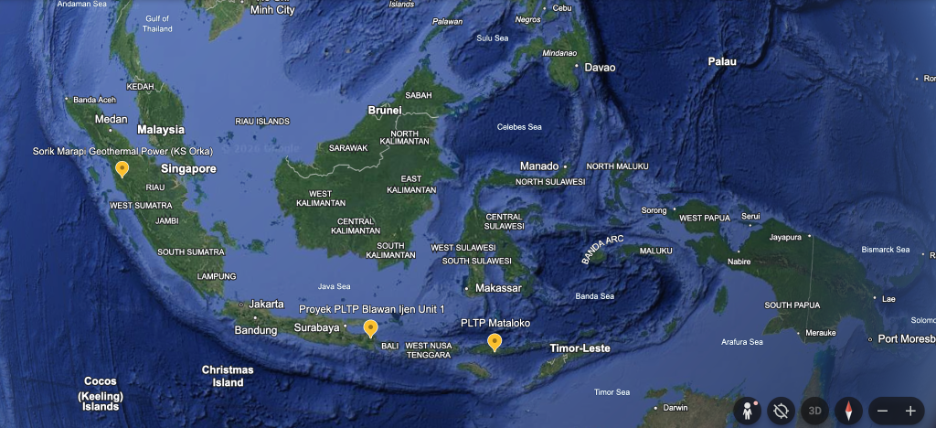
To examine how geothermal development impacts communities at the local level, Magdalene investigated three locations with distinct characteristics. The three areas were selected based on differences in management models, project operational status, and the evolving socio-ecological dynamics in each region.
From a governance perspective, the Ijen Geothermal Power Plant in East Java was selected because it is managed through a joint venture between PT Medco Energi Internasional Tbk and Ormat Technologies Inc, a company based in the United States and affiliated with Israel. Meanwhile, the Mandailing Natal Geothermal Power Plant was selected because 95 percent of its shares are owned by a foreign company, namely PT Sorik Marapi Geothermal Power (SMGP) of Singapore. The Mataloko Geothermal Power Plant, on the other hand, represents a project managed directly by the state through a state-owned enterprise (SOE), PT PLN (Persero).
In addition to their management models, the three locations also have different operational statuses and socio-ecological dynamics. At Ijen, the geothermal power plant operated by PT Medco Cahaya Geothermal, a subsidiary of PT Medco Energi Internasional, is set to begin operations in 2025.
Residents’ complaints have surfaced since the exploration phase, but media coverage on conditions after the project went operational has been limited.
Ijen’s geothermals site has characteristics that differ from the other two locations. The project’s main complex is located in Curah Macan Hamlet, on land under a Right to Cultivate (HGU) held by state-owned lantation company PTPN 1 Regional 5 and Perhutani, rather than on land owned by residents. This land ownership status influences the community’s relationship with the project and determines their capacity to cope with emerging impacts.
Meanwhile, the Mandailing Natal Geothermal Power Plant was chosen because PT SMGP has been operating commercially since 2019 and has experienced several H₂S gas leaks. Although the impact on the community’s living environment has been widely highlighted, to date there have been few reports specifically examining the impact on women. A report by Mining Advocacy Network (JATAM), “The Toxic Effects of Geothermal Mining”, cites exposure to high concentrations can cause collapse, respiratory paralysis, cyanosis, seizures, coma, and cardiac arrhythmia.
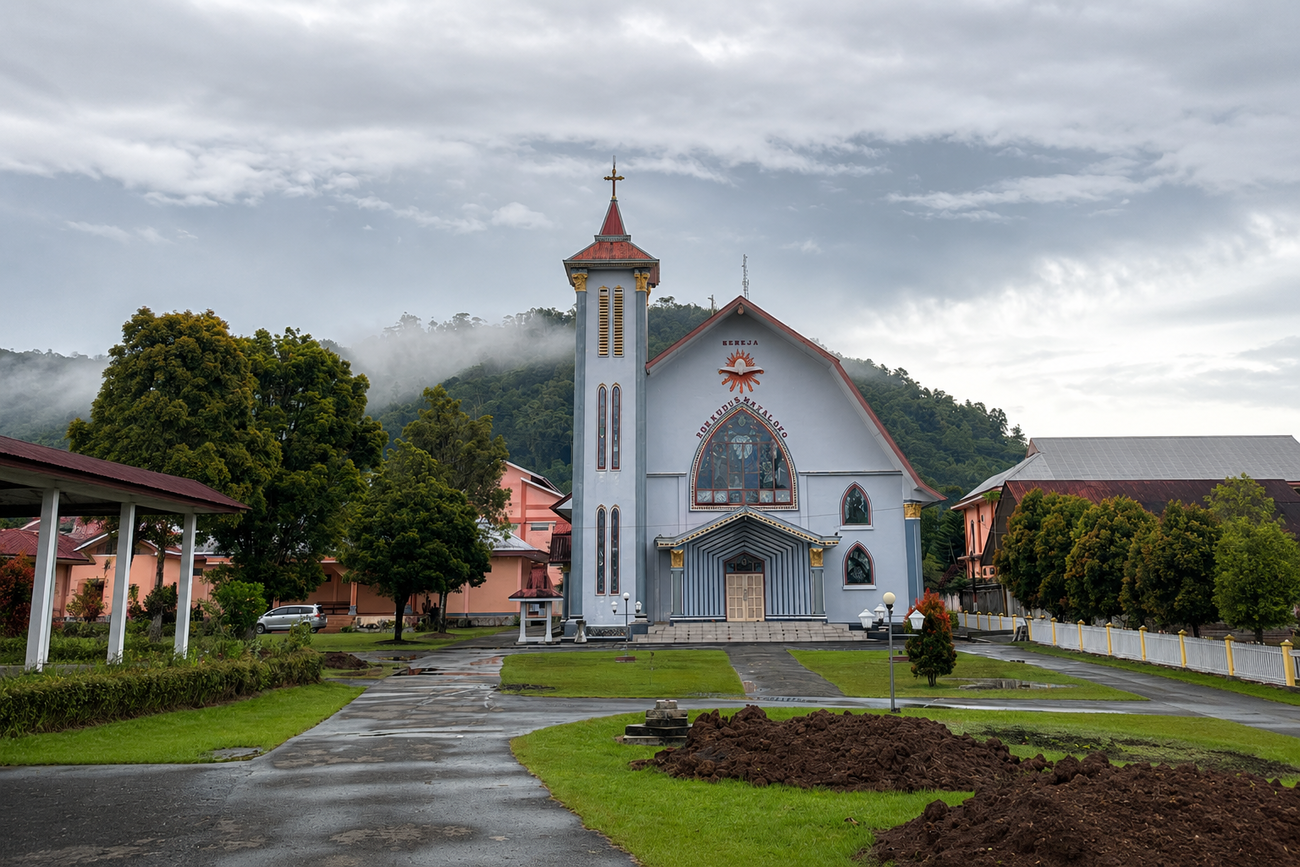
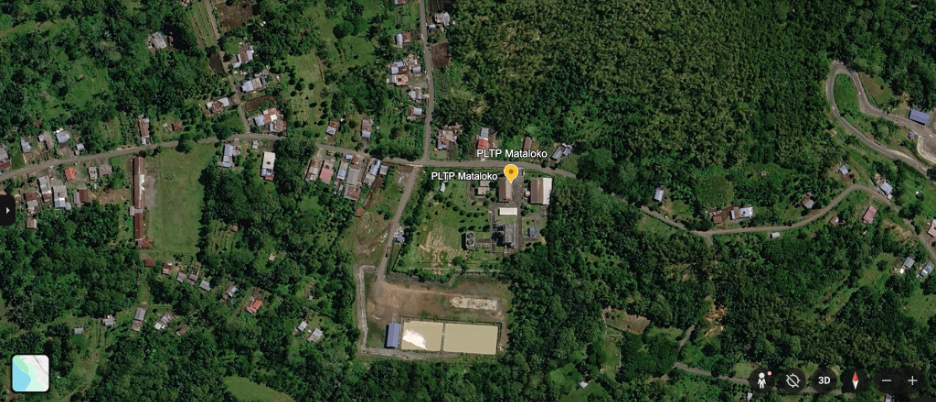
Unlike Ijen and Mandailing Natal, Mataloko was selected because it is located on Flores Island, East Nusa Tenggara, which the government has designated as a Geothermal Island (Flores Geothermal Island). The Mataloko geothermal power plant operated briefly in 2010 but was subsequently shut down due to a drastic decline in hot steam capacity and technical damage to the machinery. Currently, the project is once again in the development phase.
Despite their diverse characteristics, residents in all three regions shared similar experiences. They spoke of changes in water sources, health issues, declining crop yields, and unanswered questions about the project’s impact on their living environments.
To analyze these experiences, Magdalene used the Gender Impact Assessment (GIA) guide published by Oxfam in 2017 as an analytical framework for this special report. The guide was not used as a comprehensive gender audit due to time constraints during field reporting, but rather as a conceptual framework to identify impacts that different community groups might experience differently.
In the guide, Oxfam explains that men and women have different roles, asset ownership, and rights within society. These differences must be taken into account when assessing the impacts of development projects and extractive industries. In many rural areas, women also have close ties to natural resources, such as water, food, medicinal plants, livestock feed, and firewood.
Based on this framework, Magdalene identified four indicators for this report: an increased domestic workload, worsening health burdens, an increase in forced participation in productive labor, and the loss of access to communal resources. These four indicators serve as the foundation for analyzing the experiences of residents in Bondowoso, Mandailing Natal, and Mataloko, as discussed in this report.
Read Also: #HororPanasBumi: Menggadai Hidup Layak Warga Lingkar Panas Bumi demi Mimpi Energi (Part 1)
Impact to Water and Air Quality
In March 2024, residents of Ijen—particularly in the hamlets of Watucapil, Margahayu, and Kebunjeruk—began to notice changes in the water sources they use daily. The water, which was usually clear, turned greenish. When drunk, it left a bitter taste and a dry sensation in the throat.
This change affected at least 200 households. Residents suspect the contamination is linked to drilling activities at the Ijen Blawan Geothermal Power Plant. According to them, liquid waste from the IJN 2 drilling site is flowing toward the springs that have long served as their source of household water.
Shortly after the water quality changed, reports of health issues began to surface. Residents reported experiencing nausea and diarrhea, with children being the most severely affected group. Some of them even had to seek treatment at health facilities.
“The children are experiencing nausea and diarrhea; three or four of them have been hospitalized. The community believes this is caused by the water we’re drinking,” said “Donny,” a village official in Kalianyar.
PT Medco Cahaya Geothermal denied any direct link between residents’ health issues and the company’s activities. According to Donny, the company maintains that these complaints cannot be attributed to the project’s operations. This explanation was provided when residents demanded accountability for the changes in water quality they were experiencing.
“It’s just that Medco’s response—well, maybe they’re exaggerating, dramatizing things, and all that—it’s not really like that. But when we brought it up with Medco, they said, ‘Oh, it can’t be linked that way,’” added Donny.
Residents then asked the company to restore access to clean water. In response, the company briefly sought an alternative water source that could be channeled to the affected area. One location under consideration was in the Gunung Ranti area.
However, that plan did not move forward. The location was deemed too far away and difficult to access to serve as a long-term solution. Finally, in April 2024, the company distributed temporary clean water aid and sealed off the wastewater discharge channel suspected of being the source of the contamination.
To investigate these conditions, Magdalene, together with the JATAM, conducted laboratory tests on five water sources in Kalianyar Village on April 22, including the Gending Waluh Spring, which had previously been suspected of being contaminated. The results showed that all samples fell into the “slightly contaminated” category based on the Class I clean water quality standards in Government Regulation No. 22 of 2021.
In the report, Rifnida Azmi Fitratian, an environmental chemistry researcher at the Coordination Post for the Safety of Lapindo Mudflow Victims (PoskoKKLuLa), explained that a decline in water quality can be influenced by various factors. These include decomposing organic matter, such as leaves and twigs, animal waste, and groundwater seepage carrying nitrogen fertilizer residues from agricultural land or plantations. Nevertheless, she assessed that the community’s water sources still possess natural self-purification capabilities.
However, according to Rifnida, this capability does not guarantee that water quality will remain stable. She emphasized the need for regular monitoring because these springs serve as the primary source of clean water for residents’ household needs, sanitation, and agriculture, and are located near the geothermal power plant.
“So it needs to be checked—say, twice a year,” Rifnida told Magdalene (May 19).
Disruptions to water sources have also been reported in Mandailing Natal Regency, North Sumatra. Residents report that the water flow used to irrigate their rice fields has decreased since the company began operations. According to them, this reduced water supply has also negatively impacted crop yields, which are the family’s primary source of livelihood.
“Sita,” 41, a farmer in Hutaraja Village, said the water flow to her rice fields is no longer the same as it used to be. Although no studies have specifically measured changes in water flow, she said the impact is evident in the steadily declining rice production. Her family’s income has also been affected, as the rice fields are the household’s main source of income.
“Ever since that company came, the water flow has decreased to this level,” said Sita.
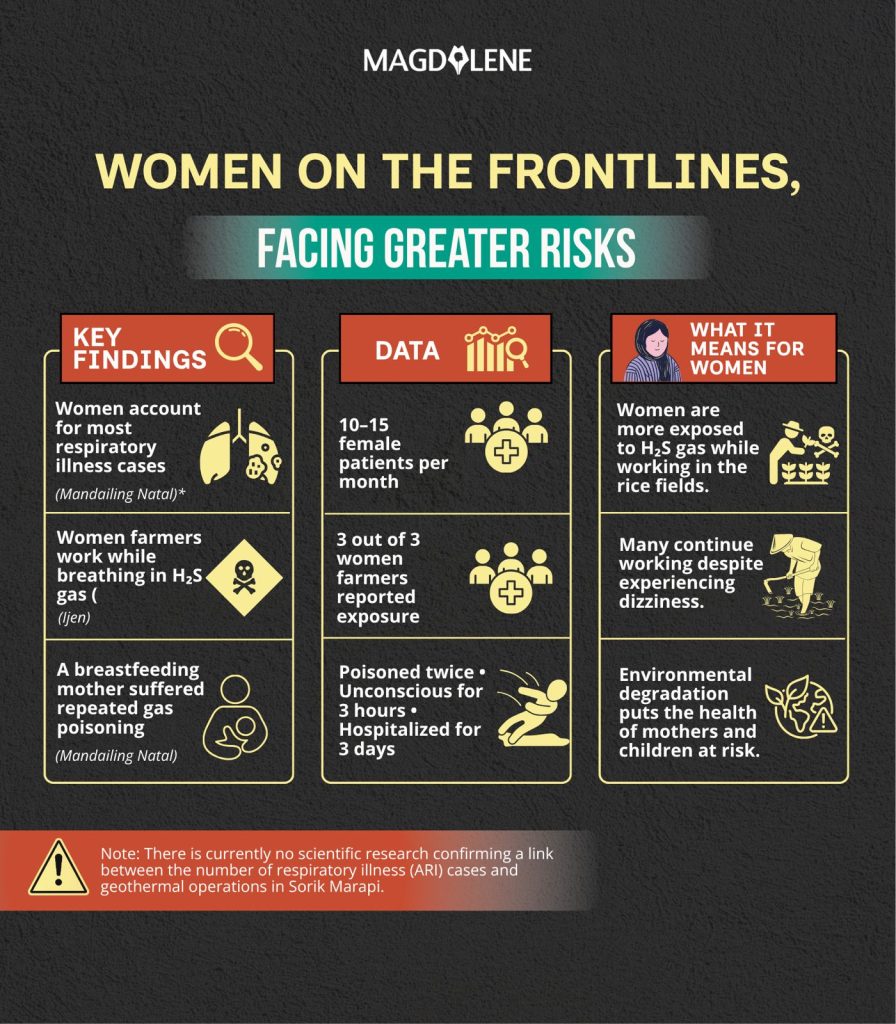
Disruptions to water sources have gone hand in hand with health complaints emerging around the project. Miva Riani Siregar, Head of the Sibanggor Jae Community Health Center, told Magdalene in Mandailing Natal (May 13) that there has been an increase in cases of acute respiratory infections (ARI) in the villages surrounding the project.
Health issues in Mandailing Natal are not limited to illnesses recorded at health facilities. In recent years, the region has also experienced several H₂S gas leaks that have directly affected residents. According to a JATAM report, five residents died following an H₂S gas leak in 2021.
A similar incident occurred again the following year, causing at least 58 residents to experience vomiting, dizziness, and even fainting. In February 2024, another 123 residents were reported to have suffered from poisoning due to an H₂S gas leak. This series of events remains fresh in the memories of some residents living near the company’s operational area.
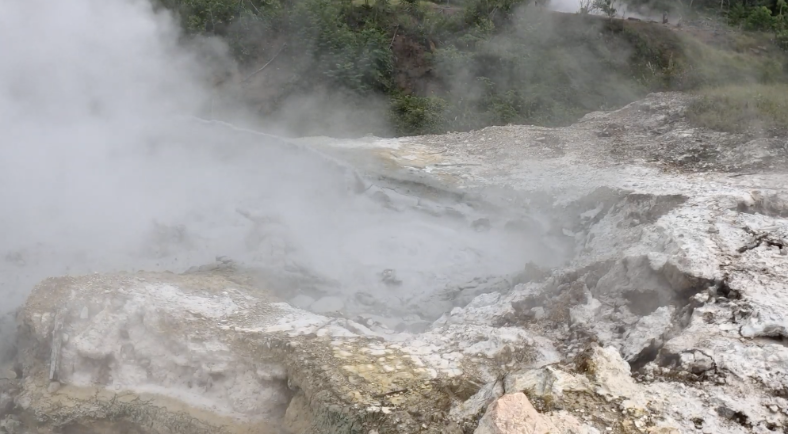
Meanwhile, residents in Mataloko, Ngada Regency, East Nusa Tenggara, live alongside the remnants of a geothermal project that ceased operations more than a decade ago. Although the geothermal power plant is no longer in operation, hot mud geysers and the smell of sulfur still emerge at several locations. For some residents, these conditions serve as a reminder that the project’s impacts do not always end when operations cease.
Inu and Maria Baka, who live about one kilometer from the center of the geothermal activity, say they frequently smell a strong sulfur, especially just before dawn. The odor often triggers shortness of breath and itchy skin, they said. These symptoms have led them to seek medical treatment repeatedly.
“They say we’re allergic to the air. Yeah, it costs 50,000 rupiah a day to buy medicine—the ointment we have to rub on,” said Maria when Magdalene met her in Turetogo Village, Golewa Subdistrict, Ngada Regency (April 6).
However, treatment from the community health center did not always produce the results they hoped for. Maria said that the same symptoms kept recurring even though she had bought medicine many times. Because of this, she and her family began using traditional remedies they prepared themselves.
“It just keeps coming back, over and over. I’ve bought so much medicine, but the symptoms keep coming back. We just bathe using those leaves and that sweet potato—we boil them and use the water for our baths,” she added.
Marselina Ngula, who lives in Radabata about five kilometers from the geyser area and the geothermal power plant, echoed her experience. Marselina has experienced health problems that she attributed to exposure to H₂S gas. Lately, she preferred using traditional remedies over seeking treatment at a health facility, she said.
“For now, to fight it off, that’s what we do—we have to go to a traditional healer and use our traditional remedies,” she said.
The health complaints raised by residents cannot yet directly prove a cause-and-effect relationship with geothermal activities. Further research is needed.
However, in the three regions Magdalene visited, residents repeatedly asked the same questions: How are environmental and health impacts monitored, who is responsible when problems arise, and to what extent are their complaints being addressed.
Read also: #HororPanasBumi: Menggadai Hidup Layak Warga Lingkar Panas Bumi demi Mimpi Energi (Part 2)
Declining Harvests and the Additional Burden Born by Women
According to Pri Utami, Head of the Geothermal Engineering Research Center at Gadjah Mada University, drilling procedures for geothermal projects are designed to comply with strict regulations. In an article published by the Department of Geological Engineering at the Faculty of Engineering (FT) at UGM, she emphasized that every project must undergo technical assessments, geological analyses, risk mitigation, and environmental monitoring.
Drilling sites are also required to be located away from disaster-prone zones such as landslide areas, active faults, flood-prone areas, and areas of social and cultural significance to indigenous and local communities. However, these ideal standards and strict regulations exist only on paper.
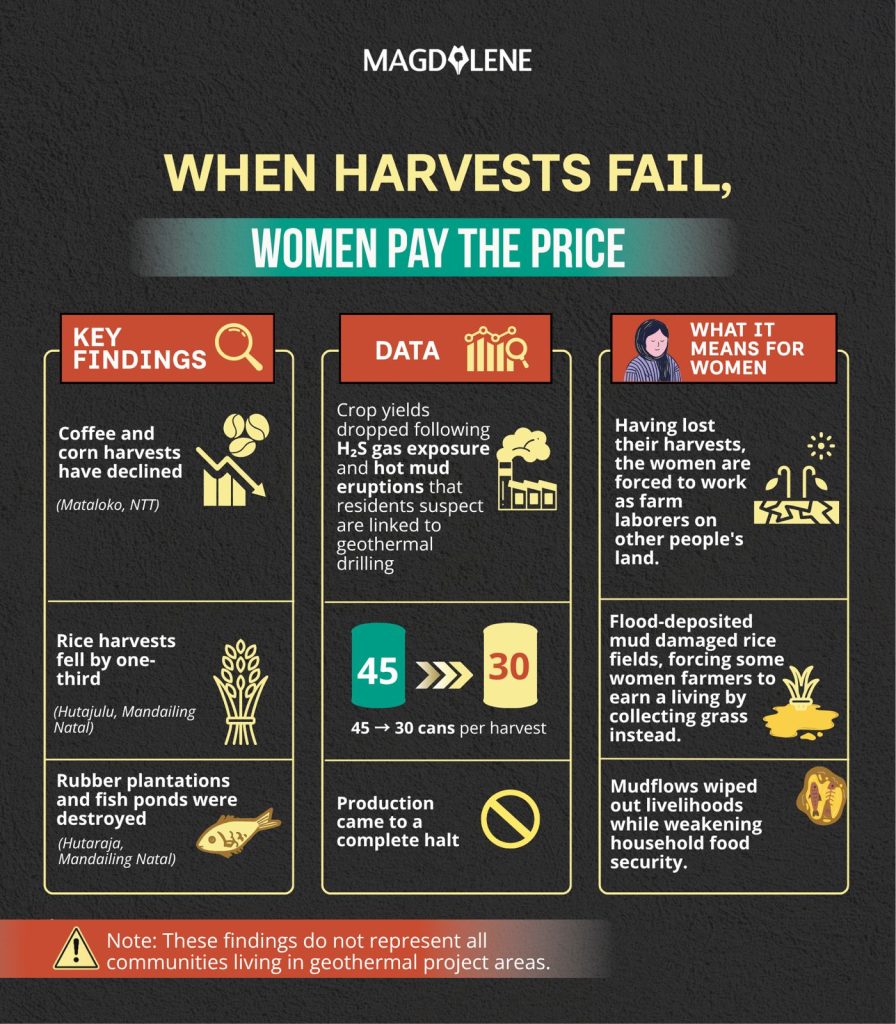
In fact, the geothermal projects in the three areas visited by Magdalene are located very close to residential areas and productive farmland. The farmers Magdalene met reported experiencing changes in their land and crop yields. These changes have had a direct impact on household incomes, which have long depended on farming.
In Ijen Subdistrict, “Firman,” 64, said the productivity of his land has begun to change in recent years. Chili peppers are growing smaller than usual with white spots on the leaves, cabbage yields have declined, and cases of stem rot are becoming more frequent. These conditions only emerged after the project activities expanded in the area, he said.
“The roots absorb the fertilizer, but the nutrients can’t move upward, so the roots are depleted,” Firman explained. “Since 2024, the fertilizer has been accumulating at the root, causing them to die off on their own, even though the roots draw nutrients from the leaves. Stem rot occurs when the roots grow above the soil, trying to re-establish contact with the soil but failing to reach it.”
He added: “Previously, stem rot cases were less than one percent, but since 2024, it’s become like this.”
These changes in the plants have driven up production costs. To control stem rot and leaf rust, farmers must spray pesticides more frequently. Whereas spraying used to be done two to three times every three months, it now can reach up to six times during the same period.
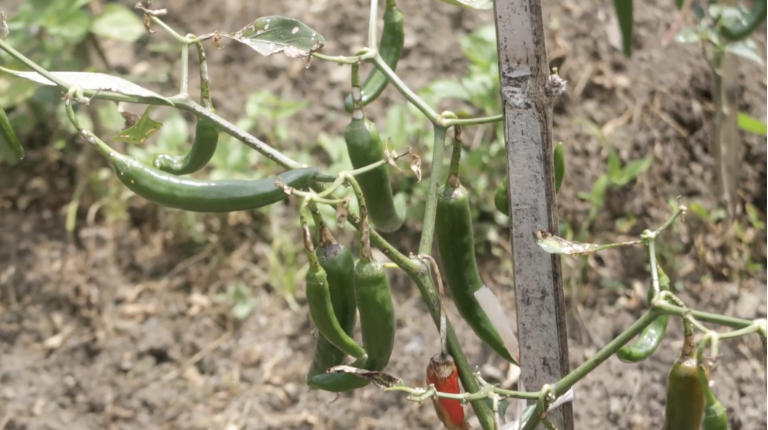
Labor needs have also increased. Firman has to hire up to twelve workers to prevent plant diseases from spreading throughout the fields. Rising production costs have not gone hand in hand with selling prices.
“The initial investment was 35 million rupiah (about USD1,960) to clear the forest, and now we’re facing nearly a 40 percent loss. Meanwhile, the price of cabbage is currently only 2,000 rupiah per kilo. I can’t move to another plot either because I’m only renting this one,” said Firman.
Complaints about crop yields have also emerged in Mandailing Natal although they may not be directly related to the geothermal project. Some residents attribute the decline in land productivity to flooding and mudslides that have repeatedly inundated their rice fields and gardens. For farming families, land damage means a reduction in the income that supports their daily needs.
“Uma,” 50, said that part of her rice fields and rubber plantations were affected by mudslides in late 2024. Since then, her rice harvest has declined, and her rubber plantation can no longer be managed as it was before. Her family’s income has also decreased because most of their household needs depend on agricultural produce.
“Now, the yield is at most only half of what it used to be,” said Uma.
The drop in income has forced Uma to seek additional work. In addition to tending her rice fields and handling household chores, she also works as a day laborer on land owned by other villagers to supplement her family’s income. For her, household needs must still be met even as crop yields continue to decline.
In Mataloko, a similar problem has emerged in a different form. Maria Baka, a farmer who grows corn, coffee, and moke in Turetogo Village, said her crop yields are no longer what they were a few years ago. When Magdalene met with her on April 6, she showed her empty coffee cherries after peeling off the outer skin.
According to Maria, corn yields have also been steadily declining. Whereas previously the harvest could be stored until the next season, the yield is far smaller now. This situation has made her family increasingly dependent on other sources of income outside the farm.
“Until next year, I’ll keep harvesting—the harvest from last year is still there, the older ones are still there. But now there’s no yield.”
The stories of Firman, Uma, and Maria illustrate the impact of geothermal development that isn’t reflected in electricity production data or energy transition targets. As crop yields decline, household income decreases as well. In these circumstances, women continue to shoulder the responsibility of meeting their families’ needs.
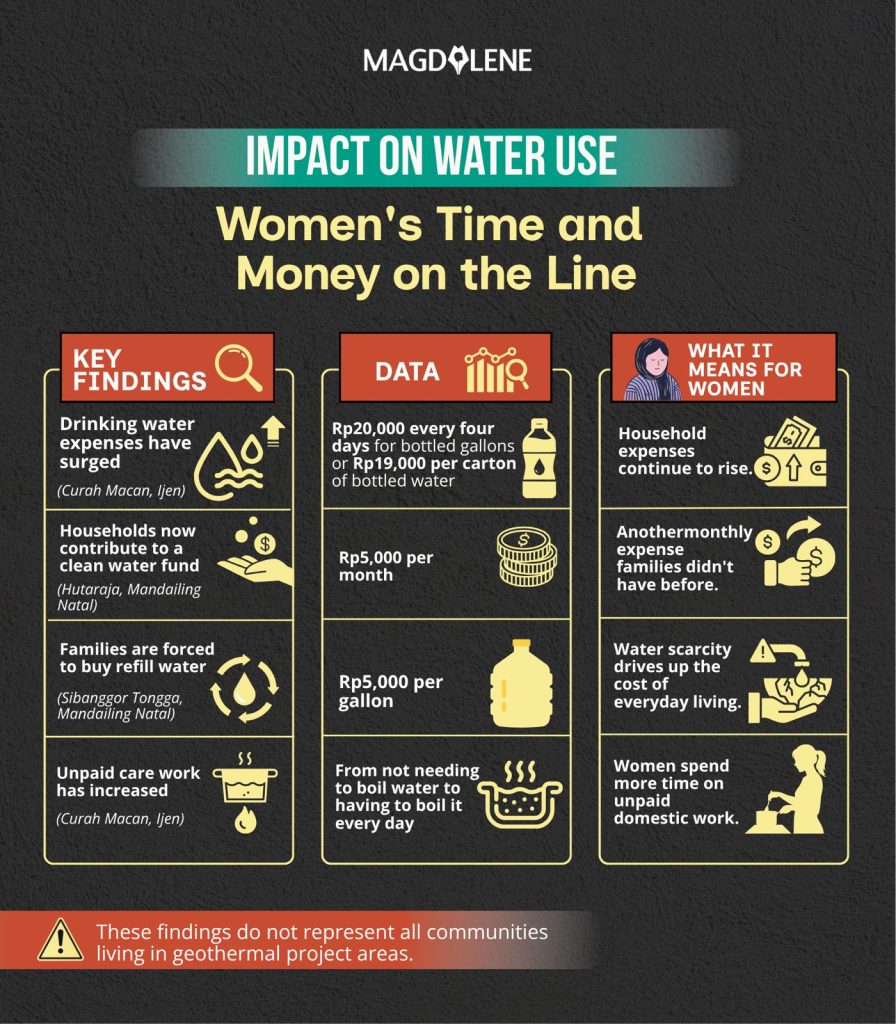
In Ijen, Mandailing Natal, and Mataloko, women recount having to find alternative water sources when the supply is disrupted. They also care for sick family members while seeking additional income when agricultural yields decline. All of this work is done alongside the domestic responsibilities they continue to shoulder.
In all three regions, issues related to water, health, and the economy emerged simultaneously in the experiences of the residents interviewed. When access to water is disrupted, the burden of caring for family members and economic pressures also increase. These conditions add to the workload women must manage in their daily lives.
Read also: ‘Ilusi’ Energi Bersih di Bisnis Panas Bumi yang Disponsori Negara
Resistance not Futile, though not Equally Spread
Environmental, health, and economic impacts aside, residents in all three regions also complained of the lack of information and communication regarding the projects operating in their vicinity. These complaints emerged repeatedly in interviews conducted by Magdalene in Ijen, Mandailing Natal, and Mataloko. This is where the issue of accountability is most evident: And even when residents ask about the impacts they are experiencing, the answers are unclear and limited.
In Curah Macan Hamlet, the area closest to the Ijen Blawan Geothermal Power Plant, several women said they had never been involved in discussions about the project. The information they received generally consisted only of announcements regarding the company’s activities, without any explanation of potential health or environmental risks.
One of them, “Ninik”, said she had never received an explanation about the potential impacts of gas exposure or drilling activities. The public outreach conducted by the company, she said, mostly consisted of technical information about the project’s activities.
“At most, we were told about the drilling operations through an announcement at the mosque, but we weren’t told what the effects of inhaling the gas would be,” said Ninik.
A lack of clarity also emerged when residents raised concerns about water pollution. Although the wastewater channel suspected of being the source of the problem has been closed, some residents admitted they were never informed of how the wastewater was managed afterward. These concerns are shared not only by residents but also by village officials.
Donny said the community had never received an explanation on the wastewater disposal process or the potential long-term impacts. As a result, many of the residents’ questions remain unanswered to this day.
“So the local community itself doesn’t know where the wastewater goes or what the long-term effects will be—they just don’t know. Even the village officials don’t know,” explained Donny.
While in Ijen the main issue relates to a lack of information, in Mataloko residents are questioning the public outreach process, which they consider to be non-transparent. One such experience was faced by Theresia Dau, a resident of Ladja, who received an invitation to a public outreach meeting on the geothermal project in November 2025.
At that time, the water sources near her home were included in PLN’s project development plans. Before attending the meeting, Theresia had heard concerns from residents and church officials about the project’s potential impact on the springs that the community had long relied on.
Upon arriving at the outreach venue, Theresia noticed that the attendance list was already filled with residents’ signatures. After participating in the event and leaving early, she later learned that the list was used as part of a document purporting to demonstrate community support for the project.
“We never knew they were collecting our signatures at the entrance to use as supporting data. We had no idea,” she complained to Magdalene at her home in Ladja, Mataloko (April 4).
“We were invited to listen. And we strongly oppose having our water taken away,” she continued.
The editorial team has sent video evidence of the incident—recorded by residents—to PLN. However, as of the publication of this report, PLN has not responded to the residents’ claims.
Unlike in Ijen and Mandailing Natal, residents’ objections in Mataloko are more often voiced openly. A number of women are directly involved in protests, particularly those related to the use of water sources and village infrastructure for the project’s needs.
Marselina Ngula, 46, is one of them. When she learned that project trucks would be passing along a road near her home in Radabata, she and other residents tried to stop the vehicles. They questioned the basis for the road-use permit granted to the company.
Marselina said the residents had never agreed to the use of that road for project activities. The dispute with the truck drivers then escalated to the point of involving the village head. During that meeting, Marselina directly conveyed the residents’ objections.
“If they still want to drive through here again, we’ll fight, we’ll beat them up, we’ll kill them—we’ll defend it. Because we built this road with our own tax money,” Lina said, recalling her words from that time.
“To this day, they haven’t driven on that road again,” she added.
Differences in residents’ responses to the geothermal project were evident in the three areas Magdalene visited. In Mataloko, residents openly expressed their opposition to the project. In a number of interviews, they repeatedly linked this stance to their dependence on springs as a source of their daily needs. Concerns about losing access to water were the most frequently cited reason.
In Ijen, residents also complained about changes in water quality, health problems, and declining crop yields. However, there were no signs of open resistance or large-scale community mobilization as seen in Mataloko.
Citing a CELIOS study, most of the land in Ijen Subdistrict is managed by the state-owned plantation and forestry companies Perhutani and PTPN XII. Many residents depend on land they do not directly own for their livelihoods. According to CELIOS researcher Wishnu Try Utomo, the lack of land rights weakens residents’ position when facing geothermal projects.
“The lack of land rights for residents weakens their position. They aren’t even involved in project outreach,” Wishnu told Magdalene (June 25).
In Mandailing Natal, residents have also voiced various complaints regarding the geothermal project. Since the project began operations, the area has experienced several incidents of H₂S gas leaks, resulting in fatalities and cases of poisoning. However, opposition to the project does not appear to be expressed as openly as it is in Mataloko.
*We have anonymized some of our sources to protect their privacy and safety. The editorial team has also sent letters to PT Medco Energi Internasional Tbk, PT Sorik Marapi Geothermal Power, and PT PLN (Persero). However, as of the publication of this report, we have not received a response*
We would like to thank the Mining Advocacy Network (JATAM) and the Center for Economic and Law Studies (CELIOS) for the information, data, and input that helped enrich this reporting process. The entire content of this report was compiled, verified, and finalized entirely independently by the Magdalene editorial team.
This article is part of Magdalene’s data-driven investigative series on the impacts of geothermal development in Ijen, Mandailing Natal, and Mataloko. Read the rest of the #HororPanasBumi series here.
Geothermal Project Team
Editor-in-Chief:
Devi Asmarani
Managing Editor:
Purnama Ayu Rizky
Editors:
Purnama Ayu Rizky, Aulia Adam, Devi Asmarani
Project Coordinator:
Jasmine Floretta V.D
Field Team
Andrei Wilmar, Aulia Adam, Jasmine Floretta V.D, Syifa Maulida, Purnama Ayu Rizky, Rose Handika
Reporters/Researchers:
Andrei Wilmar, Jasmine Floretta V.D, Syifa Maulida
Fixers:
Antony Anu, Ahmad Royhan, Muhammad Husnudin
Graphic Designers:
Della Nurlailanti Putri
Illustrator:
Karina Tungari
Social Media:
Amanda Andina Nugroho, Allaam Faadhilah, Sonia Kharisma Putri
SEO:
Kevin Seftian
Editorial Secretary
Chika Ramadhea
Product and Program Development Coordinator:
Siti Parhani
Community Engagement:
Siti Hajar
Data Analyst:
Azaria Laras